Retatrutide Storage & Stability: How Long Does It Really Last After Reconstitution?
Storing retatrutide correctly is mostly about three things: keep it cold, keep it dark, and don't freeze it once it's mixed. The harder question, exactly how many days a reconstituted vial stays good, has no validated answer, and we'll explain why that matters more than any number you've seen online.
If you've searched this topic before, you've probably seen confident claims like "lasts 28 days" or "good for 8 weeks." Those numbers come almost entirely from research-peptide sellers, they contradict each other, and none are backed by published retatrutide data. This guide takes a different approach: we'll give you the practical handling rules that peptide science actually supports, show you the real degradation risks, and be honest about the limits of what's known. If you're weighing retatrutide against other options first, our roundup of the best peptides for weight loss puts it in context.
Key Takeaways
- Lyophilized (powder) retatrutide is most stable frozen at or below −20 °C, kept dry and dark; peptide manufacturers cite this range for long-term storage (JPT, How to Store Peptides).
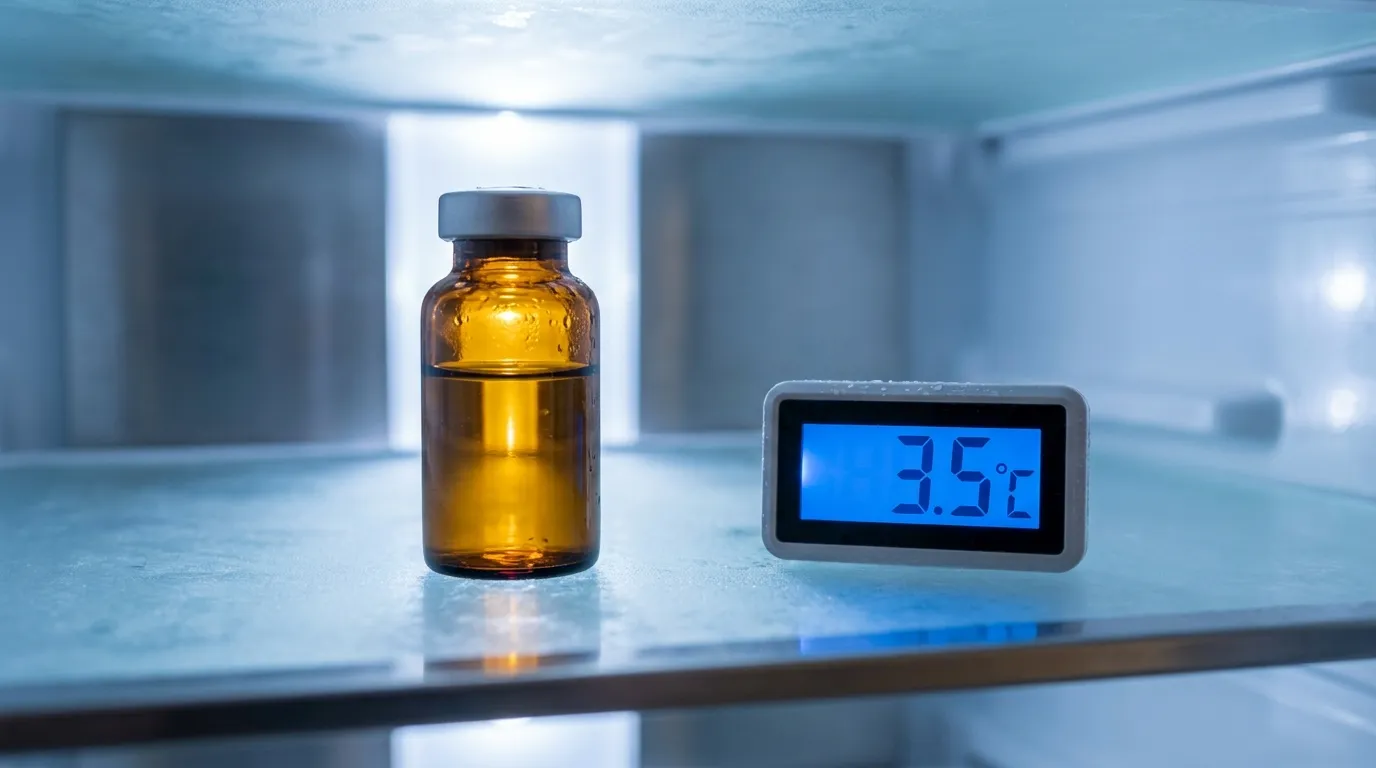
- Reconstituted retatrutide belongs in the refrigerator at 2-8 °C (36-46 °F) and should never be frozen once it contains water.
- Practical answer: community and clinic practice typically uses a refrigerated, still-clear vial within about one month (~28 days) of reconstitution, shared as a common-use convention, not validated retatrutide data.
- No official "lasts X days" figure exists for reconstituted retatrutide: it is investigational, with no published in-use stability data.
- Peptides in solution degrade through hydrolysis, deamidation, oxidation, and aggregation, accelerated by heat, light, and agitation (Pharmaceutics, 2023).
- Discard any solution that turns cloudy, changes color, or shows particles. When in doubt, throw it out.
How long does reconstituted retatrutide actually last?
There is no validated shelf life for reconstituted retatrutide, and any specific number you find online is an estimate, not established fact. Because retatrutide is investigational, no manufacturer has published in-use stability data, so claims of "21 days," "28 days," or "8 weeks" are unverified and frequently contradict one another.
So what should you actually do? In practice, most of the peptide community treats a refrigerated, still-clear vial as usable for about one month (roughly 28 days) after reconstitution, discarding it sooner at any sign of cloudiness or color change. We share that to answer the question directly, but treat it as a common-use convention, not validated, retatrutide-specific data.
What we can say with evidence comes from general peptide science. Once a lyophilized peptide is dissolved in water, the clock starts: it is far less stable in solution than as a dry powder. Peptide manufacturers typically describe reconstituted peptides as stable for only "a few days" at refrigerated temperatures, with exact longevity depending on the specific molecule, its concentration, and the diluent (JPT, "How to Store Peptides", retrieved 2026-06-14).
Our take: Every "reconstituted retatrutide lasts X" figure we surveyed across vendor pages disagreed with the others, ranging from 24 hours to three months. That spread alone tells you the honest answer: nobody has measured it for this molecule. Treat conservative refrigerated handling and your own visual checks as the real safeguard, not a number on a blog.
The pharma world has a useful frame of reference here. A widely used "in-use" convention for multi-dose injectables is a maximum of around 28 days after first use when stability data support it, but that allowance must be earned through testing, not assumed. Regulators only permit a shelf-life or in-use claim when stability data justify it (FDA/ICH, "Q1A(R2) Stability Testing of New Drug Substances and Products", retrieved 2026-06-14). For retatrutide, that data simply isn't public.
For the practical mechanics of mixing, see our detailed peptide reconstitution walkthrough.
Retatrutide storage cheat sheet
Everything above in one scannable view. When in doubt, match the form to the temperature and trust your eyes.
| Form | Store at | Light | How long it holds | Never |
|---|---|---|---|---|
| Lyophilized powder (unmixed) | Freezer, ≤ −20 °C (a 2-8 °C fridge is fine for powder you'll use soon) | Dark, original carton, kept with desiccant | Months to years frozen | Let it get damp |
| Reconstituted solution (mixed) | Refrigerator, 2-8 °C (36-46 °F), middle shelf | Dark, away from light | About 1 month (~28 days) by community convention, sooner if it stops looking clear. No validated retatrutide figure exists; our app data shows a typical vial finished in ~25 days. | Freeze it |
Pro tip: Write the reconstitution date on every vial the moment you mix it, so the use-by window is never a guess.
How to store lyophilized (powder) retatrutide
Unmixed retatrutide powder is the stable form: keep it cold, dry, and dark, and it will outlast the reconstituted solution by a wide margin. Lyophilized (freeze-dried) peptides are designed to sit in storage, which is why they're shipped as powder in the first place.
Peptide manufacturers recommend storing lyophilized peptides frozen, commonly at −20 °C for routine storage and down to −80 °C for long-term archiving, kept desiccated (with a drying agent) and protected from light (JPT, "How to Store Peptides", retrieved 2026-06-14). Short periods in a standard refrigerator are generally fine for powder you'll use soon, but the freezer is the safer home for anything you're holding.
Three rules carry most of the benefit for powder:
- Keep it dry. Moisture is the enemy of a lyophilized peptide. Keep the original desiccant with the vial and let a cold vial reach room temperature before opening, so condensation doesn't form inside.
- Keep it dark. Light can drive oxidation of sensitive amino acid residues, which is why "protect from light" is a standard pharmaceutical instruction (FDA/ICH, "Q1B Photostability Testing of New Drug Substances and Products", retrieved 2026-06-14). Keep vials in their original carton.
- Avoid temperature swings. Repeated warming and cooling stresses the product. Store it where the temperature is stable, not in the fridge door.
Reconstituting retatrutide: the quick version
Reconstitution just means adding liquid to the powder, but doing it gently is what protects stability from the very first second. This is a short overview; the exact mechanics deserve their own walkthrough.
The essentials: let a cold powder vial reach room temperature first, swab both vial stoppers with alcohol, and add your diluent slowly, aiming the stream down the inside wall of the vial rather than blasting it directly onto the powder. Then swirl gently and never shake, giving it a minute to dissolve into a fully clear solution before it goes in the fridge. Rough handling here seeds the aggregation that shows up days later as cloudiness.
For exact volumes, syringe units, and the diluent math, see our step-by-step reconstitution and dosing walkthrough.
How to store reconstituted retatrutide
Once retatrutide is mixed with water, refrigerate it immediately at 2-8 °C, keep it in its vial away from light, and never put it in the freezer. Reconstitution is the moment the product becomes fragile, so handling matters most from here on.
Pharmacopeial standards define "refrigerated" storage as 2-8 °C (36-46 °F), the same range used for most temperature-sensitive injectables (USP General Chapter <1079>, "Good Storage and Shipping Practices", retrieved 2026-06-14). That's a normal household fridge, but the middle of it: not the door (too warm and variable) and not against the back wall (risk of accidental freezing).
Which diluent: bacteriostatic vs. sterile water
The diluent you choose changes how the solution should be treated. Bacteriostatic water contains 0.9% benzyl alcohol, a preservative that inhibits microbial growth and is generally preferred for a vial you'll draw from multiple times. Sterile water has no preservative and is better suited to single-use, because it offers no protection against contamination once the stopper is pierced. Excipients and pH in the diluent can also influence how quickly a peptide degrades, which is one more reason general "shelf life" numbers don't transfer between products.
Aliquoting and pre-drawing
If you reconstitute a larger amount than you'll use quickly, dividing it into smaller portions (aliquots) limits how often the main supply is warmed and disturbed. Manufacturers specifically recommend aliquoting to avoid repeated freeze-thaw cycles, which promote aggregation (JPT, "How to Store Peptides", retrieved 2026-06-14). Pre-drawing doses into syringes is sometimes done for convenience, but every transfer adds a contamination and adsorption risk, and plastic syringes are not designed for storage.
Multi-dose vials and repeated punctures
Each time you pierce the stopper, you introduce a small contamination risk and expose the contents to air. With a preservative-containing diluent this risk is reduced but not eliminated. The cleaner your technique, alcohol-swabbing the stopper, using a fresh needle, minimizing air exposure, the better your solution holds up over its use period.
For dosing volumes and unit conversions, see our reconstitution and dosing tool.
Why retatrutide degrades: the science
Peptides in solution break down through a handful of well-understood chemical reactions, and almost all of them speed up with heat, light, and physical agitation. Understanding these pathways explains why the storage rules exist, and why a mixed vial is so much more vulnerable than powder.
In its 2023 review in Pharmaceutics, Nugrahadi and colleagues catalogued the main degradation routes for therapeutic peptides in aqueous solution: hydrolysis of the peptide backbone, deamidation of asparagine and glutamine residues, oxidation (including light- and metal-driven oxidation of methionine, cysteine, and tryptophan), and physical aggregation or precipitation (Pharmaceutics, "Designing Formulation Strategies for Enhanced Stability of Therapeutic Peptides in Aqueous Solutions", 2023, retrieved 2026-06-14). The same review notes that low temperature, controlled pH, light protection, and excluding oxygen all help slow these reactions.
Physical aggregation deserves special attention because it's driven by the very things people do during handling. Concentration, pH, exposed surfaces, and agitation all influence whether peptide molecules clump together (PubMed, "Factors affecting the physical stability (aggregation) of peptide therapeutics", 2018, retrieved 2026-06-14). That's why vigorous shaking is discouraged: swirl gently to dissolve, never shake hard.
Which breakdowns matter most, and which can't be undone
Not all degradation is equal. Hydrolysis and deamidation slowly rewrite the peptide's chemistry, which can quietly erode potency long before anything is visible to the eye. Oxidation is especially relevant for a peptide like retatrutide because it's triggered by light and trace metals and attacks specific residues (methionine, cysteine, and tryptophan), which is precisely why amber vials and dark storage exist (Pharmaceutics, "Designing Formulation Strategies for Enhanced Stability of Therapeutic Peptides in Aqueous Solutions", 2023, retrieved 2026-06-14).
Aggregation is the pathway to fear most, because it is effectively irreversible. Once molecules misfold and clump together, you cannot dissolve them back into active drug, and those aggregates are exactly what you eventually see as cloudiness or floating particles. This is why gentle handling carries so much weight: every hard shake, every freeze-thaw cycle, and every hour spent warm nudges more molecules toward clumping (PubMed, "Factors affecting the physical stability (aggregation) of peptide therapeutics", 2018, retrieved 2026-06-14). The damage accumulates silently, then announces itself all at once. A clear vial is reassuring, but it is not proof that no chemical change has begun.
According to the 2023 Pharmaceutics review, the practical levers that slow peptide degradation are consistent across molecules: keep the solution cold, shield it from light, avoid introducing oxygen, and don't agitate it. Those four habits map directly onto the storage rules in this guide. They aren't arbitrary, they're the chemistry working in your favor.
Temperature, light, and handling excursions
Cold slows every degradation reaction, light accelerates oxidation, and brief temperature excursions add up, so consistency beats any single rule. A rough rule of thumb from reaction chemistry is that degradation roughly doubles for every 10 °C rise in temperature, which is why a vial left on the counter loses stability far faster than one in the fridge.
That rule of thumb comes from the Arrhenius relationship, which describes how reaction rates climb with temperature. In practical terms: a solution that might hold up for weeks at 5 °C could lose comparable potency in a fraction of that time at room temperature, and faster still in a hot car or a sunny window. Cold doesn't stop degradation; it buys you time by slowing the underlying kinetics, which is the entire point of the cold chain used for biologic drugs.
The 2-8 °C window is a deliberate sweet spot: cold enough to slow those reactions sharply, yet safely above freezing. That second half matters more than most people expect. When a water-based solution freezes, ice crystals form and squeeze the dissolved peptide into the shrinking pockets of liquid between them, a process called cryo-concentration. The local concentration spikes, surfaces multiply, and molecules are forced together, which drives exactly the irreversible aggregation described earlier. That is the real reason "never freeze the reconstituted solution" is a hard rule rather than a gentle suggestion: a single freeze can do damage that no amount of careful refrigeration afterward can reverse.
The standard temperature bands below are the reference points pharmacists use.
What if the power goes out, or I leave it on the counter?
So your vial sat out: now what? A single, short excursion is rarely catastrophic, but the doubling rule means you should respond based on time and temperature, not panic. A vial that spent an hour or two at room temperature and still looks perfectly clear is generally treated as usable, then returned to the fridge promptly. The longer and warmer the exposure, whether an overnight power cut, a full day on the counter, or an afternoon in a hot car, the more caution is warranted, and the more weight a careful visual inspection deserves. If it turns cloudy, changes color, or shows particles, discard it no matter how brief the exposure was. When the exposure was long and you're genuinely unsure, the conservative call is to replace it: a wasted vial costs less than an ineffective or unsafe one.
Travel and transport
Traveling with a temperature-sensitive peptide takes planning. Keep reconstituted solution cold with an insulated cooler and gel packs, but place a barrier between the vial and the packs so it chills without freezing. On flights, medically necessary liquids can usually exceed standard carry-on limits when declared, and carrying a clinician's note plus original packaging makes screening smoother. Never check a temperature-sensitive vial into the cargo hold, where temperatures swing wildly. A brief, unavoidable warm or cold spell isn't necessarily ruinous, but repeated excursions stack up, so minimize them.
Signs retatrutide has gone bad, and safe disposal
Trust your eyes: a properly stored solution is clear and colorless, so any cloudiness, color change, or visible particles is a reason to discard it. Visual inspection is your most reliable at-home check, because you can't measure potency in a kitchen.
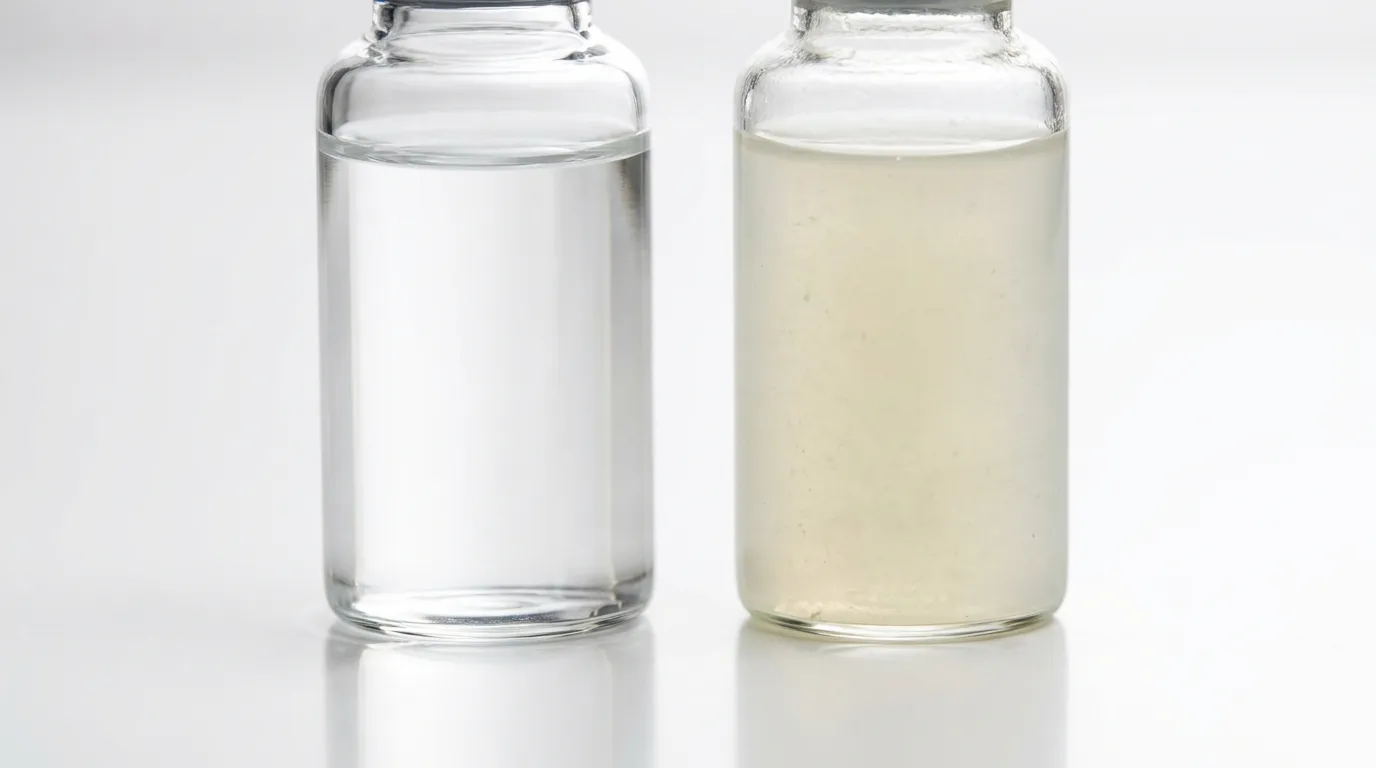
Discard the vial if you see any of these:
- Cloudiness or haze where the liquid was previously clear (a classic sign of aggregation or contamination)
- Color change, especially a yellow or brown tint
- Visible particles, flakes, or floaters
- A powder vial that looks melted, clumped, or discolored, or one you suspect got wet
- Any solution past a reasonable refrigerated window, or one you know was left warm or frozen
Our take: A clear solution is not a guarantee of full potency, since degradation can occur before it's visible, but a non-clear solution is a reliable signal to stop. The asymmetry is the point: clarity is necessary, not sufficient.
For disposal, treat it like any sharps-and-medication waste: don't pour solution down the drain or toss vials in household trash loosely. Use a sharps container for needles, and follow local pharmacy take-back or hazardous-waste guidance for the vial and contents.
Where dosing fits in (and what the trials used)
Storage only matters because the product needs to stay potent for dosing, and the only retatrutide doses with real evidence behind them are the ones studied in clinical trials. We won't invent numbers; here is what the published and registered trials actually used.
In 2023, the New England Journal of Medicine published the Phase 2 obesity trial (Jastreboff et al.), which enrolled 338 adults and tested once-weekly retatrutide at 1, 4, 8, and 12 mg, with starting doses of 2 mg or 4 mg titrated upward (NEJM, "Triple-Hormone-Receptor Agonist Retatrutide for Obesity: A Phase 2 Trial", 2023, retrieved 2026-06-14). As of 2026, the pivotal Phase 3 program (TRIUMPH-1) is studying 4, 9, and 12 mg once weekly, initiated at 2 mg and escalated every four weeks (ClinicalTrials.gov, NCT05929066, retrieved 2026-06-14); Eli Lilly announced positive topline Phase 3 weight-loss results in May 2026 (Eli Lilly investor release, retrieved 2026-06-14).
These figures describe what was administered in supervised trials of an investigational drug. They are not a recommendation, a prescription, or guidance to self-administer. Because retatrutide is unapproved, any use outside a clinical trial carries unknown risks and falls outside regulatory oversight, a conversation to have with a qualified clinician.
Frequently Asked Questions
The bottom line
Retatrutide storage comes down to matching the form to the temperature: powder lives in the freezer, mixed solution lives in the fridge, and neither should ever sit warm or in the light for long. The reconstituted "how long does it last" question has no validated answer for this investigational drug, so conservative cold storage and honest visual checks are your real safeguards, not a number from a sales page.
As retatrutide moves through Phase 3, formal stability and handling data may eventually be published. Until then, treat every claim, including the practical guidance here, as a careful synthesis of peptide science rather than a manufacturer's tested label, and check with a qualified clinician before acting.
For related reading, see our step-by-step reconstitution walkthrough and bacteriostatic vs sterile water → diluent comparison guide.
Sources
- Nugrahadi PP, Hinrichs WLJ, Frijlink HW, Schöneich C, Avanti C. "Designing Formulation Strategies for Enhanced Stability of Therapeutic Peptides in Aqueous Solutions: A Review." Pharmaceutics, 2023. Retrieved 2026-06-14. https://pmc.ncbi.nlm.nih.gov/articles/PMC10056213/
- "Factors affecting the physical stability (aggregation) of peptide therapeutics." PubMed, 2018. Retrieved 2026-06-14. https://pubmed.ncbi.nlm.nih.gov/29147559/
- JPT Peptide Technologies. "How to Store Peptides." Retrieved 2026-06-14. https://www.jpt.com/blog/store-peptides/
- United States Pharmacopeia. General Chapter <1079>, "Good Storage and Shipping Practices." Retrieved 2026-06-14. http://www.uspbpep.com/usp31/v31261/usp31nf26s1_c1079.asp
- FDA / ICH. "Q1A(R2) Stability Testing of New Drug Substances and Products." Retrieved 2026-06-14. https://www.fda.gov/media/71707/download
- FDA / ICH. "Q1B Photostability Testing of New Drug Substances and Products." Retrieved 2026-06-14. https://www.fda.gov/regulatory-information/search-fda-guidance-documents/q1b-photostability-testing-new-drug-substances-and-products
- Jastreboff AM, et al. "Triple-Hormone-Receptor Agonist Retatrutide for Obesity: A Phase 2 Trial." New England Journal of Medicine, 2023. DOI 10.1056/NEJMoa2301972. Retrieved 2026-06-14. https://www.nejm.org/doi/full/10.1056/NEJMoa2301972
- ClinicalTrials.gov. "A Study of Retatrutide (LY3437943) in Participants Who Have Obesity or Overweight" (TRIUMPH-1, NCT05929066). Retrieved 2026-06-14. https://clinicaltrials.gov/study/NCT05929066
- Eli Lilly. "Lilly's triple agonist, retatrutide, delivered powerful weight loss in pivotal Phase 3 obesity trial." May 2026. Retrieved 2026-06-14. https://www.prnewswire.com/news-releases/lillys-triple-agonist-retatrutide-delivered-powerful-weight-loss-in-pivotal-phase-3-obesity-trial-302778859.html