Semax vs Selank: Focus or Calm, and Why the Community Runs Both (2026)
The honest answer to "Semax or Selank" is usually "it depends what you want to fix," because they are not really competitors: Semax is the focus-and-cognition peptide and Selank is the calm-and-anti-anxiety one, the two headline names in our roundup of the best peptides for focus and cognition. They are two Russian heptapeptides built for opposite jobs, which is exactly why so many people stop choosing and run both. This page settles the question two ways at once: what the (limited, mostly Russian) research actually shows for each, and what the ProtocolPlus community does when it has tried them.
Most "Semax vs Selank" pages frame it as a duel and pick a winner. We add the signal no competitor has: among our users who log these two, how many run them together as a focus-plus-calm pair, which direction the minority who switch actually move, and how the day-to-day side effects compare. The research tells you what each peptide is for; the community data tells you that for many people the real answer is "both, for different times of day." For the full science on either, we link up to its dedicated guide so this page stays a clean decision hub.
Head-to-head
Edge: TIE — effectively a tie
Semax and Selank are not really rivals: Semax is the focus-and-cognition peptide and Selank is the calm-and-anti-anxiety one, so for most people the honest answer is 'depends what you want to fix.' The ProtocolPlus community treats them as a complementary pair more than an either/or: about 40% of users who track one also track the other, and switching between them is near-balanced (net slightly toward Selank), which is the headline this page leads with. The fit-score radar is a near-tie on every dimension and serves only as the secondary 'why' behind that usage signal.
Overall fit score
By dimension
Side by side
| Selank | Semax | |
|---|---|---|
| Primary effect (what people want it for) | Calm, anti-anxiety, stress resilience | Focus, cognition, drive, neuroprotection |
| Class / origin | Russian anxiolytic heptapeptide (tuftsin analog) | Russian nootropic heptapeptide (ACTH(4-10) analog) |
| Mechanism (studied) | GABA / serotonin modulation, enkephalinase inhibition | BDNF and NGF upregulation, monoamine modulation |
| Route (community-typical) | Intranasal (also injectable) | Intranasal (also injectable) |
| Regulatory status | Russia-registered anxiolytic; not FDA-approved | Russia-registered nootropic; not FDA-approved |
| Community cost per dose (illustrative app data) | ~$2.38 / dose ($30-65 vial, ~20 doses) | ~$1.90 / dose ($30-65 vial, ~25 doses) |
| Most-reported side effect (illustrative app data) | Mild nasal irritation (~10%) | Mild nasal irritation (~10%) |
Educational. These are research compounds, not FDA-approved, with limited or no human trial data; this is not medical advice and not a claim that either is effective or safe. Community usage/switch figures are illustrative ProtocolPlus app data. Verify everything with a clinician.
Key Takeaways
- They solve different problems, so "better" depends on your goal. Semax is for focus, cognition, and drive (it upregulates BDNF and NGF and is an ACTH(4-10) analog). Selank is for calm and anxiety (a tuftsin analog that modulates GABA and enkephalin pathways).
- The community treats them as a pair, not a duel. About 40% of users (roughly 403) who track one also track the other, the highest co-tracking we see, because Semax-for-focus plus Selank-for-calm is a popular stack rather than an either/or.
- Switching is near-balanced. Of Semax users, about 14% (roughly 74) later moved to or added Selank; of Selank users, about 14% (roughly 67) moved the other way. The net is a near-tie, leaning only slightly toward Selank (net about 7 users). A usage signal, not an efficacy verdict.
- Evidence is thin and mostly Russian for both. Selank's anchor is a generalized-anxiety-disorder trial where it looked benzodiazepine-comparable without sedation or dependence; Semax's anchor is ischemic-stroke-recovery trials. Neither is FDA-approved.
- Cost and tolerability are close. Both are intranasal, both run about $30 to $65 a vial, and the most-reported issue for each is mild nasal irritation (
10%). Per dose, Semax is marginally cheaper ($1.90 vs ~$2.38) simply because a vial stretches to more doses.- For most people: Selank if your problem is anxiety, Semax if your problem is focus, and the stack if it is both.
The signature split: focus vs calm
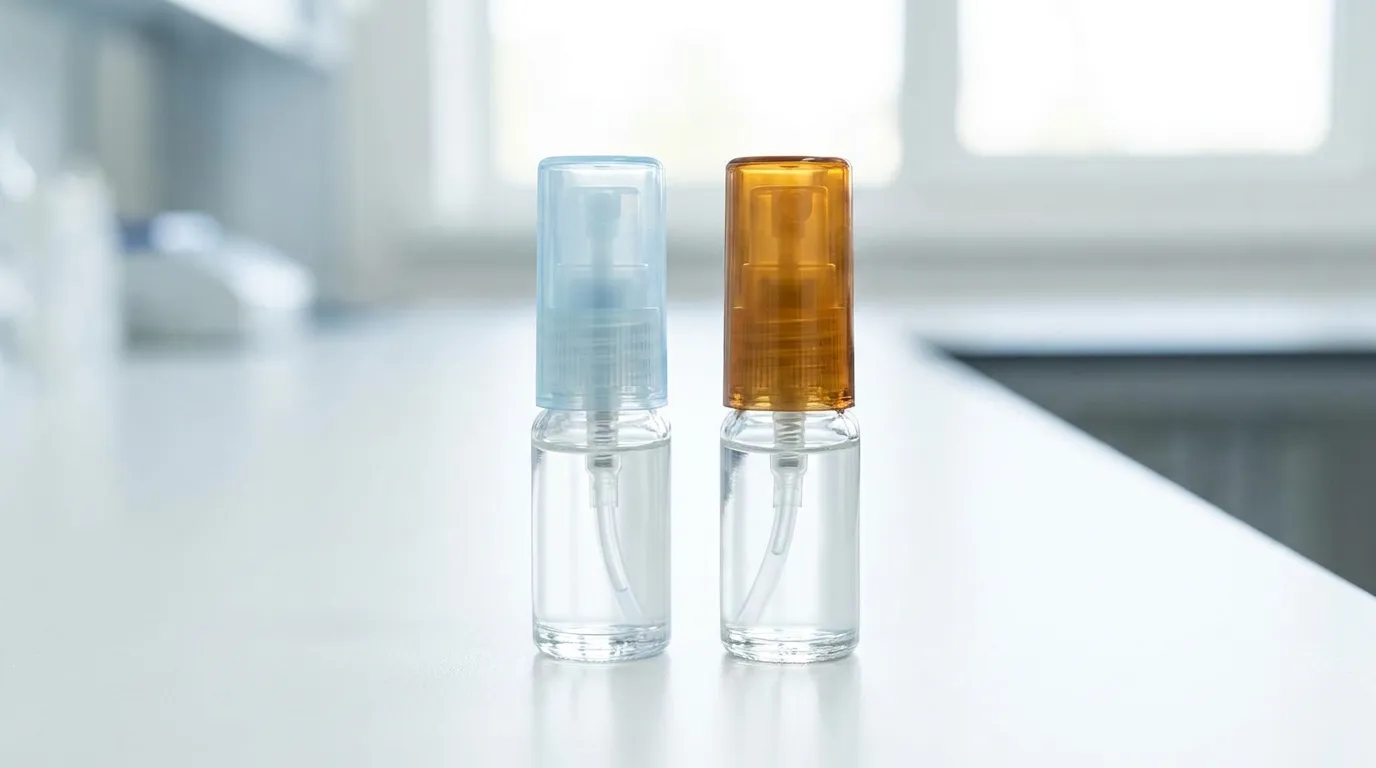
Before any table, here is the one mental model that decides most of this comparison. Semax pushes toward focus and drive; Selank pulls toward calm and steadiness. They sit at opposite ends of the same axis, which is why they complement each other instead of competing. Almost everything below is a footnote to this picture.
Semax vs Selank at a glance
Here is the side-by-side before we go deep. The single most important row is the first one: pick by the problem you are trying to solve. The rest are close, because these two are more alike in logistics (Russian heptapeptides, intranasal, similar cost, mild side effects) than they are in purpose.
| Dimension | Selank (calm) | Semax (focus) |
|---|---|---|
| Primary effect people want | Calm, anti-anxiety, stress resilience | Focus, cognition, drive, neuroprotection |
| Class / origin | Russian anxiolytic heptapeptide (tuftsin analog) | Russian nootropic heptapeptide (ACTH(4-10) analog) |
| Mechanism (studied) | GABA / serotonin modulation, enkephalinase inhibition | BDNF and NGF upregulation, monoamine modulation |
| Route (community-typical) | Intranasal (also injectable) | Intranasal (also injectable) |
| Regulatory status | Russia-registered anxiolytic; not FDA-approved | Russia-registered nootropic; not FDA-approved |
| Community cost / dose | ~$2.38 / dose | ~$1.90 / dose |
| Most-reported side effect | Mild nasal irritation (~10%) | Mild nasal irritation (~10%) |
The table is the headline. The one place the answer genuinely flips is the goal row, so most of the real decision is just naming whether you need a brake (Selank) or a gas pedal (Semax), or both.
What does the ProtocolPlus community actually do between the two?
This is the part no trial and no competitor page can give you: among users who log these two, do people pick one, or run both? The short version is that the headline here is not a switch war, it is a pairing. Because Semax and Selank do opposite things, the most common pattern is people keeping both on hand, and the small group who do switch split almost evenly in each direction. That is the opposite of a head-to-head where everyone migrates one way.
Three numbers carry the story, all from ProtocolPlus app data among the roughly 1,008 users tracking one of these two:
- Co-tracking is the headline: ~40% (about 403 users) log both. This is the highest co-tracking share we see in any peptide pair, and it is the whole point. Semax for focus and Selank for calm is treated as a complementary stack, not a coin flip. For many people "which one" is really "which one when."
- Adoption is nearly even: ~52% Semax (528), ~48% Selank (480). Semax is the marginally larger camp, but it is a near-split, not a landslide. Neither peptide dominates.
- Switching is balanced, net barely toward Selank. About 14% of Semax users (roughly 74) later moved to or added Selank, and about 14% of Selank users (roughly 67) moved the other way, a net of only about 7 users. When traffic runs both directions almost equally, that is a signal the two are not substitutes; people are tuning which they need, not finding one strictly better.
Why the switching is a wash (and what that tells you)
The reverse flows cancel out for a reason. People who start on Semax for focus sometimes add Selank because the focus push leaves them a little wired and they want the calm to balance it; people who start on Selank for anxiety sometimes add Semax once the edge is gone and they want drive back. Neither move is "this one was better." Each is someone reaching for the other end of the axis. That is also why the co-tracking number is so high: the natural endpoint of either journey is often holding both.
The focus case: what the Semax research shows
The one-sentence answer: Semax is the peptide to look at for focus, cognition, and neuroprotection, and its strongest human data is in ischemic-stroke recovery rather than healthy-brain productivity. Semax is a synthetic analog of the ACTH(4-10) fragment with a stabilized C-terminus, but unlike full ACTH it has no hormonal action and does not raise cortisol. Its headline mechanism is neurotrophic: it increases expression of brain-derived neurotrophic factor (BDNF) and nerve growth factor (NGF) in brain regions tied to learning and memory.
The clinical anchor is stroke. In Russian trials led by Gusev and Skvortsova, intranasal Semax added to standard care in acute ischemic stroke accelerated recovery of neurological function versus standard care alone, and a later multicenter trial of roughly 200 patients reported better 30-day outcomes (Gusev and Skvortsova, Zhurnal Nevrologii i Psikhiatrii, 1997 and 2001). Semax is registered in Russia for ischemic stroke, chronic cerebrovascular insufficiency, and optic-nerve conditions, and sold there as a 0.1% and 1% intranasal solution. The caveat that must travel with every one of those figures: these are small, often single-language trials, the populations are stroke patients rather than healthy nootropic users, and none of it has been replicated in the FDA-style randomized trials that approval would require.
For healthy-brain "focus" use, which is what most buyers actually want, the honest status is that the cognition data is thinner and more preliminary than the stroke data, and the community use case is an extrapolation from mechanism plus self-report, not a proven indication. That is the real ceiling on Semax: a plausible, mechanistically-grounded focus story with strong neuroprotection signals in sick brains, and limited hard data in well ones. For the full pharmacology and the dosing detail, see the Semax guide.
The calm case: what the Selank research shows
The one-sentence answer: Selank is the peptide to look at for anxiety, and its strongest human data is a generalized-anxiety-disorder trial where it performed comparably to a benzodiazepine without the sedation or dependence. Selank is a synthetic heptapeptide derived from tuftsin, a natural immune peptide, with a stabilizing Pro-Gly-Pro tail. Its studied mechanisms are anxiolytic: modulation of GABAergic tone, inhibition of enkephalin breakdown (raising endogenous anti-anxiety peptides), and effects on serotonin metabolism.
The clinical anchor is anxiety. In a Russian comparative trial in patients with generalized anxiety disorder and neurasthenia, Selank produced anxiolytic activity the authors described as comparable to the benzodiazepine medazepam on standard anxiety scales, with an added anti-asthenic (anti-fatigue) effect and, crucially, without the sedation, tolerance, or dependence that benzodiazepines carry (Zozulia, Neznamov et al., Zhurnal Nevrologii i Psikhiatrii, 2008). Selank is registered in Russia as an anxiolytic. The same caveat applies as for Semax, and arguably harder: the evidence base is small, largely Russian-language, and unreplicated in Western randomized trials, so "benzodiazepine-comparable" should be read as a finding from limited data, not a settled equivalence. For the full mechanism and dosing, see the Selank guide.
The practical contrast is clean. Semax is built to push a system; Selank is built to settle one. If you are anxious and reach for Semax, you may feel more wired, not better; if you are flat and reach for Selank, you may feel calm but not sharper. Matching the peptide to the actual complaint matters more here than with most comparisons, because the two effects point in opposite directions.
Can you stack Semax and Selank? (the real reason this comparison exists)
The one-sentence answer: stacking them is the single most common pattern in our data, typically Semax in the morning for focus and Selank later for calm, but "common in the community" is not the same as "validated," and there are no controlled trials of the combination. The logic is intuitive: the two act on different systems toward opposite ends of the focus-calm axis, so people use them to get drive without the jitter and calm without the fog. The roughly 40% co-tracking figure above is this idea playing out at scale.
That said, the honest framing is that combining two unapproved research peptides multiplies the unknowns rather than canceling them. You inherit both purity-and-sourcing risks at once, any interaction is uncharacterized, and self-reported "it balances me out" is exactly the kind of claim that is easy to feel and hard to verify. Most people who stack separate the timing (focus peptide early, calm peptide later) rather than co-dosing, but none of that is a protocol you should assemble from a comparison page. If the combination interests you, treat it as an experiment to discuss with a clinician, not a recommendation. We keep the detailed tolerability of each on its own page: Semax side effects and Selank side effects.
Tolerability: both mild, and very close
The one-sentence answer: both are generally well tolerated in reports, dominated by mild local effects, so tolerability rarely decides this matchup. Because both are usually intranasal, the most common complaint for each is mild nasal irritation, at roughly the same rate.
In our community reports the issues line up closely: nasal irritation (Selank ~10% vs Semax ~10%), occasional injection-site reactions for those who inject (~7% vs ~6%), mild fatigue (~6% vs ~4%), headache (~5% vs ~6%), and dizziness (~4% vs ~3%). These are self-reported community frequencies, not trial incidence and not proof of cause, and they are low across the board. The small directional hints fit the mechanisms: Selank, the calming one, edges slightly higher on fatigue, while Semax, the activating one, edges slightly higher on headache. The differences are tiny. Neither peptide is the clearly gentler choice, and the bigger unknown for both is not these mild effects but the absence of long-term safety data outside the Russian clinical setting.
Cost and access: nearly identical, both grey-market
The one-sentence answer: cost is close to a wash, and the bigger issue for both is not price but legality and sourcing. In ProtocolPlus cost figures both peptides run about $30 to $65 per vial; per dose Semax works out marginally cheaper (about $1.90 vs $2.38) only because a vial tends to stretch to a few more doses. That gap is small enough to ignore as a deciding factor.
What actually matters on access is the regulatory reality. Neither Semax nor Selank is FDA-approved. They are legitimate registered medicines in Russia but, in the US and most Western markets, they are sold only as "research chemicals," outside the prescription system, with no guarantee of purity, dose accuracy, or sterility. That uncertainty applies equally to both and dwarfs the cents-per-dose difference. We do not quote vendor prices here because they shift constantly; treat the per-dose community figures as a directional signal, not a quote, and treat the legal and purity caveats as the real cost.
Speed and onset: both are subtle, not switches
The one-sentence answer: neither is a dramatic on-off switch, and expectations should be modest for both. Users commonly describe Semax as a same-day-to-few-days lift in focus and drive, and Selank as a same-day-to-few-days easing of anxiety, but effects are typically subtle rather than overwhelming, and self-report at this evidence level is easy to confound with expectation. Because both are short peptides cleared quickly, any effect is tied to recent dosing rather than a slow build, which is part of why people use them situationally (Semax before demanding cognitive work, Selank during stressful stretches). The honest expectation for either is a nudge you have to pay attention to notice, not a transformation.
The editorial scorecard (the "why," not the verdict)
The fit-score radar below rates each peptide 1 to 5 on six dimensions. With equal weighting the two tie exactly (60 vs 60): they match on evidence, effectiveness, safety, accessibility, speed, and cost, which is the honest summary for two peptides this similar in everything except purpose. That tie is the point. The radar cannot capture the only dimension that actually decides your choice, which is your goal, so the community usage data above, not this chart, is the real signal.
Choose Selank if... / Choose Semax if...
The decision rarely needs a coin flip; it needs you to name the problem. These two cards cover the great majority of cases.
Choose Selank if:
- Your main goal is calm: anxiety, a racing mind, stress reactivity, or tension that disrupts sleep.
- You want an anxiolytic effect that, in Russian trials, looked benzodiazepine-comparable without sedation or dependence.
- You tend to feel over-stimulated, wired, or more anxious on focus-pushing nootropics.
- You want the calming half of the common Semax-plus-Selank focus-and-calm stack.
Choose Semax if:
- Your main goal is focus: concentration, mental drive, task engagement, or memory.
- You are drawn to the neuroprotection and cognition angle (BDNF and NGF, studied in stroke recovery).
- You already feel calm and want a push, not a brake.
- You want the focus half of the stack, often dosed in the morning.
The honest verdict
For most people the question answers itself once you name the goal: Selank if the problem is anxiety, Semax if the problem is focus. They are not competitors so much as two halves of the same toolkit, which is exactly why the community treats them as a pair, co-tracks both at the highest rate we see, and switches between them in roughly equal numbers. There is no "winner" here in the way there is when one drug simply out-performs another; there is a calm peptide and a focus peptide, and the right one is whichever effect you are missing. The overriding caveat sits above both: this is thin, mostly Russian, unreplicated evidence for two compounds that are not FDA-approved and are sold as unregulated research chemicals in the West, so treat any use as experimental and run it past a clinician.
To make it concrete, here is how the decision usually lands by situation:
- Mainly anxious, stressed, or wired: Selank.
- Mainly unfocused, flat, or wanting cognitive drive: Semax.
- Both at once (focus by day, calm when needed): the stack, typically Semax earlier and Selank later, which is the community's most common pattern.
- Sensitive to stimulants / over-stimulation: Selank.
- Recovering cognition / drawn to the neuroprotection data: Semax.
- Worried about legality and purity: the same caution applies to both; neither is FDA-approved.
For the deep science and dosing on each, see the Semax guide and the Selank guide; for tolerability, see Semax side effects and Selank side effects.
Frequently Asked Questions
Sources
- Zozulia AA, Neznamov GG, Siuniakov TS, et al. "Efficacy and possible mechanisms of action of a new peptide anxiolytic selank in the therapy of generalized anxiety disorders and neurasthenia." Zhurnal Nevrologii i Psikhiatrii imeni S.S. Korsakova, 2008;108(4):38-48. PMID 18454096. Retrieved 2026-06-18. https://pubmed.ncbi.nlm.nih.gov/18454096/
- Gusev EI, Skvortsova VI, et al. "The efficacy of semax in the treatment of patients at different stages of ischemic stroke." Zhurnal Nevrologii i Psikhiatrii imeni S.S. Korsakova. Retrieved 2026-06-18. https://pubmed.ncbi.nlm.nih.gov/29798983/
- Shadrina M, Kolomin T, Agapova T, et al. "Semax and Pro-Gly-Pro activate the transcription of neurotrophins and their receptor genes after cerebral ischemia." Cellular and Molecular Neurobiology / PMC, 2017. Retrieved 2026-06-18. https://pmc.ncbi.nlm.nih.gov/articles/PMC11498467/
- Medvedev VE, et al. "Selank (tuftsin-derived anxiolytic): mechanism and clinical evidence" (review of GABA/enkephalin modulation and anxiolytic action). Retrieved 2026-06-18. https://www.researchgate.net/publication/299052506_Efficacy_and_possible_mechanisms_of_action_of_a_new_peptide_anxiolytic_selank_in_the_therapy_of_generalized_anxiety_disorders_and_neurasthenia
- U.S. Food & Drug Administration. "Information for consumers on using dietary supplements / unapproved drugs" (regulatory status context: Semax and Selank are not FDA-approved). Retrieved 2026-06-18. https://www.fda.gov/drugs/development-approval-process-drugs
- ProtocolPlus. "Community head-to-head data: Semax vs Selank" (head-to-head/selank__semax.json). First-party app data, 2026. n ~ 1,008 users tracking one of the two; about 40% (403) co-track both. Usage and switching signal, not a clinical efficacy verdict.