
CJC-1295 Side Effects: The GH-Axis Cluster, the Blood-Sugar Caution & What 500 Users Report (2026)
CJC-1295's side effects are best understood as one cluster, not a random list: because it drives your own growth hormone and IGF-1 up, the same axis that puts it among the most-tracked peptides for muscle growth, the things people notice are the classic growth-hormone-axis effects — fluid retention, carpal-tunnel-like tingling, joint aches, and a rise in blood sugar — plus a CJC-notable post-injection flushing or "head rush." This page answers the real tolerability question two ways at once: what 500 ProtocolPlus users report from real use, held honestly against the bigger fact that CJC-1295 has no human safety trials and therefore no validated incidence for any of it.
Most "CJC-1295 side effects" pages give you a flat symptom list with no mechanism and no real numbers. We do it differently. The headline below is first-party community data — what 500 ProtocolPlus users who tracked CJC-1295 tolerability actually report — and we keep two things beside it: the growth-hormone-axis framing that explains why these effects travel together, and the single caution we flag harder than its frequency suggests, the metabolic one (raised blood sugar / insulin resistance). For the molecule itself (what it is, how the GHRH mechanism works, DAC vs no-DAC, dosing), this page links up to the CJC-1295 complete guide so it stays a clean safety-and-tolerability hub.
Key Takeaways
- These are growth-hormone-axis side effects. CJC-1295 is a long-acting GHRH analog: it makes your pituitary release more growth hormone, which raises IGF-1. Almost everything on this page — water retention, carpal-tunnel-like tingling, joint aches, raised blood sugar — is the same cluster seen with growth-hormone excess, which is why they tend to appear together and respond to lowering the dose.
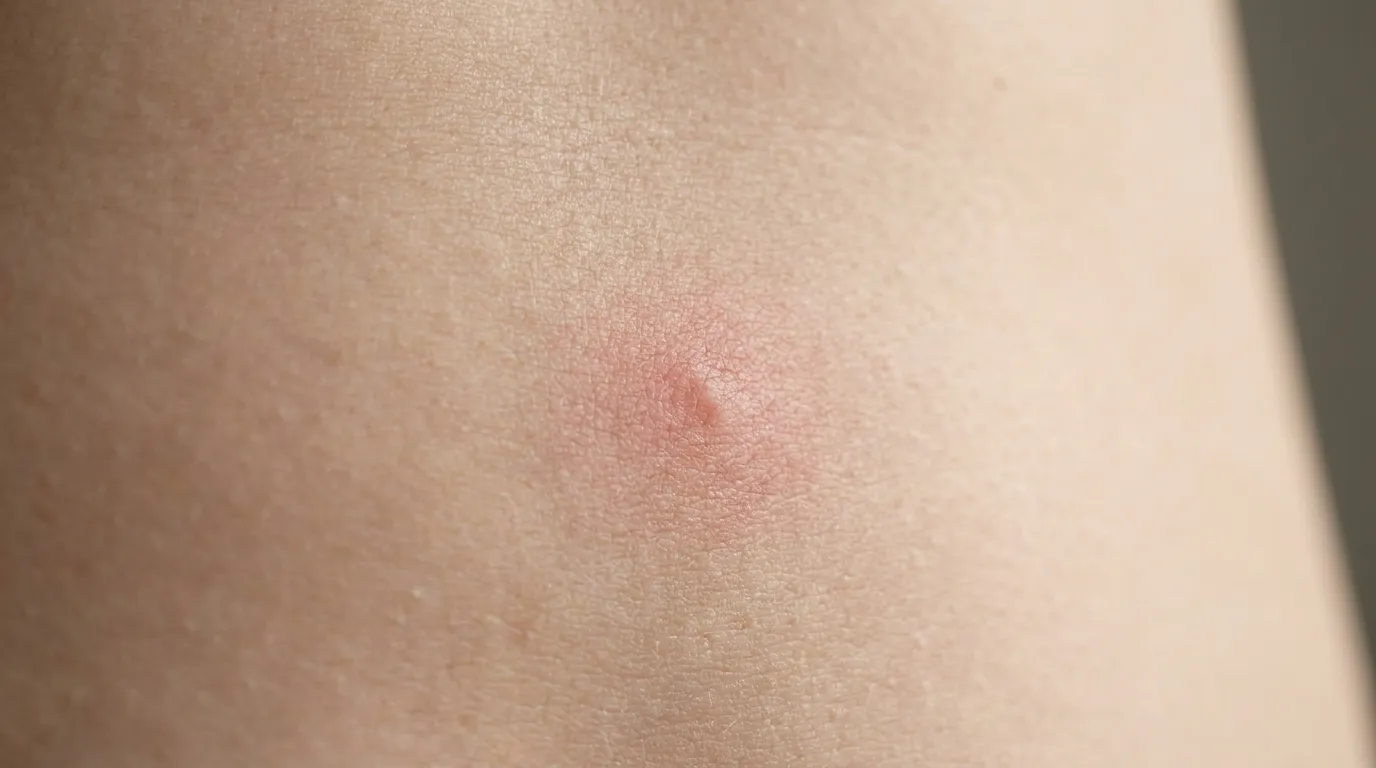
- What our users report (N=500): the most-reported effect is a mild injection-site reaction (16%, 80 users), then water retention (14%, 70, moderate), flushing / head-rush (12%, 60), and numbness / tingling (12%, 60, moderate). Most of what's reported is mild-to-moderate and short-lived.
- The post-injection flushing / "head rush" is the CJC-notable one. A warm, flushed, light-headed feeling shortly after injecting comes from transient vasodilation. It's usually brief and benign, but it's distinctive enough that people often ask about it specifically.
- The one to watch is blood sugar, not because it's common but because it's metabolic. Only 5% (25 users) reported raised blood sugar, but growth hormone lowers insulin sensitivity, so we flag this harder than its frequency: anyone with prediabetes, diabetes, or metabolic risk should treat glucose as the effect to monitor, not the rare one to ignore.
- No validated incidence exists, and DAC matters. CJC-1295 has no completed human safety trials, so these are self-reported community figures, not validated rates. The longer-acting DAC version keeps GH elevated for days rather than in short pulses, which can plausibly amplify the fluid-retention effects versus the short-acting no-DAC (Mod GRF 1-29).

What are the most common CJC-1295 side effects?
Across 500 ProtocolPlus users who tracked CJC-1295 tolerability, the most-reported effects are an injection-site reaction (16%), water retention (14%), flushing or head-rush (12%), and numbness/tingling (12%) — almost all mild-to-moderate, and most of them are the signature of a raised growth-hormone axis. This is a community-report ranking from our own app data, not a validated incidence table, because no such table exists for CJC-1295.
The pattern is exactly what the mechanism predicts. CJC-1295 is a GHRH (growth-hormone-releasing hormone) analog, so it pushes your own growth hormone and IGF-1 up — and growth-hormone excess characteristically causes fluid retention, with the downstream tingling and joint aches that come with it. After the top cluster, reports tail off into milder, less specific effects: fatigue or lethargy (10%, 50 users), headache (10%, 50), increased hunger (8%, 40), joint aches (7%, 35), dizziness (6%, 30), vivid dreams (5%, 25), raised blood sugar (5%, 25), and anecdotal heart palpitations (4%, 20). In our dataset, eight of the twelve reported effects were tagged mild and four moderate; none were severe.
These shares come only from our community-reported dataset and describe what people experience and log, not trial-grade incidence and not causation. A mild-to-moderate list from a self-selected group is consistent with the peptide being reasonably tolerated — but it is equally consistent with under-reporting, short follow-up, and a healthy-user effect. The deep mechanism and the DAC-vs-no-DAC distinction live on the hub; for the molecule itself see the CJC-1295 complete guide.
Citation capsule. Among 500 ProtocolPlus users who tracked CJC-1295 tolerability, the most-reported effects were an injection-site reaction (16%, 80 users), water retention (14%, 70), flushing/head-rush (12%, 60), and numbness/tingling (12%, 60); raised blood sugar was reported by 5% (25). Every reported effect was mild or moderate; none severe. This is first-party data reflecting what the community reports — self-reported, not validated trial incidence, and not proof of causation. CJC-1295 has no completed human safety trials. Source: ProtocolPlus app data (side-effects/cjc-1295.json), 2026.
What don't we know — and why is blood sugar the one to flag?
The honest answer is that CJC-1295's safety picture is mostly unmeasured: there are no completed human safety trials, no validated incidence, and no long-term human data — so the most important "side effects" are the ones we cannot yet quantify, and the metabolic one (raised blood sugar / insulin resistance) deserves more weight than its low report rate suggests. This is the part most pages skip, and it is the part that actually matters.
For an approved drug you can open the label and read a validated, placebo-controlled adverse-event table. CJC-1295 has nothing like that — its development was discontinued after early-phase trials, so there is no incidence profile at all. Instead of a list of documented severe reactions, the right block for CJC-1295 is a list of mechanism-plausible concerns and known unknowns, with the metabolic one moved to the front because of what it is, not how often it was logged.
Raised blood sugar / insulin resistance
The gap: growth hormone directly lowers insulin sensitivity, so elevating it can raise fasting glucose. This is a documented effect of GH excess, but it has never been quantified for CJC-1295 in a trial.
Why it matters: it is metabolic, not just uncomfortable. Anyone with prediabetes, diabetes, or metabolic risk should monitor glucose, not dismiss a 5% rate.
Theoretical GH-excess / IGF-1 concerns
The gap: sustained high IGF-1 is the same signal seen in acromegaly, and IGF-1 is a growth factor, so chronic elevation raises theoretical concerns about tissue overgrowth and, in principle, tumor promotion.
Why it matters: it is a mechanism-level caution, not a proven human harm — but it is exactly why open-ended use is the wrong default.
Product quality, not the peptide
The gap: unregulated "research use only" vials can carry endotoxins, the wrong peptide, residual solvents, or mislabeled doses; at-home reconstitution adds infection risk.
Why it matters: the documented real-world harms cluster here, not in the molecule's pharmacology.
None of the above is a documented severe event reported by our community — these are open questions and mechanism-plausible concerns, framed honestly. If you develop signs of injection-site infection (spreading redness, warmth, pus, fever), persistent numbness, or any severe symptom, stop and see a clinician — that is true for any injectable.
Citation capsule. CJC-1295 has no completed human safety trials and its development was discontinued, so no validated incidence exists. The reported effects map onto the documented growth-hormone-excess cluster — fluid retention with peripheral edema, arthralgia, carpal tunnel syndrome and paresthesias, and worsening glucose tolerance — which respond to dose reduction. The blood-sugar effect is mechanistically grounded (growth hormone reduces insulin sensitivity), which is why it is flagged more heavily than its self-reported frequency. Source: Reed, Merriam & Kargi, "Adult Growth Hormone Deficiency — Benefits, Side Effects, and Risks of Growth Hormone Replacement," Frontiers in Endocrinology, 2013.
What do the reported CJC-1295 side effects feel like, and how does the community handle them?
The reported effects are mostly mild-to-moderate and cluster into a GH-axis pattern: a puffy fluid-retention feeling (often with tingling and joint aches), a distinctive warm flushing right after injecting, and a small but important glucose signal. Below is each commonly reported effect: what it feels like, when it tends to show up, and how the community tends to handle it. These are descriptions of common practice, not a prescription — dose decisions belong with a clinician, and for how cycles and the DAC-vs-no-DAC choice are typically structured the CJC-1295 / Ipamorelin dosage calculator lays out the reported ranges.
Water retention (14%, 70 users)
The signature growth-hormone effect, and the most-reported moderate one. People describe puffiness — slightly swollen fingers, a fuller face, a "soft" look, sometimes mild ankle swelling or a couple of pounds on the scale that aren't fat. It is fluid, not tissue, and it is the same edema seen with growth-hormone therapy. Community practice is to treat it as a dose signal: it tends to track with higher doses and with the longer-acting DAC version, so people lower the dose, watch sodium and hydration, and give it time — fluid retention from GH usually eases when the dose comes down. This is also the effect most likely to be amplified by DAC, covered below.
Numbness and tingling (12%, 60 users)
Tagged moderate, and mechanistically linked to the water retention above rather than being a separate problem. When fluid accumulates, it can compress nerves — most classically the median nerve at the wrist, producing carpal-tunnel-like tingling, numbness, or pins-and-needles in the hands. It is one of the textbook signs of growth-hormone excess. Because it is downstream of fluid retention, the community handles it the same way: it usually improves when the dose is reduced and the puffiness settles. Persistent or worsening numbness, though, is a reason to stop and check with a clinician rather than push through.
Flushing and head-rush (12%, 60 users)
The CJC-notable one, and the effect people most often ask about by name. Shortly after injecting, some users feel a wave of warmth, a flushed face, and a brief light-headed "head rush." It comes from transient vasodilation — blood vessels widening for a short window — and it is typically brief and benign, fading within minutes. Community practice is unremarkable: inject while seated, give it a few minutes before standing or driving, and stay hydrated. It is distinctive enough to be alarming the first time, but on its own it is usually the least concerning effect on the list.
Raised blood sugar (5%, 25 users) — the one we flag hardest
Only 5% reported it, but this is the effect we weight above its frequency, because it is metabolic. Growth hormone is a counter-regulatory hormone: it lowers insulin sensitivity, so raising it can nudge fasting glucose up. For a metabolically healthy person this is often minor and reversible; for someone with prediabetes, type 2 diabetes, or significant metabolic risk, it is the effect that actually matters. Community practice for anyone in that group is to monitor glucose (a fasting reading or a CGM), not to assume a low report rate means low personal risk — and to involve a clinician before starting, not after a number drifts.
The milder tail (fatigue, headache, hunger, joint aches, dizziness, vivid dreams, palpitations)
Fatigue/lethargy (10%) and headache (10%) are common, non-specific, and usually early. Increased hunger (8%) tracks with the GH/IGF-1 axis. Joint aches (7%) belong to the same fluid-retention cluster as the tingling. Dizziness (6%) often overlaps with the post-injection flushing. Vivid dreams (5%) are frequently reported with GH-axis peptides and are generally harmless. Heart palpitations (4%) are tagged moderate and anecdotal — we flag them only because anything cardiovascular deserves a lower threshold for stopping and getting checked, especially with a compound that has no validated safety data.
When do effects start and ease, and how does DAC change it? (the time-course)
The pattern most people describe is dose-linked rather than calendar-linked: the fluid-retention cluster builds as the dose goes up and eases when it comes down. The big variable is DAC vs no-DAC. The no-DAC version (Modified GRF 1-29, or Mod GRF 1-29) is short-acting — it produces a brief GH pulse and clears in roughly half an hour, more like the body's natural rhythm. The DAC version is bound to albumin and has a half-life measured in days (estimated ~5.8 to 8.1 days in the original pharmacokinetic study), so it keeps growth hormone and IGF-1 elevated continuously for days rather than in short pulses. That sustained elevation is mechanistically why the DAC version can amplify the fluid-retention effects — water retention, tingling, joint aches — compared with the pulsatile no-DAC. People who run into puffiness on DAC often report it settles when they switch to no-DAC or lower the frequency. This is community pattern, not a validated protocol.
Our take: The single most useful lens with CJC-1295 is "is this the GH axis talking?" Water retention, tingling, joint aches and a higher glucose reading aren't four random problems — they're one cluster that says the growth-hormone signal is high, and the lever for all of them is the dose (and DAC vs no-DAC). Go slow, treat the fluid-retention cluster as a dose signal, monitor glucose if you're metabolically at-risk, and treat anything cardiovascular or any persistent numbness as a stop-and-check signal.
How does our community report compare to the "official" rates?
There is no validated incidence table to compare against — CJC-1295's development was discontinued and it has never completed a human safety trial — so the honest comparison is "community self-report vs the documented growth-hormone-excess literature," not "community vs trial." This is the most important framing on the page: the reassurance and the concern both come from mechanism and analogy, not from a CJC-1295 adverse-event table that simply does not exist.
What we can do is sanity-check our community pattern against two solid anchors. First, the growth-hormone-excess literature: in adults treated with growth hormone, the most common side effects come from fluid retention — peripheral edema, arthralgia, carpal tunnel syndrome, paresthesias, and worsening glucose tolerance — reported in roughly 15-44% of participants at higher doses and responding to dose reduction. That is precisely the cluster our users report (water retention 14%, tingling 12%, joint aches 7%, raised blood sugar 5%), which is reassuring for coherence even though it says nothing about exact rates. Second, the single CJC-1295 pharmacokinetic study (Teichman 2006) reported no serious adverse reactions in healthy adults, but it was small, short, and built to measure hormone levels, not to establish a safety profile. Stacking the evidence honestly:
| Evidence source | What it tells us about side effects | Strength for human safety |
|---|---|---|
| ProtocolPlus community (N=500) | What users report: the GH-axis cluster (water retention, tingling, flushing, glucose) + a mild tail; no severe events logged | Weak — self-reported, self-selected, short follow-up, no causation |
| CJC-1295 PK study (Teichman 2006) | No serious adverse reactions in healthy adults | Weak — tiny, short, designed to measure hormones not safety |
| Growth-hormone-excess literature | Fluid-retention cluster (edema, arthralgia, CTS, paresthesia) + glucose intolerance, dose-related | Moderate by analogy; not a CJC-1295 incidence rate |
| Long-term human safety trial for CJC-1295 | — | Does not exist (development discontinued) |
| Validated incidence table (like an FDA label) | — | Does not exist |
The takeaway is not "CJC-1295 is dangerous." It is that the confident-sounding side-effect lists you'll see elsewhere are built on mechanism and analogy, not on the kind of evidence that lets anyone state a real human side-effect rate. Our 16% injection-site figure, and every figure on this page, is a report signal, not an incidence.
Why does CJC-1295 cause these side effects?
Almost every CJC-1295 side effect traces to one cause: as a GHRH analog it raises your own growth hormone and IGF-1, and growth-hormone excess characteristically causes fluid retention (with downstream tingling and joint aches), reduced insulin sensitivity, and — via vasodilation around dosing — flushing. That single mechanism is why the effects travel together and why dose is the main lever. The deep receptor-level science and the DAC chemistry live on the hub; this is the short version that explains the pattern above.
The distinct pieces are worth separating. The fluid-retention cluster (water retention → nerve compression → carpal-tunnel-like tingling, plus arthralgia) is the most characteristic GH effect and the one DAC can amplify by keeping GH elevated for days. The glucose effect is separate and more important than its frequency: growth hormone is counter-regulatory to insulin, so sustained elevation can raise blood sugar — the metabolic caution we flag hardest. The flushing/head-rush is a short-lived vasodilatory response around the injection, not a GH-cluster effect. And the theoretical IGF-1 concerns (tissue overgrowth, tumor-promotion hypotheses) follow from chronically elevated IGF-1 being the same signal seen in acromegaly — a mechanism-level caution, not a documented human harm. For the full GHRH science, DAC vs no-DAC, and dosing, see the CJC-1295 complete guide.
Citation capsule. CJC-1295 is a long-acting GHRH analog whose DAC (drug affinity complex) binds albumin to extend its half-life to an estimated 5.8-8.1 days, sustaining growth-hormone and IGF-1 elevation for days rather than in pulses. Growth-hormone excess characteristically causes fluid retention (edema, carpal tunnel syndrome, paresthesias, arthralgia) and reduced insulin sensitivity, which is the cluster our community reports. Sustained DAC exposure is the mechanistic reason fluid-retention effects can be amplified versus the short-acting no-DAC (Mod GRF 1-29). Source: Teichman et al., Journal of Clinical Endocrinology & Metabolism, 2006; Reed, Merriam & Kargi, Frontiers in Endocrinology, 2013.
Is CJC-1295 legal and FDA-approved? (and what about the 2006 trial death?)
CJC-1295 is not FDA-approved for any use, its human development was discontinued, it is sold only "for research use only," and it is banned in sport under the WADA Prohibited List (class S2, peptide hormones and growth factors). This status is safety-relevant: there is no approved label precisely because the human safety questions were never resolved.
Two facts deserve careful, accurate framing. First, the 2006 trial halt: a Phase II study of CJC-1295 (the DAC version) for HIV-associated fat changes was halted in July 2006 after a participant at an Argentina site died. The attending physician judged the most likely cause to be asymptomatic coronary artery disease — that is, the death was assessed as unrelated to CJC-1295 — and the sponsor discontinued development as a precaution. It is important not to over-read this: it is not evidence that CJC-1295 killed someone, but it is part of why the compound never advanced to approval and why no long-term safety data exists. Second, the WADA status: CJC-1295 is prohibited at all times under class S2 (growth-hormone-releasing factors), so it is banned for tested athletes and would cause a positive test. For the full legal and development history, the CJC-1295 complete guide keeps the up-to-date detail.
Citation capsule. CJC-1295 is an unapproved drug, not FDA-approved for any condition, sold "for research use only"; its clinical development was discontinued after early-phase trials. A Phase II lipodystrophy study was halted in July 2006 following a participant death that the attending physician judged most likely due to asymptomatic coronary artery disease and unrelated to the drug. CJC-1295 is on the WADA Prohibited List under class S2 (peptide hormones, growth factors). Source: aidsmap (NAM), 2006; World Anti-Doping Agency 2026 Prohibited List (class S2); BSCG, 2026.
Who should be especially cautious with CJC-1295?
Because CJC-1295 has no validated human safety data, the cautious default is "not without a clinician" — and the caution is sharper for anyone with diabetes, prediabetes, or metabolic risk (the insulin-sensitivity effect), anyone with a cancer history (the theoretical IGF-1 concern), anyone pregnant or trying to conceive, and tested athletes. These are not label-established contraindications, because no label exists; they follow from the mechanism and the missing data.
A few practical lines follow. If your blood sugar is already a concern, the glucose effect is the one that turns a tolerability question into a metabolic one — monitor it and involve a clinician before starting. If you have a personal or family cancer history, the theoretical IGF-1 / growth-factor concern is worth raising with an oncologist, not because harm is proven but because the uncertainty cuts the wrong way. Pregnancy and fertility are unstudied, so "avoid" is the conservative call. And because the research-grade ("for research use only") product is unregulated, product quality is its own caution on top of the molecule — for how to think about sourcing and third-party testing, see how to vet peptide quality. None of this page replaces a clinician conversation; with an investigational compound that conversation matters more, not less.
Frequently Asked Questions
The bottom line
If you came here asking what CJC-1295 side effects look like, the honest answer has two layers to hold at once. The first is a clear pattern: because CJC-1295 raises your own growth hormone, the effects people report are the growth-hormone-axis cluster — water retention (14%), carpal-tunnel-like tingling (12%), joint aches (7%) — plus a distinctive post-injection flushing (12%) and a small but important glucose signal (5%). In our community of 500 users, everything reported was mild-to-moderate, with no severe events, and the cluster maps cleanly onto the documented growth-hormone-excess literature.
The second layer is the one most pages bury, so we won't: that coherence is not the same as proven safety. CJC-1295 has no completed human safety trials, its development was discontinued, and there is no validated side-effect rate at all. The metabolic effect — raised blood sugar from reduced insulin sensitivity — is the one we flag above its frequency, the DAC version can amplify the fluid-retention cluster by keeping growth hormone elevated for days, and the most concrete real-world risk is often the unregulated product itself. Use that framing to make a clear-eyed decision with a clinician, monitor glucose if you are metabolically at-risk, and treat anything cardiovascular or any persistent numbness as a stop signal. From here, the natural next reads are the CJC-1295 complete guide for the molecule, the GHRH mechanism, and the full DAC vs no-DAC picture, the CJC-1295 / Ipamorelin dosage calculator for how cycles are structured, and how to vet peptide quality for sourcing.
Sources
- Teichman SL, Neale A, Lawrence B, Gagnon C, Castaigne JP, Frohman LA. "Prolonged stimulation of growth hormone (GH) and insulin-like growth factor I secretion by CJC-1295, a long-acting analog of GH-releasing hormone, in healthy adults." Journal of Clinical Endocrinology & Metabolism, 2006;91(3):799-805. PMID: 16352683. Retrieved 2026-06-18. https://pubmed.ncbi.nlm.nih.gov/16352683/
- Reed ML, Merriam GR, Kargi AY. "Adult Growth Hormone Deficiency — Benefits, Side Effects, and Risks of Growth Hormone Replacement." Frontiers in Endocrinology (Lausanne), 2013;4:64. PMCID: PMC3671347. Retrieved 2026-06-18. https://pmc.ncbi.nlm.nih.gov/articles/PMC3671347/
- Melmed S, et al. "Growth Hormone and Aging." Endotext (NCBI Bookshelf), NBK279163. Retrieved 2026-06-18. https://www.ncbi.nlm.nih.gov/books/NBK279163/
- Bernard EJ. "Lipodystrophy study halted after patient death." aidsmap (NAM), 2006-07-31. Retrieved 2026-06-18. https://www.aidsmap.com/news/jul-2006/lipodystrophy-study-halted-after-patient-death
- World Anti-Doping Agency. "The 2026 Prohibited List, International Standard" (class S2, Peptide Hormones, Growth Factors, Related Substances and Mimetics — Growth Hormone Releasing Factors). Effective 2026-01-01. Retrieved 2026-06-18. https://www.wada-ama.org/sites/default/files/2025-09/2026list_en_final_clean_september_2025.pdf
- Banned Substances Control Group (BSCG). "CJC-1295 Use in Sports and Military Rules Explained." 2026-02-23. Retrieved 2026-06-18. https://www.bscg.org/blogs/single/cjc-1295-use-in-sports-and-military-rules-explained
- ProtocolPlus. "Community-reported tolerability data: CJC-1295" (side-effects/cjc-1295.json). First-party app data, 2026. N = 500 users who tracked CJC-1295 tolerability. Self-reported community frequency, not validated incidence and not proof of causation.