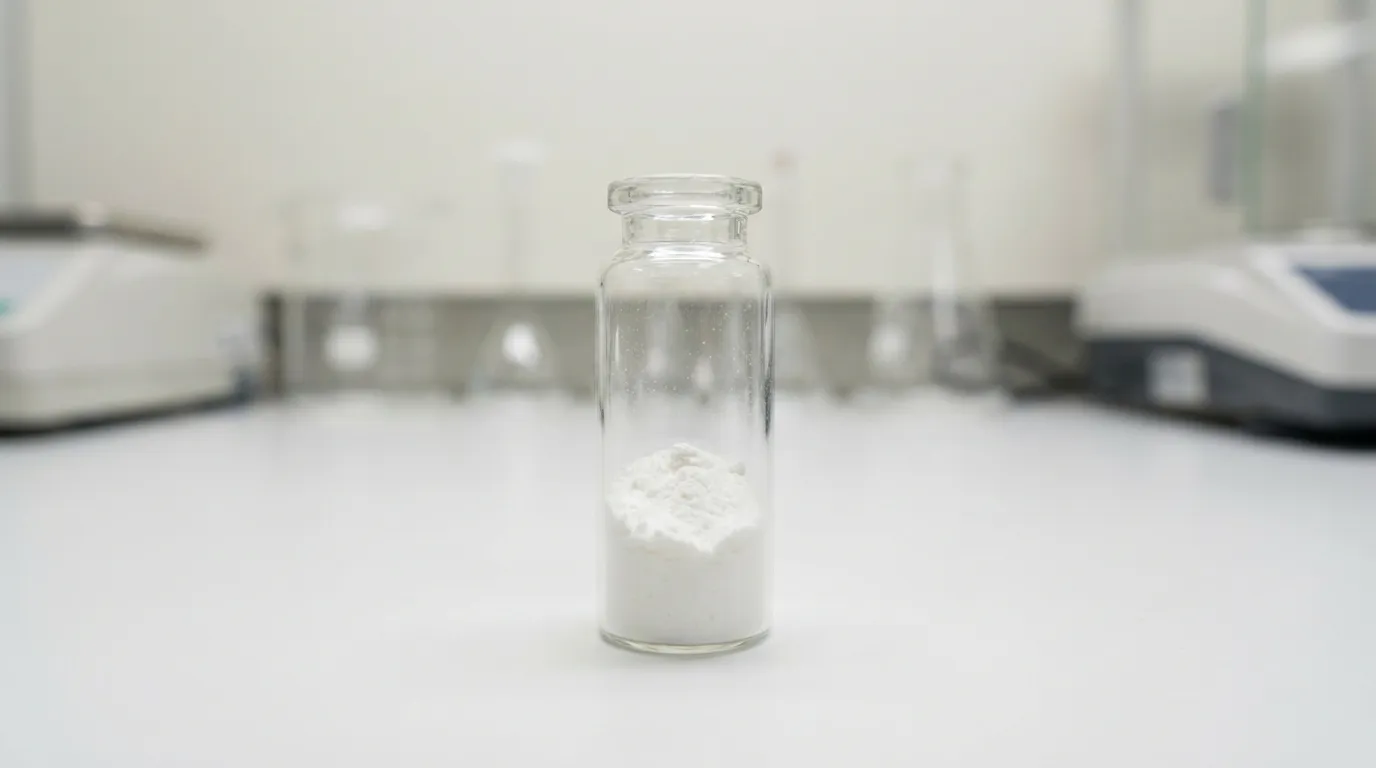
CJC-1295: The Complete Guide to the Long-Acting GHRH Peptide (2026)
CJC-1295 is a synthetic 30-amino-acid analog of growth hormone-releasing hormone (GHRH) designed to make your own pituitary gland release more growth hormone over a longer window than the natural hormone can. Its signature trick is a "Drug Affinity Complex" (DAC) that grabs onto a blood protein and stretches its half-life from minutes to days, which is why one injection can keep growth hormone and IGF-1 elevated for over a week. The catch: its human development was halted after early trials, it is not approved anywhere, and it is sold only as a research chemical.
If you have seen CJC-1295 paired with Ipamorelin in a "GH stack," or argued over whether you want the "DAC" or "no-DAC" version, this guide is the high-level map of the whole compound. We cover what it actually is, how the GHRH mechanism works, the all-important DAC vs no-DAC (Mod GRF 1-29) distinction, what it is studied for, the dosing ranges people report, side effects, realistic results, the honest safety picture, and its research-only legal status. Each section is a clear overview; the deep-dive topics (a full dosing chart, the side-effect deep dive, the Ipamorelin stack protocol, the Sermorelin comparison) point to dedicated guides so this page stays a clean hub.
Key Takeaways
- CJC-1295 is a synthetic 30-amino-acid GHRH analog (a growth hormone secretagogue) that stimulates the pituitary to release more growth hormone, which raises IGF-1 (Wikipedia, "CJC-1295", retrieved 2026-06-15).
- The "DAC" is the defining feature. A Drug Affinity Complex at position 30 binds the peptide to circulating albumin, extending its half-life to an estimated 5.8 to 8.1 days, so growth hormone stays elevated for 6+ days after a single injection (Teichman et al., J Clin Endocrinol Metab, 2006, retrieved 2026-06-15).
- "DAC" vs "no-DAC" are practically two different drugs. The no-DAC version, properly called Modified GRF (1-29) or Mod GRF 1-29, lacks the albumin tether and lasts only ~30 minutes, so it is dosed in short daily pulses; the DAC version is dosed roughly weekly (Wikipedia, "CJC-1295", retrieved 2026-06-15).
- Reported doses cluster around 100-300 mcg per dose for no-DAC (often 1-2x daily) and ~1-2 mg weekly for the DAC version. These are community/research figures, not validated dosing. The full ladder is a future dosing chart spoke.
- It is not FDA-approved and was discontinued. CJC-1295 reached Phase II for growth hormone deficiency and lipodystrophy but development stopped after the death of a trial subject (judged unrelated to the drug by the attending physician); the FDA declined to add it to the substances compounding pharmacies may use (Wikipedia, "CJC-1295", retrieved 2026-06-15).
- It is banned in sport. CJC-1295 is prohibited at all times under the World Anti-Doping Agency Prohibited List class S2 (peptide hormones and growth factors) (BSCG, 2025, retrieved 2026-06-15).
What is CJC-1295?
CJC-1295 is a synthetic peptide made of 30 amino acids that mimics growth hormone-releasing hormone (GHRH), the natural signal your brain uses to tell your pituitary gland to release growth hormone. It is also written "CJC 1295," and the long-acting form is "CJC-1295 with DAC." It belongs to a class called growth hormone secretagogues, meaning it prompts your body to make its own growth hormone rather than supplying the hormone directly.
Chemically, CJC-1295 is a modified version of the first 29 amino acids of human GHRH, known as GHRH(1-29) or Sermorelin, with four amino-acid swaps that protect it from being broken down, plus a 30th-position addition called a Drug Affinity Complex (DAC) (Wikipedia, "CJC-1295", retrieved 2026-06-15). The DAC lets it latch onto albumin, a common blood protein, which shields it from enzymes and dramatically extends how long it works. Its molecular formula is C165H269N47O46 (molar mass ~3,647 g/mol), and it was developed in the mid-2000s by the Canadian biotech ConjuChem. If injectable peptides are new to you, start with our what are peptides and how peptides work guides.
The single most important fact about CJC-1295 is its status: it is not approved by the FDA or any other drug regulator for any use, and its clinical development was halted. It exists in a small body of research and, separately, in a large unapproved "research chemical" market. Everything else in this guide should be read through that lens.
Citation capsule. CJC-1295 is a synthetic 30-amino-acid analog of growth hormone-releasing hormone (GHRH), a long-acting growth hormone secretagogue built from Modified GRF (1-29) plus a Drug Affinity Complex (DAC) at position 30 that binds albumin to extend its half-life to an estimated 5.8-8.1 days. Developed by ConjuChem; reached Phase II then discontinued. Not approved by any regulator for human use. Source: Wikipedia, "CJC-1295," 2026; Teichman et al., JCEM 2006; CAS 446262-90-4; PubChem CID 56841945.
How does CJC-1295 work?
CJC-1295 works by binding to GHRH receptors on the pituitary gland, which prompts the gland to release pulses of growth hormone (GH); that GH then signals the liver to produce more IGF-1, the downstream hormone behind most growth and repair effects. In short, it pushes your own GH-IGF-1 axis rather than injecting GH directly. This keeps the body's natural feedback loops more intact than synthetic HGH does.
In plain terms, CJC-1295 acts like a longer-lasting copy of the brain's own "make growth hormone" signal. Natural GHRH is destroyed in minutes; CJC-1295's four stabilizing amino-acid changes resist that breakdown, and the DAC tether to albumin keeps it circulating for days. The result, in the one published human study, was a "GH bleed", a sustained elevation in baseline growth hormone, layered on top of the body's normal pulses. A dose-escalation study in healthy adults found that single subcutaneous doses produced "dose-dependent increases in mean plasma GH concentrations by 2- to 10-fold for 6 d or more" and raised IGF-1 "by 1.5- to 3-fold for 9-11 d," with the estimated half-life of CJC-1295 at "5.8-8.1 d" (Teichman et al., "Prolonged stimulation of GH and IGF-I secretion by CJC-1295," J Clin Endocrinol Metab, 2006, retrieved 2026-06-15).
Here is what each step of the pathway contributes, in simple terms:
- GHRH receptor binding (pituitary): CJC-1295 docks at the same receptor natural GHRH uses, telling the pituitary to release growth hormone.
- The DAC + albumin tether: the Drug Affinity Complex binds albumin so the peptide is not cleared in minutes, producing days of sustained signaling instead of a single pulse.
- Growth hormone release (the "GH bleed"): GH rises and stays elevated, amplifying both pulse height and baseline.
- IGF-1 from the liver: sustained GH drives the liver to make more IGF-1, the hormone most responsible for tissue growth, recovery, and body-composition effects.

The receptor pharmacology deep dive (how GHRH signaling is regulated, why pulsatility matters, how secretagogues differ from injected HGH) is its own topic. We keep it at overview level here and link out to how peptides work for the foundations.
CJC-1295 with DAC vs without DAC (Mod GRF 1-29)
The biggest practical decision with CJC-1295 is "DAC" versus "no-DAC," and they behave almost like two different drugs: the DAC version binds albumin and lasts about a week per injection, while the "no-DAC" version, properly called Modified GRF (1-29), clears in roughly 30 minutes and is pulsed several times a day. This single distinction drives dosing, timing, and which one people pick.
Strictly speaking, "CJC-1295" refers to the DAC version; the no-DAC peptide is a different molecule, Modified GRF (1-29) or "Mod GRF 1-29," that the market simply markets as "CJC-1295 without DAC" (Wikipedia, "CJC-1295", retrieved 2026-06-15). The DAC version produces a steady, days-long elevation in growth hormone ("the GH bleed"), which is convenient but flattens the natural pulse pattern. The no-DAC version mimics a single short GHRH pulse, which fans argue better preserves the body's natural rhythm, especially when timed before sleep, but it requires frequent dosing. Because the deep dosing math differs so much between them, we keep this comparison at the overview level and send the full breakdown to a spoke.
| Feature | CJC-1295 with DAC | "No-DAC" = Modified GRF (1-29) |
|---|---|---|
| What it is | 30-amino-acid GHRH analog with DAC at position 30 | GHRH(1-29) analog without the DAC tether |
| Half-life | ~5.8-8.1 days (binds albumin) | ~30 minutes |
| Effect pattern | Sustained "GH bleed" for days | Short single GH pulse |
| Reported dosing cadence | ~weekly (sometimes 1-2x/week) | 1-3x daily, often pre-bed |
| Reported dose range | ~1-2 mg per dose | ~100-300 mcg per dose |
| Often paired with | Ipamorelin (less commonly) | Ipamorelin (the "gold standard" stack) |
The detailed titration ladders, reconstitution volumes, and weight-based dosing for each version are a dedicated spoke, not this hub. See the full CJC-1295 DAC vs no-DAC dosing and titration chart and our CJC-1295 vs Sermorelin vs Tesamorelin comparison.
Our take: Most confusion online comes from people treating "CJC-1295" and "CJC-1295 no-DAC" as the same thing dosed differently. They are not, they are different molecules with half-lives that differ by a factor of roughly 300. Getting this wrong is the single most common CJC-1295 mistake.
What is CJC-1295 used for?
CJC-1295 is used and studied mainly to raise growth hormone and IGF-1 for body composition (more lean mass, less fat), recovery, sleep quality, and anti-aging goals; clinically it was investigated for growth hormone deficiency and HIV-associated lipodystrophy before development stopped. None of these are FDA-approved uses; they are the directions the early research and community use have pointed.
The headline appeal is a GH boost without injecting HGH itself. Because CJC-1295 nudges the body's own pituitary, users pursue the classic growth-hormone benefits: improved lean muscle, fat loss, faster recovery, better sleep, and skin and connective-tissue support, which is why it ranks among the most-tracked peptides for muscle growth. On the clinical side, CJC-1295 reached Phase II trials for growth hormone deficiency and lipodystrophy, conditions where boosting GH has a clear rationale, before being discontinued (Wikipedia, "CJC-1295", retrieved 2026-06-15). It is worth stressing that the human efficacy evidence for the body-composition claims is thin: the published trial measured hormone levels (GH and IGF-1 went up), not muscle gained or fat lost.
A quick overview of the areas CJC-1295 is used for, and where the evidence stands:
| Reported use | What it is based on | Evidence level |
|---|---|---|
| Raise GH / IGF-1 | Directly measured in the 2006 trial | One small human pharmacology study |
| Lean muscle / body composition | Extrapolated from GH/IGF-1 biology | Mechanistic; no outcome trials in humans |
| Fat loss | GH's known lipolytic effects | Mechanistic / anecdotal |
| Recovery & sleep | Deep-sleep GH pulse; community reports | Anecdotal |
| Anti-aging / skin / connective tissue | IGF-1 and collagen biology | Mechanistic / anecdotal |
| GH deficiency / lipodystrophy | Original clinical indications | Reached Phase II, then discontinued |
Because each of these is a distinct future spoke, we keep them brief here. The honest headline: CJC-1295 reliably raises GH and IGF-1 in the one study that measured it, but the leap from "hormones went up" to "you will gain muscle and lose fat" has not been tested in proper human trials.
What doses of CJC-1295 do people report using?
There is no validated dose for CJC-1295, but reported research and community protocols differ sharply by version: the no-DAC (Mod GRF 1-29) form is commonly used at 100-300 mcg per dose one to three times daily, while the DAC version is used at roughly 1-2 mg once or twice weekly. These are figures people report, not an established or recommended dose, and there is no approved label to anchor them.
For the no-DAC version, the most-cited convention is 100-200 mcg per injection, often dosed 1-3 times a day and frequently timed before bed to ride the natural sleep GH pulse, very often combined with Ipamorelin in the same syringe. For the DAC version, the long half-life means far less frequent dosing, commonly described around 1-2 mg per week. The only human dosing anchor is the 2006 trial, where single subcutaneous doses of 30 or 60 mcg/kg were "well tolerated," with the higher dose (roughly 2-4 mg for many adults) producing the most sustained GH and IGF-1 response (Teichman et al., J Clin Endocrinol Metab, 2006, retrieved 2026-06-15). We label community figures as a convention because no regulator has reviewed a dose and the long-term human pharmacology is essentially unstudied.
The detailed titration ladder, dose-conversion math, reconstitution volumes, and injection-site choices are a dedicated spoke. We cover only the high-level framing here and link out to the full CJC-1295 dosing and titration chart, the step-by-step reconstitution guide, and the general peptide injections guide.
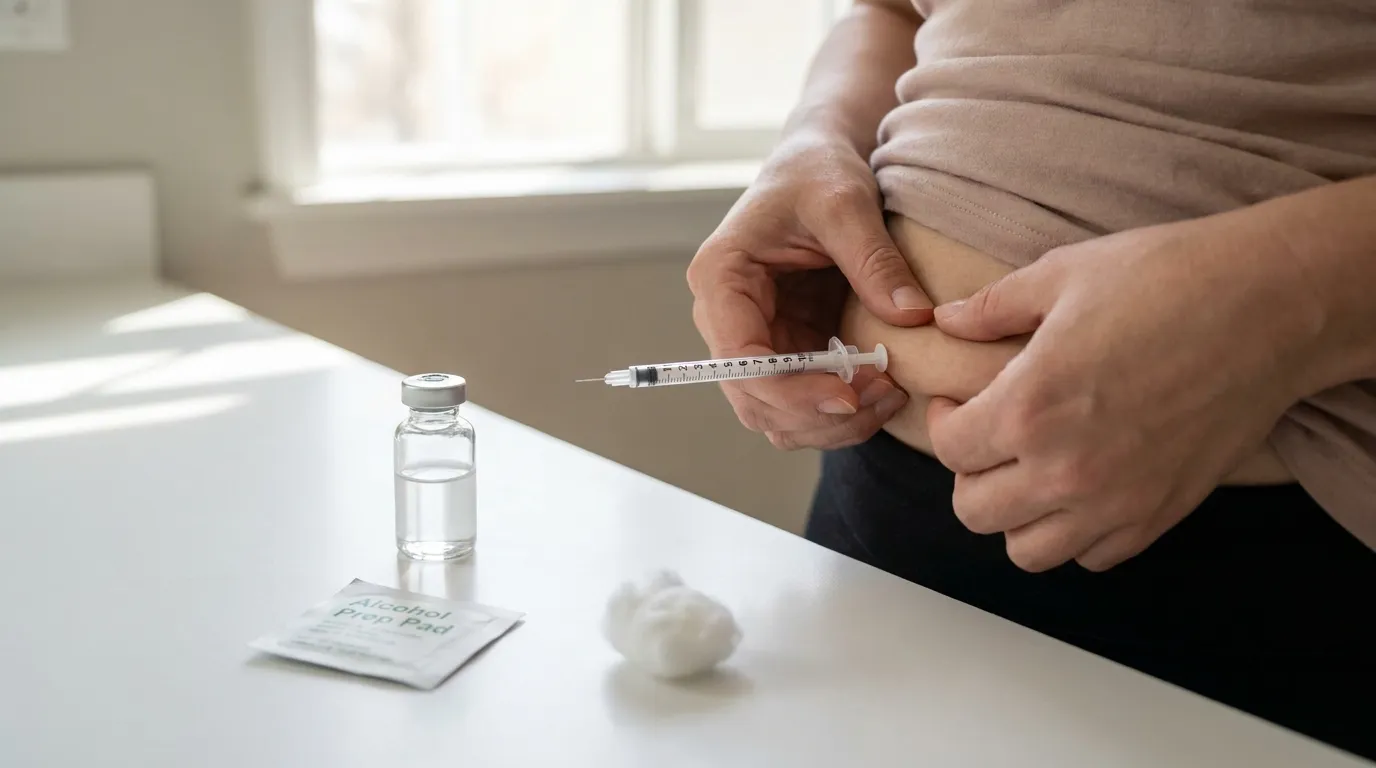
For orientation only, here is how people commonly describe the reported routes (not a recommendation):
| Version | Reported dose range | Reported cadence |
|---|---|---|
| No-DAC (Mod GRF 1-29) | 100-300 mcg per dose | 1-3x/day, often pre-bed |
| With DAC | ~1-2 mg per dose | ~1-2x/week |
| Trial anchor (2006) | 30-60 mcg/kg single dose | Single or weekly (study) |
Our take: Numbers like "100 mcg of CJC and Ipamorelin before bed" get repeated so often they sound official. They are community conventions extrapolated from one small pharmacology study, not human dose-finding trials, which is exactly why we never present them as a validated dose.
What results does CJC-1295 produce, and how fast?
In the only human study, CJC-1295 reliably raised growth hormone and IGF-1 within days, but real-world body-composition results (muscle, fat, recovery) are unproven, slow, and easy to overstate. What is measured is hormone levels; what people want, visible recomposition, has not been tested in trials.
The clean, documented result is hormonal: after a single injection, growth hormone rose 2- to 10-fold for six or more days, and IGF-1 rose 1.5- to 3-fold and stayed above baseline for nine to eleven days; with repeat dosing, IGF-1 "remained above baseline for up to 28 d" (Teichman et al., J Clin Endocrinol Metab, 2006, retrieved 2026-06-15). The downstream effects people actually chase, leaner physique, faster recovery, better sleep, build slowly over weeks to months and largely overlap with what good training, sleep, and nutrition would deliver. Because GH and IGF-1 stay elevated for days (DAC) or pulse briefly (no-DAC), most reported "results" are about how someone feels (sleep, recovery) well before any measurable change in body composition.

For grounded before-and-after context and how to read transformation claims, see peptides before and after. A realistic expectation: hormone markers can move in the first week or two, but physique changes are a multi-week project, not a quick fix.
What are the side effects of CJC-1295?
Reported CJC-1295 side effects are mostly mild and short-lived, such as injection-site reactions, flushing, water retention, headache, and tiredness; the bigger concerns are theoretical and tied to chronically raising growth hormone and IGF-1, plus the unknowns of an unapproved, discontinued drug. "Largely unstudied long-term" is the honest headline, not "safe."
In the 2006 trial, the most common adverse events were transient and not serious, including injection-site reactions and flushing, and the higher doses were described as well tolerated (Teichman et al., J Clin Endocrinol Metab, 2006, retrieved 2026-06-15). The more important caution is conceptual: sustained high GH and IGF-1, the whole point of the DAC version, carries the same theoretical risks as growth-hormone excess, including fluid retention, joint aches, carpal-tunnel-like symptoms, insulin resistance, and, with chronic elevation, concerns researchers raise about tissue overgrowth. None of this has been characterized for long-term CJC-1295 use because that data does not exist.
A hub-level overview of what is reported and what is theorized:
- Commonly reported (mild): injection-site redness or itching, facial flushing, headache, tiredness or a head-rush after dosing, and water retention.
- GH-excess type effects: joint or muscle aches, tingling/numbness (carpal-tunnel-like), and possible effects on blood sugar/insulin sensitivity with sustained high GH.
- Quality-related risks: because the market is unregulated, contamination, mislabeled potency, or impurities are real concerns independent of the peptide itself.
- Unknown: true long-term safety in humans, because the compound was discontinued and never had long-horizon data.
This is the hub-level summary. A full side-effect deep dive, including the IGF-1/insulin and tissue-overgrowth debate and how researchers frame it, is a dedicated spoke: CJC-1295 side effects and safety deep-dive.
How does CJC-1295 compare to Ipamorelin and Sermorelin?
CJC-1295 is most often paired with Ipamorelin because the two work through different receptors and amplify each other, and it is frequently compared to Sermorelin and Tesamorelin, which are related but distinct GHRH-type peptides. The headline: CJC-1295 is the long-acting GHRH "push," and people combine or contrast it with shorter or differently-acting partners.
The classic combination is CJC-1295 (usually the no-DAC version) plus Ipamorelin, nicknamed the "gold standard" GH stack, because CJC-1295 is a GHRH analog while Ipamorelin is a ghrelin-receptor secretagogue, so they hit two separate levers on growth-hormone release and produce a larger, cleaner pulse together; our head-to-head of CJC-1295 and Ipamorelin breaks down how the two differ when used alone. Sermorelin is essentially GHRH(1-29) without CJC-1295's stabilizing changes, so it is shorter-acting and weaker; Tesamorelin is a different stabilized GHRH analog that, unlike CJC-1295, is FDA-approved (for HIV-associated lipodystrophy), which makes it the closest "legitimate" comparison.
Because each pairing and comparison is its own future spoke, we keep them short here to avoid overlap:
- CJC-1295 + Ipamorelin (the stack): two mechanisms, larger GH pulse; the most common pairing. Work the doses with our CJC-1295 and Ipamorelin dosing calculator.
- CJC-1295 vs Sermorelin: Sermorelin is shorter-acting GHRH(1-29); CJC-1295 lasts far longer. See CJC-1295 vs Sermorelin comparison.
- CJC-1295 vs Tesamorelin: Tesamorelin is an FDA-approved GHRH analog; CJC-1295 is not. See our Tesamorelin guide.
- CJC-1295 vs MK-677: MK-677 (Ibutamoren) is an oral ghrelin-receptor secretagogue, a different class. See our MK-677 guide.
Is CJC-1295 safe and legal?
CJC-1295 is not approved by any regulator, its development was discontinued, and it is not legal to sell or prescribe as an approved medicine or to include in supplements; the products sold online are unapproved "research chemicals." That status matters more than any single study.
On safety, the one human trial looked acceptable for an investigational compound, but "tolerated in a small short study" is not "established safe," and the program was halted: CJC-1295 reached Phase II for growth hormone deficiency and lipodystrophy but development stopped after the death of a trial subject, which the attending physician concluded was unrelated to the drug and attributed to underlying coronary artery disease (Wikipedia, "CJC-1295", retrieved 2026-06-15). On legality, there are no FDA-approved products containing CJC-1295; it is treated as an investigational substance available to researchers only, and the FDA declined to add any form of it (free base, acetate, with or without DAC) to the bulk drug substances that compounding pharmacies may use, so it cannot be legally compounded or prescribed in the U.S. (peptides.org, "CJC-1295", retrieved 2026-06-15).
CJC-1295 is also banned in sport. It appears on the World Anti-Doping Agency Prohibited List under class S2 (peptide hormones, growth factors, and related substances) and is prohibited at all times, both in and out of competition; the U.S. Department of Defense incorporates WADA categories into its testing, so athletes and service members face additional rules (BSCG, "CJC-1295 Use in Sports and Military Rules Explained," 2025, retrieved 2026-06-15). For the full legal picture and how to evaluate a vendor, see are peptides legal and how to vet peptide quality.
Our take: The single most common misunderstanding is assuming that because CJC-1295 is sold openly online, it must be legal and vetted. It is sold "for research use only," it is an unapproved drug whose human development was stopped, and the FDA specifically declined to let pharmacies compound it. Easy to buy is not the same as legal or safe.
How do people obtain CJC-1295?
Because CJC-1295 is unapproved and discontinued, the main way people access it is by buying unapproved "research chemical" lyophilized vials online, which is a legal and safety gray market; there is no legitimate prescription route outside a clinical trial. Reputable U.S. compounding pharmacies cannot legally compound it after the FDA declined to list it.
The research-peptide market is where most online searches end up: vendors sell lyophilized CJC-1295 (often labeled DAC or no-DAC) "for research use only," and buyers reconstitute and use it off-label. That market carries real risks of mislabeled potency, the wrong version (DAC sold as no-DAC or vice versa), impurities, and non-sterile product, with no regulatory oversight. There is a related but separate, legitimate path: an FDA-approved GHRH analog, Tesamorelin, exists for a specific medical indication and can be prescribed, which is the closest legal alternative for someone whose goal is GH support.
If you are researching that path despite the risks, the responsible groundwork is the same as for any research peptide:
- Confirm the legal status for your country and situation, including sport and workplace rules. See are peptides legal.
- Demand a certificate of analysis (COA) from independent third-party testing, and confirm both identity (is it the DAC or no-DAC version you think?) and purity. See how to vet peptide quality.
- Understand handling before anything else. Reconstitution and cold storage are not optional. See getting started with peptides and the peptide injections guide.
- Talk to a qualified clinician who can weigh your specific health situation, interactions, and contraindications, and discuss approved alternatives.
We are describing what people do, not endorsing it. Using an unapproved, discontinued drug means accepting unknown risks with no regulatory safety net.
Frequently Asked Questions
The bottom line
CJC-1295 is one of the more scientifically interesting peptides in the GH-secretagogue world: a clever piece of protein engineering that takes the body's own "make growth hormone" signal and, via the DAC albumin tether, stretches it from minutes to days. The one human study is genuinely impressive on the narrow thing it measured, that GH and IGF-1 rise and stay elevated for over a week, and that is the real reason it became a fixture of the Ipamorelin "GH stack."
The other half of the story is discipline: CJC-1295 is unapproved, its human development was discontinued, the FDA declined to let pharmacies compound it, it is banned in sport, and it is sold only as an unregulated research chemical where you may not even get the version on the label. The honest label is investigational and abandoned. The "DAC vs no-DAC" distinction is the practical thing to get right, and a qualified clinician, plus a real COA, is the way to navigate the gap between "hormones went up in one study" and "proven and safe for you." From here, the natural next reads are how to vet peptide quality, are peptides legal, and getting started with peptides.
Sources
- Wikipedia. "CJC-1295." Retrieved 2026-06-15. https://en.wikipedia.org/wiki/CJC-1295
- Teichman, S.L., et al. "Prolonged stimulation of growth hormone (GH) and insulin-like growth factor I secretion by CJC-1295, a long-acting analog of GH-releasing hormone, in healthy adults." Journal of Clinical Endocrinology & Metabolism 91(3):799-805, 2006. Retrieved 2026-06-15. https://pubmed.ncbi.nlm.nih.gov/16352683/
- Peptides.org. "CJC-1295: Reviews, Clinical Trials, and Safety." Retrieved 2026-06-15. https://www.peptides.org/cjc-1295/
- Banned Substances Control Group (BSCG). "CJC-1295 Use in Sports and Military Rules Explained." 2025. Retrieved 2026-06-15. https://www.bscg.org/blogs/single/cjc-1295-use-in-sports-and-military-rules-explained
- Yunique Medical. "CJC 1295 Peptide Guide." Retrieved 2026-06-15. https://yuniquemedical.com/cjc-1295/
- U.S. Food and Drug Administration. "Bulk Drug Substances Nominated for Use in Compounding Under Section 503A of the FD&C Act." Retrieved 2026-06-15. https://www.fda.gov/drugs/human-drug-compounding/bulk-drug-substances-used-compounding-under-section-503a-fdc-act
- PubChem. "CJC-1295 (CID 56841945)." Retrieved 2026-06-15. https://pubchem.ncbi.nlm.nih.gov/compound/56841945