
Peptides Before & After: What Realistic Results Look Like
If you searched "peptides before and after," you were probably hoping for a clean answer: take the peptide, wait X weeks, look like the second photo. The honest version is less tidy. Peptide results are real for some compounds and largely unproven for others, they unfold over months rather than days, and they depend as much on your starting point, your diet, your sleep, and your consistency as on the vial itself.
This guide is deliberately about expectations, not hype. We will not show you a wall of dramatic transformation photos, because the most useful thing we can give you is a realistic sense of what changes, how long it takes, why two people on the same peptide can get completely different outcomes, and how to measure your own progress honestly instead of comparing yourself to a stranger's best-case picture. Per-compound deep dives (doses, protocols, specific risks) live in their own guides; here we stay on the one question that brought you: what does "before and after" actually look like?
Key Takeaways
- There is no single peptide before-and-after timeline. It ranges from a few weeks (some healing peptides) to 6 to 12 months (GLP-1 weight loss, hair, body composition), and many "results" are functional, not photographable.
- The only category with truly dramatic, mirror-visible transformations backed by large trials is GLP-1 weight-loss medication (semaglutide, tirzepatide), and even those take months. In the STEP 1 trial, semaglutide 2.4 mg produced a mean -14.9% body weight change at 68 weeks (NEJM, 2021).
- Most popular "research" peptides (BPC-157, TB-500) have almost no human trial evidence; reported results are anecdotal and the changes are usually felt (pain, recovery), not seen (PMC review, 2025).
- Results vary because of your baseline, dose, lifestyle, adherence, and biology, and because non-responders exist. A photo from someone else is not a prediction for you.
- Trust your own measurements over internet photos. Standardize lighting, pose, time of day, and camera distance, and track numbers (weight, measurements, performance), not just pictures.
- Many before-and-after results fade if you stop. Roughly two-thirds of semaglutide weight loss was regained one year after stopping in the STEP 1 trial extension (Diabetes, Obesity and Metabolism, 2022).

What does "peptides before and after" actually mean?
"Before and after" with peptides means a measurable change in a specific goal over time, but the size, speed, and even visibility of that change depend entirely on which peptide and which goal you are talking about. There is no universal peptide transformation, because peptides are not one thing.
The phrase usually conjures side-by-side body photos, and for one category (GLP-1 weight-loss drugs) that image is fair. For most other peptides, the honest "after" is something you feel or measure rather than something a camera captures: less joint pain, faster recovery between workouts, better sleep, slightly firmer skin. Lumping all of these under one dramatic before-and-after expectation is the single biggest reason people feel let down.
It also helps to separate two very different kinds of evidence. A handful of peptides have results from large, randomized clinical trials (the gold standard). Most of the "research peptides" sold online have results that are anecdotal, drawn from rodent studies, or marketing photos with no controls. Both can be called "before and after," but they are worlds apart in how much you should trust them. We will flag which is which throughout.
Citation capsule. The largest, best-evidenced peptide "before and after" is GLP-1 weight loss: in the STEP 1 randomized trial, semaglutide 2.4 mg weekly produced a mean −14.9% change in body weight at 68 weeks versus −2.4% for placebo. Most other consumer peptides (such as BPC-157) have no large randomized human trials, so their reported results are anecdotal. Sources: NEJM STEP 1, 2021; PMC narrative review of BPC-157, 2025.
Realistic peptide results timeline by goal
Peptide results follow the goal, not the molecule, and the realistic timeline ranges from about 3 weeks for some recovery effects to 6 to 12 months for body-composition and hair changes. Anything promising a dramatic visible change in a few weeks is almost certainly overselling.
The table below is a realistic-expectations summary across the goal categories people search for. The "first visible change" and "peak result" columns are typical reported ranges; the "evidence" column is the honest part that most before-and-after pages leave out. Specific compounds are named only as examples, and each links out to its own dedicated guide rather than being dosed here.
| Goal category | First noticeable change | Peak / fair judgment point | Mostly seen or felt? | Evidence quality |
|---|---|---|---|---|
| Weight loss (GLP-1) | 4 to 8 weeks (appetite down) | 6 to 12 months | Seen (mirror-visible) | Strong (large RCTs) |
| Injury / recovery (BPC-157, TB-500) | 1 to 4 weeks (reported) | 4 to 8 weeks | Felt (pain, function) | Weak (mostly animal/anecdotal) |
| Skin (GHK-Cu / copper peptides) | 2 to 4 weeks (hydration) | 8 to 12 weeks | Seen, but subtle | Moderate (small studies) |
| Body composition (GH peptides) | 4 to 8 weeks (sleep, recovery) | 4 to 6 months | Mixed, usually modest | Weak to moderate |
| Hair | 8 to 12 weeks | 6+ months | Seen, gradual | Weak (limited) |
A few principles cut across every row. First, appetite, sleep, and recovery changes show up before anything visible in the mirror. Second, the fair point to judge a peptide is usually months, not weeks. Third, the strength of the evidence is inversely related to how dramatic the marketing photos are: the loudest before-and-after claims tend to come from the categories with the weakest data.
Weight loss (GLP-1): the only mirror-visible, trial-backed transformation
GLP-1 receptor drugs are the one peptide category where dramatic before-and-after body photos are realistic, and even those take 6 to 12 months of continuous use. This is also the category with the strongest evidence by a wide margin.
In the STEP 1 trial, adults on semaglutide 2.4 mg weekly lost a mean of 14.9% of body weight over 68 weeks, compared with 2.4% on placebo (NEJM, 2021). Tirzepatide went further: in SURMOUNT-1, participants lost an average of 16.0%, 21.4%, and 22.5% at the 5 mg, 10 mg, and 15 mg doses over 72 weeks (NEJM / Eli Lilly, 2022). Appetite usually drops within the first month, but the visible body change is a months-long curve, not a switch.
Two honest caveats matter for expectations. Real-world results are typically smaller than trial numbers because of lower doses and people stopping early (Medscape, 2025). And the result is not permanent on its own: in the STEP 1 extension, participants regained about two-thirds of their lost weight a year after stopping (JAMA, 2022). For dosing, brands, and how to actually begin, see our getting started with peptides guide. deeper GLP-1 mechanism and dosing pharmacology
Injury and recovery (BPC-157, TB-500): mostly felt, barely proven
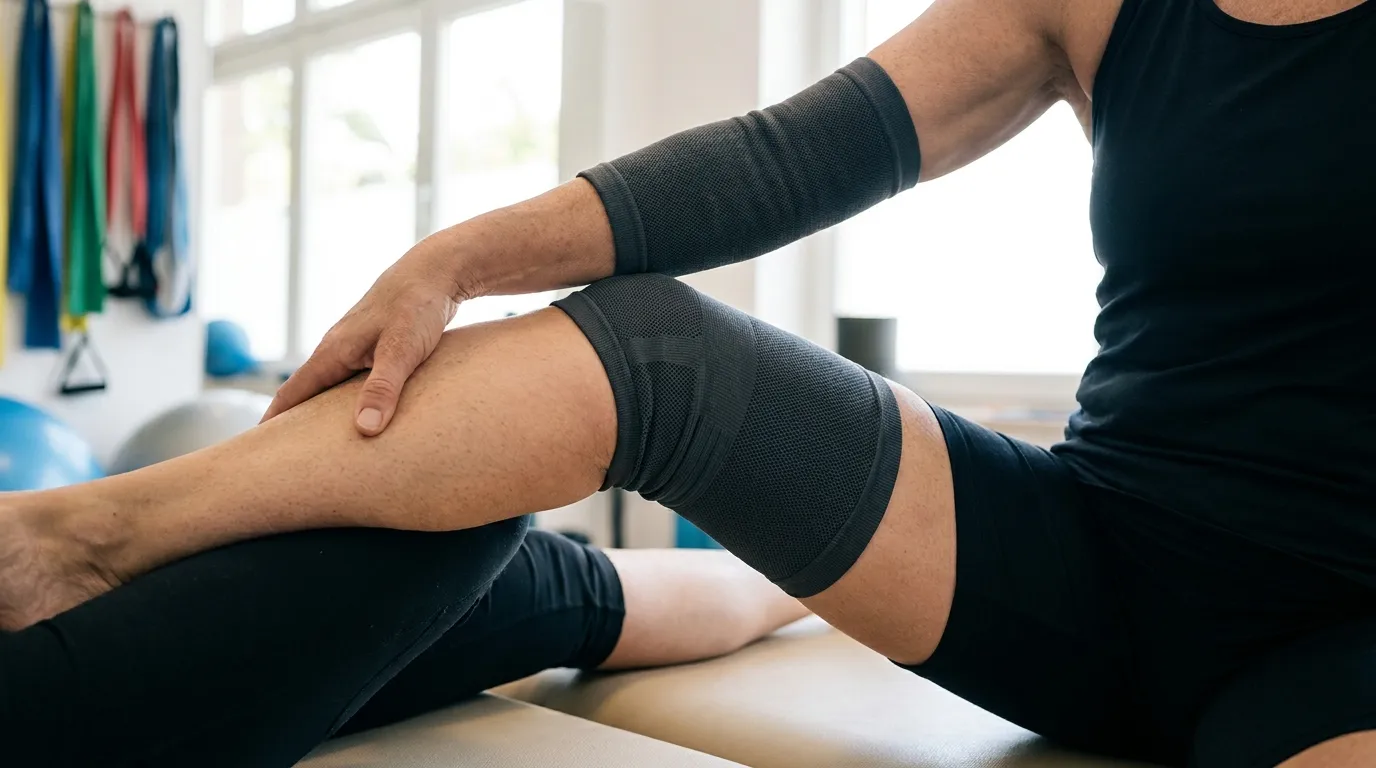
Healing peptides like BPC-157 and TB-500 are reported to improve recovery within weeks, but their "before and after" is something you feel (less pain, better function), not something a camera shows, and the human evidence is very thin. Manage expectations accordingly.
Users commonly report changes in pain or mobility within one to four weeks, with reported benefit building over four to eight weeks. The problem is the evidence base. A 2025 narrative review found only three published human studies of BPC-157 for musculoskeletal healing, none of them randomized controlled trials, and concluded that "until well-designed clinical trials are conducted and published, BPC-157 should not be recommended for clinical use" (PMC, 2025). The bulk of supportive data is from rodents. Both peptides are unapproved and banned in competitive sport. Treat any dramatic "before and after" claim here with heavy skepticism, and read how to vet peptide quality before trusting a product at all.
Skin (GHK-Cu / copper peptides): real but subtle
Copper peptides can produce genuine, measurable skin improvements (firmness, hydration, fine lines), but the change is subtle and takes roughly 8 to 12 weeks, not the overnight glow some photos imply. This category has moderate evidence: small human studies plus solid lab data.
In laboratory work, GHK-Cu stimulates collagen and elastin production in skin fibroblasts, and small clinical studies have reported improved skin thickness, hydration, and elasticity over a course of weeks (NIH / PMC, 2018). Reported timelines are typically light hydration and smoothness in the first couple of weeks, with firmer texture and tone by 8 to 12 weeks. Because the effect is gradual, controlled photography (same light, same camera) is the only way to judge it fairly. The cosmetic-skin story has its own depth that we keep shallow here on purpose. dedicated copper peptide skin guide
Body composition (GH peptides): modest and slow
Growth-hormone-related peptides (sermorelin, CJC-1295, ipamorelin, MK-677) tend to produce modest, slow body-composition shifts over months, often felt first as better sleep and recovery. Expectations should be calibrated way down from steroid-style transformations.
People often report improved sleep and recovery in the first one to two months, with any visible composition change appearing over four to six months and usually being subtle. The human efficacy evidence for body-composition goals is limited, and these are not FDA-approved for muscle building. If you see a dramatic muscular "after" attributed to a GH peptide in eight weeks, the more likely explanations are training, diet, water-weight shifts, photography, or other compounds. For the underlying biology, see how peptides work.
Hair: the slowest visible result
Peptide-based hair results are among the slowest, needing roughly 6 months minimum before a fair before-and-after, and the evidence is limited. Hair grows slowly, so any honest assessment requires patience and standardized photos at fixed intervals (for example monthly, same part line, same light). Quick "after" photos in this category are especially unreliable.
Why do peptide results vary so much between people?
Two people can run the identical peptide and get completely different "afters" because the outcome depends on baseline, dose, biology, lifestyle, and adherence far more than on the peptide alone. This variability is normal, expected, and the reason internet photos are not a forecast for you.
The biggest drivers of variation are worth naming plainly:
- Starting point (baseline). Someone with more to lose or a worse starting baseline will show a bigger, more photogenic change than someone already lean or already healthy. The "after" is relative to the "before."
- Dose and duration. Real-world doses are often lower than trial doses, and many people quit before the fair judgment point, which shrinks results (Medscape, 2025).
- Lifestyle stack. Diet, training, sleep, and stress can amplify or erase a peptide's effect. Clinics consistently frame peptides as a tool layered on top of lifestyle, not a replacement for it.
- Biology and non-response. Genetics, hormones, age, and underlying conditions shift outcomes, and genuine non-responders exist for many interventions.
- Product quality. In an unregulated market, an underdosed or impure product produces an underwhelming "after" through no fault of the protocol. See how to vet peptide quality.
Our take: When a before-and-after looks too clean, the missing variable is almost always context. The photo rarely tells you the person's starting point, dose, diet, training, other compounds, or how many people tried the same thing and saw nothing. Judge interventions by ranges and averages from trials, not by the single best outcome someone chose to post.
Clinical results vs. real-world results: mind the gap
Clinical trial before-and-after numbers represent close-to-ideal conditions, so real-world results are usually smaller. Knowing this gap keeps your expectations honest.
Trials use carefully selected participants, full target doses, structured support, and high adherence. In the real world, people titrate lower, miss doses, stop early, and lack the trial's lifestyle scaffolding. That is why the same drug that delivered roughly 15% to 22% weight loss in trials often delivers less in practice (Medscape, 2025). The trial figure is the realistic ceiling under good conditions, not the average outcome for everyone.
How to measure your own before and after (the right way)
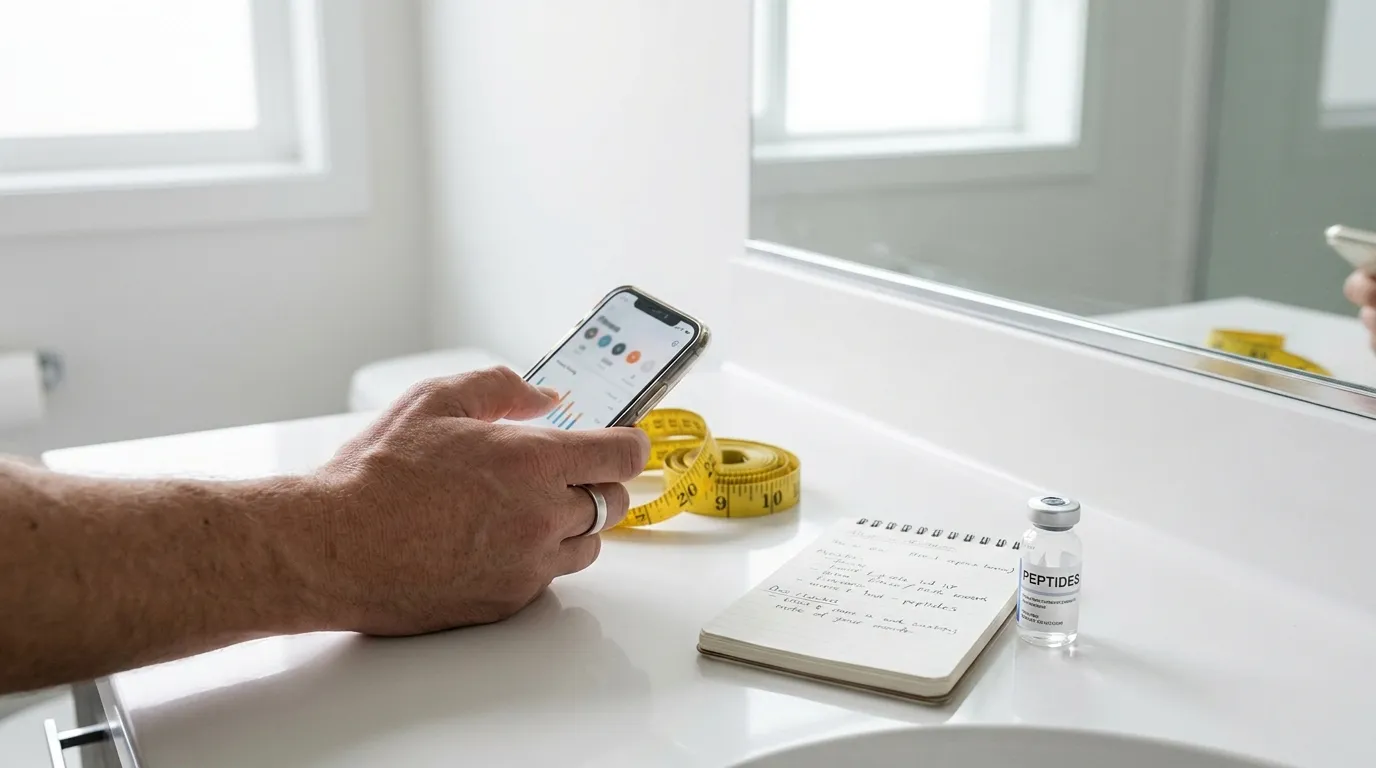
The most reliable before-and-after is the one you measure yourself under controlled conditions, because it removes the lighting tricks, cherry-picking, and survivorship bias baked into internet photos. Numbers beat impressions, and a fixed method beats memory.
Set a real baseline before you start anything, then re-measure on a schedule. Here is a simple, repeatable process:
- Capture a true baseline first. On day zero, record weight, key tape measurements (waist, hips, the area you care about), relevant performance markers (a lift, a walk time, pain on a 0 to 10 scale), and sleep quality. You cannot have an "after" without an honest "before."
- Standardize your photos. Same time of day (morning, fasted), same lighting and room, same camera distance and angle, same minimal clothing, same relaxed pose. No filters, no flexing-only shots.
- Pick fixed re-check dates. Match the goal's fair judgment point: weekly for weight, every 4 weeks for skin and body composition, monthly for hair. Avoid judging on noisy day-to-day swings.
- Track numbers, not just pictures. Photos miss slow change and exaggerate water and lighting. Weight, measurements, and performance logs catch real trends. Apps that log every dose and metric make the trend visible.
- Account for confounders. Note diet changes, training, illness, travel, and any other compound, so you can attribute a change correctly instead of crediting the peptide for everything.
This is also exactly the kind of data the ProtocolPlus community logs, which is why our app can show aggregate patterns rather than single anecdotes. For the practical setup side (vials, injecting, scheduling), see the peptide injections guide.
How to read (and doubt) before and after photos online
Most peptide before-and-after photos online are unverifiable best-case examples, and a handful of consistency checks will tell you which ones to ignore. Skepticism here is a skill, not cynicism.
The fastest red flag is a dramatic visible change in only four to eight weeks for a goal that physiologically takes months. The next is inconsistency between the two photos: different lighting, posture, time of day, camera, or even a different pump or tan can manufacture a "result." Use this quick checklist when you look at any pair:
- Same conditions? Lighting, angle, distance, pose, and time of day should match. Mismatches are the most common trick.
- Realistic timeframe? Be very suspicious of large changes faster than the goal's normal biology allows.
- Consistent details? Moles, tattoos, background, and room should match across both images.
- Source and incentive? A seller showing their own product's results has an obvious motive; an uncontrolled testimonial is not evidence.
- Where is the denominator? One stunning photo says nothing about how many people tried the same thing and saw little or nothing (survivorship bias).

Setting realistic expectations by goal
A realistic mindset treats peptides as a tool that may shift the odds, over months, on top of solid lifestyle habits, with results measured against your own honest baseline. That framing protects you from both disappointment and from chasing a stranger's photo.
If your goal is weight loss with a trial-backed GLP-1 medication under medical supervision, a substantial, mirror-visible change over 6 to 12 months is realistic, while remembering it can fade if you stop (Diabetes, Obesity and Metabolism, 2022). If your goal is recovery or skin or body composition with less-proven peptides, set expectations to "subtle, gradual, possibly nothing," judge at the fair point, and never assume a dramatic photo applies to you. And whatever the goal, the variables you control (diet, sleep, training, consistency, product quality, and a clinician's input) usually matter more to your "after" than the specific peptide you picked.
What the ProtocolPlus community tracks
Across the ProtocolPlus app, weight and metabolic goals dominate what people track, which fits the evidence: it is the category where measurable before-and-after change is most realistic. The aggregate pattern below is a usage signal (what people choose to log and measure), not a claim about how well any compound works.
Among 27,272 anonymized trackers logging 230,268 doses across 41 distinct compounds, metabolic and GLP-1 goals make up the clear majority of tracked use, with growth-hormone, repair, and cosmetic goals trailing well behind. That mirrors the reality of this guide: the goal with the strongest evidence and the most photographable result is also the one most people are actually measuring.
Frequently Asked Questions
The bottom line
Peptide "before and after" is real, but it is not the instant, dramatic, universal transformation the photos imply. One category (GLP-1 weight loss) delivers large, mirror-visible, trial-backed change over many months. Most other peptides deliver subtle or felt changes with thin evidence, and a meaningful share of people see little at all. The variable that decides your "after" is rarely just the vial: it is your baseline, dose, consistency, lifestyle, product quality, and biology.
So measure yourself honestly, judge at the fair point for your goal, distrust dramatic photos with mismatched conditions, and remember that many results fade if you stop. If you are starting from the basics, build up through what are peptides, how peptides work, and getting started with peptides, and learn to vet peptide quality before you trust any product or its photos. For anything you might consider using, talk to a qualified healthcare professional first.
Sources
- Wilding JPH, Batterham RL, Calanna S, et al. "Once-Weekly Semaglutide in Adults with Overweight or Obesity (STEP 1)." New England Journal of Medicine, 2021. Retrieved 2026-06-15. https://www.nejm.org/doi/full/10.1056/NEJMoa2032183
- Jastreboff AM, Aronne LJ, Ahmad NN, et al. "Tirzepatide Once Weekly for the Treatment of Obesity (SURMOUNT-1)." New England Journal of Medicine / Eli Lilly press release, 2022. Retrieved 2026-06-15. https://investor.lilly.com/news-releases/news-release-details/lillys-surmount-1-results-published-new-england-journal-medicine
- Wilding JPH, Batterham RL, Davies MJ, et al. "Weight regain and cardiometabolic effects after withdrawal of semaglutide: the STEP 1 trial extension." Diabetes, Obesity and Metabolism, 2022;24(8). Retrieved 2026-06-15. https://pubmed.ncbi.nlm.nih.gov/35441470/
- "Regeneration or Risk? A Narrative Review of BPC-157 for Musculoskeletal Healing." PMC (narrative review), 2025. Retrieved 2026-06-15. https://pmc.ncbi.nlm.nih.gov/articles/PMC12446177/
- Pickart L, Margolina A. "Regenerative and Protective Actions of the GHK-Cu Peptide in the Light of the New Gene Data." International Journal of Molecular Sciences / PMC, 2018. Retrieved 2026-06-15. https://pmc.ncbi.nlm.nih.gov/articles/PMC6073405/
- Medscape. "Real-World GLP-1 Weight-Loss Results Differ From Trials." 2025. Retrieved 2026-06-15. https://www.medscape.com/viewarticle/real-world-glp-1-weight-loss-results-differ-trials-2025a1000fih
- ColumbiaDoctors (Columbia University Department of Surgery). "What to Know About Peptides: Benefits & Safety Concerns." 2024. Retrieved 2026-06-15. https://www.columbiadoctors.org/news/what-know-about-peptides-benefits-safety-concerns