LL-37: The Body's Own Antimicrobial Peptide — Defense, Healing & the Research
LL-37 is a peptide you already make: it is the only human cathelicidin antimicrobial peptide, a 37-amino-acid front-line soldier of your innate immune system that punches holes in microbes, helps wounds close, and tunes inflammation. That natural pedigree is exactly why it has become a buzzy "immune and healing" research peptide. The catch is twofold: almost all of the therapeutic evidence is still in the lab, and LL-37 is genuinely double-edged, meaning too much of it is tied to skin and autoimmune disease, so more is not better.
If you have seen LL-37 marketed as a way to "boost immunity" or clear stubborn infections, this guide is the high-level map of the whole molecule, and it sits among the options in our best peptides for recovery roundup. We cover what it actually is, how it defends and heals, the vitamin D connection, the honest harmful side, what the human research really shows, the reported dosing people use, and its research-only status. Each section is a clear overview; deeper subtopics point to dedicated guides so this page stays a clean hub.
Key Takeaways
- LL-37 is the only human cathelicidin antimicrobial peptide, a 37-amino-acid host-defense peptide named for the two leucine residues at its start ("LL") and its 37-residue length (Wikipedia, "Cathelicidin", retrieved 2026-06-16).
- It is cut from a larger precursor. The CAMP gene encodes the 18 kDa precursor hCAP-18/CAP-18, and proteinase 3 cleaves off the active C-terminal fragment, LL-37 (UniProt, "P49913 (CAMP_HUMAN)", 2026, retrieved 2026-06-16).
- It does three jobs in innate immunity: kills a broad range of microbes by disrupting their membranes, helps wounds heal (including new blood-vessel growth), and tunes immune signaling by recruiting immune cells (Wikipedia, "Cathelicidin", retrieved 2026-06-16).
- Vitamin D turns it on. Active vitamin D (1,25-dihydroxyvitamin D3) upregulates the CAMP gene, which is one reason vitamin D status is tied to immune defense (Wikipedia, "Cathelicidin", retrieved 2026-06-16).
- It is double-edged — too much is harmful. Overexpression and abnormal processing of LL-37 are implicated in rosacea (Yamasaki et al., Nature Medicine, 2007), psoriasis (Lande et al., Nature, 2007), and systemic lupus, so "boost it as high as possible" is the wrong goal.
- Injectable LL-37 is not FDA-approved and is sold as a research chemical. The therapeutic evidence is overwhelmingly preclinical, with only a few small early-stage human trials (for example, a venous-leg-ulcer trial and an intratumoral melanoma trial) (ClinicalTrials.gov, NCT02225366, retrieved 2026-06-16).
What is LL-37?
LL-37 is a small natural peptide, 37 amino acids long, that is the only cathelicidin antimicrobial peptide in humans and acts as a built-in antibiotic and immune messenger. Its name is a label, not a brand: the "LL" marks the two leucine amino acids at the start of the chain, and "37" is its length. It is also written as the cathelicidin antimicrobial peptide, with the precursor known as hCAP-18 or CAP-18.
Chemically, LL-37 is a short chain with the sequence LLGDFFRKSKEKIGKEFKRIVQRIKDFLRNLVPRTES, encoded by the gene CAMP (Wikipedia, "Cathelicidin", retrieved 2026-06-16). An important nuance often lost in marketing: the body does not make "LL-37" directly. It first makes a larger 18-kilodalton precursor called CAP-18 (hCAP-18), and an enzyme called proteinase 3 snips off the active C-terminal piece, which is LL-37 (UniProt, "P49913 (CAMP_HUMAN)", 2026, retrieved 2026-06-16). It is produced by neutrophils and by epithelial cells in the skin, gut, and airways, exactly the surfaces where the body meets the outside world. If injectable peptides are new to you, start with our how peptides work guide.
The most important framing for this hub: LL-37 the molecule is natural and essential, but LL-37 the product (a vial of synthetic peptide sold for "research") is not approved by any regulator for human use. Those two things are easy to blur, and most of this guide lives in the gap between them.
Citation capsule. LL-37 is the sole human cathelicidin antimicrobial peptide: a 37-amino-acid host-defense peptide (sequence LLGDFFRKSKEKIGKEFKRIVQRIKDFLRNLVPRTES) cleaved by proteinase 3 from the C-terminus of the precursor hCAP-18/CAP-18, the product of the CAMP gene. It has antimicrobial, wound-healing, and immunomodulatory roles in innate immunity. Source: Wikipedia, "Cathelicidin," 2026; UniProt P49913 (CAMP_HUMAN); PubChem CID 16198951.
How does LL-37 work?
LL-37 works in three overlapping ways: it directly kills microbes by tearing open their outer membranes, it helps damaged tissue repair and grow new blood vessels, and it acts as a chemical signal that summons and steers immune cells. This combination is why it is called a "host-defense peptide" rather than just an antibiotic. The detail below is solid molecular biology, but its use as an injected therapy is mostly preclinical.
In plain terms, LL-37 is a positively charged, fat-loving peptide that is drawn to the negatively charged membranes of bacteria. The leading mechanism is described as "disintegration (damaging and puncturing) of cell membranes of organisms toward which the peptide is active," which kills the microbe outright (Wikipedia, "Cathelicidin", retrieved 2026-06-16). Beyond killing, it "plays a role in the activation of cell proliferation and migration, contributing to the wound closure process," and "it induces angiogenesis," the growth of new blood vessels (Wikipedia, "Cathelicidin", retrieved 2026-06-16).
Here is what each role contributes, in simple terms:
- Antimicrobial (membrane disruption): physically punctures the membranes of many bacteria, plus some fungi and enveloped viruses. It also neutralizes bacterial toxin (LPS).
- Wound healing and angiogenesis: drives skin cells to migrate and multiply to close a wound, and stimulates new blood-vessel growth into the repairing tissue.
- Immunomodulation (chemotaxis): acts on immune-cell receptors (such as FPRL-1) to recruit neutrophils, monocytes, and T cells to the site, coordinating the larger immune response.
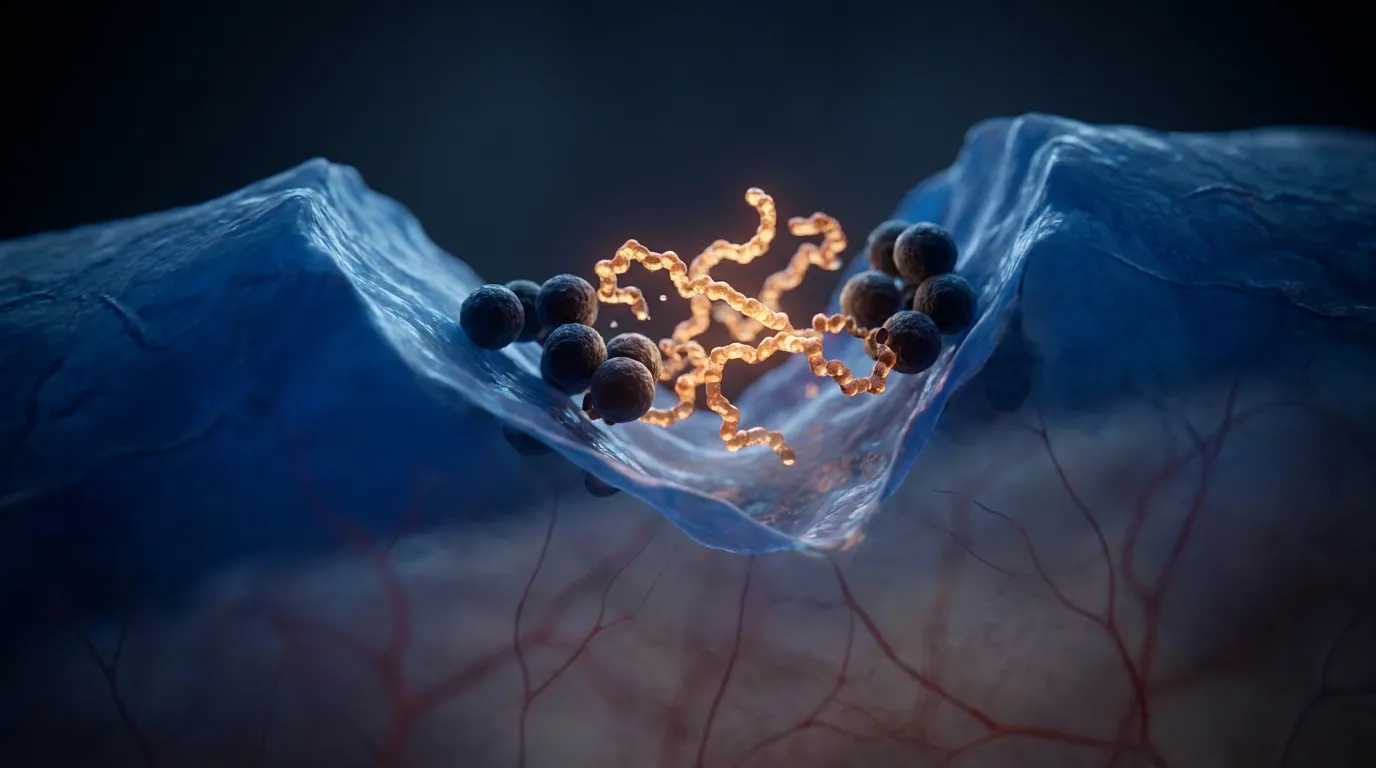
The receptor-and-signaling deep dive (how membrane disruption is selective, how immune chemotaxis is wired) is its own topic. We keep it at overview level here and link out to how peptides work for the foundations.
What is LL-37 used for?
As a natural molecule, LL-37 is part of your everyday defense at the skin, gut, and airways; as a research peptide, it is being studied mainly for wound healing, hard-to-treat infections, and a few specific conditions, with the strongest interest in chronic wounds and skin. None of these are FDA-approved uses; they are the directions research and community use have pointed.
In the body, LL-37 is doing its job constantly: it is one of the antimicrobial peptides that keeps the skin barrier and mucous membranes from being overrun, and low levels are linked to more infections. As a candidate therapy, the headline directions are wound healing and infection. Researchers have studied synthetic LL-37 to push stalled chronic wounds to close, and a randomized, placebo-controlled trial reported that it was "safe and effective in enhancing healing" of hard-to-heal venous leg ulcers (Wound Repair and Regeneration / PubMed 25041740, 2014, retrieved 2026-06-16). Its broad microbe-killing also makes it a model for new antibiotics against drug-resistant bacteria, and it has even been tested injected directly into tumors in an early melanoma study (ClinicalTrials.gov, NCT02225366, retrieved 2026-06-16).
A quick overview of the areas LL-37 is studied for, and where the evidence stands:
| Studied area | What the research suggests | Evidence level |
|---|---|---|
| Chronic wound healing | Helps stalled wounds close (e.g. venous leg ulcers) | One small randomized human trial; preclinical |
| Antibacterial defense | Kills a broad range of bacteria, incl. drug-resistant strains | Lab / preclinical; antibiotic-design model |
| Antiviral / antifungal | Activity against some enveloped viruses and fungi | Lab studies |
| Immune modulation | Recruits and steers immune cells; tunes inflammation | Lab / animal studies |
| Cancer (intratumoral) | Tested injected into tumors (melanoma) | Early-phase human trial (NCT02225366) |
| Gut and skin barrier | Maintains barrier defense; deficiency raises infection risk | Observational / mechanistic |
Because several of these are distinct future spokes, we keep them brief here. The honest headline: LL-37 is biologically powerful and broadly interesting, but the human therapeutic evidence is early and thin. Compare this profile with other healing and immune peptides such as BPC-157 and KPV.
Why is LL-37 a double-edged sword?
LL-37 is genuinely double-edged: the same peptide that defends and heals also drives inflammation and autoimmunity when it is overproduced or processed abnormally, which is why "raise it as high as possible" is the wrong goal. Too little leaves you infection-prone, but too much is tied to real skin and autoimmune disease. This is the single most important nuance about LL-37, and most consumer pages skip it.
The clearest example is rosacea. In a landmark 2007 study, researchers found that people with rosacea have both high cathelicidin levels and abnormal forms of the peptide, and that injecting those abnormal cathelicidin fragments into mouse skin produced rosacea-like inflammation, concluding that "cathelicidin promotes skin inflammation in rosacea" (Yamasaki et al., Nature Medicine, 2007, retrieved 2026-06-16). In psoriasis, LL-37 plays a different harmful trick: it binds the body's own DNA and converts that normally inert self-DNA into a potent trigger that activates plasmacytoid dendritic cells to pump out inflammatory interferon, a mechanism described in a 2007 Nature paper (Lande et al., Nature, 2007, retrieved 2026-06-16). LL-37 has also been identified as an autoantigen in systemic lupus erythematosus, where LL-37 bound to nucleic acids becomes a target the immune system mistakenly attacks (PMC7388365, "Cathelicidin LL-37 in SLE", 2020, retrieved 2026-06-16).
Our take: This is where the "natural immune booster" marketing falls apart. Your body keeps LL-37 in a careful window for a reason. The interesting biology is not "more LL-37 is better," it is the right amount, in the right place, processed correctly. Anyone selling LL-37 as a simple immunity upgrade is ignoring a decade of evidence that overexpression is part of the disease, not the cure.
How does vitamin D fit in?
Vitamin D is the main natural "on switch" for LL-37: the active form of vitamin D directly turns up the gene that makes it, which is a big part of why vitamin D status is tied to immune defense. This is a real, well-described link, and it is a far more sensible lever than injecting the peptide. It does not mean megadosing vitamin D maximizes immunity.
The mechanism is direct. The active hormone form of vitamin D (1,25-dihydroxyvitamin D3) binds the vitamin D receptor, which then acts on the CAMP gene to increase LL-37 production, especially in immune cells like macrophages. As the reference summary puts it, "the production of cathelicidin is up-regulated by vitamin D" (Wikipedia, "Cathelicidin", retrieved 2026-06-16). This is one of the cleaner stories in immunology for why low vitamin D is associated with weaker barrier defense.
The practical takeaway is the responsible inverse of the hype. Rather than buying an unapproved peptide, the evidence-backed way most people influence their own LL-37 is by maintaining healthy vitamin D status through sunlight, diet, or clinician-guided supplementation, which works through the body's own regulated machinery rather than flooding the system. We keep this at hub level; the broader peptide-and-nutrient picture is covered in how peptides work.
How strong is the human evidence?
The therapeutic evidence for injected LL-37 is broad in the lab but very thin in humans: extensive cell and animal data, and only a few small early-stage human trials. That gap between dramatic test-tube activity and a near-empty human file is the most important thing to understand before considering it as a product.
The basic biology of LL-37 is not in doubt, it is one of the best-studied human antimicrobial peptides. What is missing is human therapeutic proof. The most concrete human result is the venous-leg-ulcer trial, a small randomized, placebo-controlled study that reported LL-37 was "safe and effective in enhancing healing of hard-to-heal" ulcers (Wound Repair and Regeneration / PubMed 25041740, 2014, retrieved 2026-06-16). There is also an early intratumoral melanoma study registered as NCT02225366 (ClinicalTrials.gov, NCT02225366, retrieved 2026-06-16). Beyond a handful of such studies, there is no large completed trial establishing that injecting LL-37 safely treats any common condition.
Why the human evidence is so thin
It helps to see why a molecule this well understood has so little human therapy data. LL-37 is hard to use as a drug: it can be broken down quickly in the body, it can be irritating or toxic to human cells at higher concentrations, and its double-edged inflammatory role raises a real safety question about deliberately raising it. Much of the active research is actually aimed at engineering more stable, less toxic LL-37-inspired molecules rather than using the natural peptide itself. There is also very little human pharmacokinetic data for the injectable research product, meaning we do not really know how much of a dose does what, how long it lasts, or how it is cleared. That missing picture is exactly why every dose figure in this guide can only be a reported convention, not a validated number.
Our take: The volume of LL-37 papers is genuinely huge, but most of it answers "what does this peptide do in a dish or a mouse," not "is injecting it safe and effective in people." Treating a deep basic-science literature as if it were clinical proof is the most common mistake we see with LL-37.
What doses of LL-37 do people report using?
There is no validated dose for LL-37, and no approved label to anchor one, but reported research-peptide and community protocols cluster around roughly 100 to 500 mcg per day by subcutaneous injection, often in short cycles. These are figures people report, not an established, safe, or recommended dose, and they sit on top of essentially no human pharmacokinetic data.
In the research-peptide market, LL-37 is sold as a lyophilized (freeze-dried) powder, commonly in 5 mg vials, that is reconstituted with bacteriostatic water before use. Community write-ups most often describe daily subcutaneous doses in the low hundreds of micrograms, run for a few weeks rather than continuously. We label all of this as a community/research convention because no regulator has reviewed a dose, the underlying human pharmacokinetics are essentially unstudied, and LL-37's double-edged inflammatory role means "more" carries a specific theoretical risk, not just diminishing returns.
For orientation only, here is how people commonly describe the reported approach (not a recommendation):
| Parameter | Reported convention | Notes |
|---|---|---|
| Form | Lyophilized powder, ~5 mg vial | Reconstituted with bacteriostatic water before use |
| Route | Subcutaneous injection | Most commonly described route |
| Reported daily amount | ~100-500 mcg | Community/research figures, not validated dosing |
| Cycle length | Short cycles (often a few weeks) | Commonly cycled rather than taken continuously |
Our take: Numbers like "a few hundred micrograms a day" get repeated until they sound official. They are not. They are community conventions with no human dose-finding trial behind them, and for a double-edged peptide that is a reason for extra caution, not a green light. The detailed handling and reconstitution steps are a job for our general how peptides work and quality guides, not a self-dosing recipe.
What are the risks and side effects of LL-37?
Because injectable LL-37 has barely been tested in humans, its true side-effect profile is unknown; reported issues are mostly local injection reactions, but its built-in inflammatory and pro-autoimmune role makes "raising LL-37" a genuine theoretical risk, not just an unknown. "Unknown, and double-edged" is the honest headline, not "safe natural booster."
In the small human studies done so far, such as the venous-leg-ulcer trial, LL-37 was described as safe at the doses tested (Wound Repair and Regeneration / PubMed 25041740, 2014, retrieved 2026-06-16). But that is a narrow, local-wound context, not a green light for systemic dosing. The specific concern that sets LL-37 apart from many other peptides is its own biology: chronically high or abnormally processed LL-37 is part of how rosacea, psoriasis, and lupus drive inflammation (Yamasaki et al., Nature Medicine, 2007, retrieved 2026-06-16; Lande et al., Nature, 2007, retrieved 2026-06-16).
A hub-level overview of what is reported and what is theorized:
- Commonly reported (mild): injection-site redness, swelling, or irritation; LL-37 can also be locally irritating because it disrupts membranes.
- Quality-related risks: the market is unregulated, so contamination, mislabeled potency, or impurities are real concerns independent of the peptide itself.
- Mechanism-specific, researcher-raised: because overexpression is implicated in inflammatory and autoimmune skin and systemic disease, deliberately raising LL-37 carries a theoretical risk of provoking or worsening those conditions.
- Unknown: true long-term human safety of injected LL-37, because the long-horizon data simply do not exist.
This is the hub-level summary. People with rosacea, psoriasis, lupus, or other autoimmune conditions are exactly the group for whom the double-edged biology should prompt the most caution.
Is LL-37 safe and legal?
The LL-37 molecule is a normal part of your body, but LL-37 sold as an injectable peptide is not approved by any regulator, has no official safety determination as a drug, and is sold only as an unapproved "research chemical." That status matters more than any single study.
On safety, the small wound-healing trial is reassuring in its narrow setting, but "safe applied to a local ulcer in a small study" is not the same as "established safe to inject systemically," and the peptide's double-edged inflammatory role is a reason for added caution. On legality, the key point for buyers is that injectable LL-37 is not an FDA-approved drug, cannot be legally marketed to treat or prevent disease, and is not a lawful dietary ingredient; the vials sold online are unapproved research chemicals labeled "for research use only, not for human consumption." For the broader legal picture and how to evaluate a vendor, see are peptides legal and our quality-vetting guide.
Our take: The single most common misunderstanding is "LL-37 is natural, so it must be safe and fine to use." Natural in your body at a regulated level is not the same as safe to inject as an unregulated product. It is "research use only," it is not FDA-approved, and its own biology makes overexpression part of several diseases. Easy to buy is not the same as legal or safe.
A realistic look at expectations
The dramatic "natural immune supercharger" framing around LL-37 comes mostly from impressive lab biology and anecdotes, not controlled human results, so realistic expectations should be modest, skeptical, and mindful of the double-edged risk. Going in calibrated is part of using any of this information responsibly.
Two honest caveats sit on top of the hype. First, powerful activity in a dish or a mouse does not reliably predict a safe, useful human therapy, and the human file here is small. Second, because LL-37 is part of your normal defense and is regulated by things like vitamin D status, the most evidence-aligned way to support it for most people is through that natural machinery, not an unregulated vial. For grounded context on reading transformation and "booster" claims, see how peptides work.
Frequently Asked Questions
The bottom line
LL-37 is one of the most genuinely interesting molecules in the peptide world precisely because it is yours: the only human cathelicidin, a real front-line defender that kills microbes, helps wounds heal, and coordinates the immune response. The basic biology is excellent, and the link to vitamin D gives a believable, body-regulated story for why it matters to immunity.
The other half of the story is discipline, and LL-37's is unusually sharp. It is double-edged, with overexpression woven into rosacea, psoriasis, and lupus, so "boost it" is the wrong instinct. The injectable version is unapproved, barely tested in humans, and sold only as an unregulated research chemical, with the strongest human result confined to a small local-wound trial. The honest label is investigational, and the honest goal is balance, not maximum. From here, the natural next reads are how peptides work, are peptides legal, and our other immune and healing peptide hubs BPC-157 and KPV.
Sources
- Wikipedia. "Cathelicidin." Retrieved 2026-06-16. https://en.wikipedia.org/wiki/Cathelicidin
- UniProt Consortium. "P49913 · CAMP_HUMAN (Cathelicidin antimicrobial peptide / hCAP-18)." 2026. Retrieved 2026-06-16. https://www.uniprot.org/uniprotkb/P49913/entry
- PubChem. "LL-37, CID 16198951." National Library of Medicine. Retrieved 2026-06-16. https://pubchem.ncbi.nlm.nih.gov/compound/16198951
- Yamasaki K, et al. "Increased serine protease activity and cathelicidin promotes skin inflammation in rosacea." Nature Medicine, 2007;13:975-980. Retrieved 2026-06-16. https://www.nature.com/articles/nm1616
- Lande R, et al. "Plasmacytoid dendritic cells sense self-DNA coupled with antimicrobial peptide." Nature, 2007;449:564-569. Retrieved 2026-06-16. https://www.nature.com/articles/nature06116
- "Cathelicidin LL-37 in systemic lupus erythematosus." PMC7388365, 2020. Retrieved 2026-06-16. https://pmc.ncbi.nlm.nih.gov/articles/PMC7388365/
- "Immunomodulatory Role of LL-37 in Autoimmune Diseases and Viral Infections." PMC7565865, 2020. Retrieved 2026-06-16. https://www.ncbi.nlm.nih.gov/pmc/articles/PMC7565865/
- "A randomized, placebo-controlled trial of LL-37 for venous leg ulcers." Wound Repair and Regeneration / PubMed 25041740, 2014. Retrieved 2026-06-16. https://pubmed.ncbi.nlm.nih.gov/25041740/
- ClinicalTrials.gov. "Intratumoral LL-37 in Melanoma, NCT02225366." Retrieved 2026-06-16. https://clinicaltrials.gov/study/NCT02225366
- Dürr UHN, Sudheendra US, Ramamoorthy A. "LL-37, the only human member of the cathelicidin family of antimicrobial peptides." Biochimica et Biophysica Acta, 2006. Retrieved 2026-06-16. https://www.sciencedirect.com/science/article/pii/S000527360600126X