BPC-157: The Complete Guide to the Healing Peptide (2026)
BPC-157 is a synthetic 15-amino-acid peptide, derived from a protein in human gastric juice, that has become one of the most talked-about "healing" compounds in the biohacking world for its dramatic tissue-repair results in animal studies. The catch is that almost all of that evidence comes from rats, not people: BPC-157 is not approved by any regulator, has only a handful of small human studies, and is sold as an unapproved research chemical.
If you have heard BPC-157 called the "Wolverine peptide" or seen it paired with TB-500 for injury recovery, or ranked among the most-used recovery peptides, this guide is the high-level map of the whole compound. We cover what it actually is, how its proposed mechanism works, what it is being studied for, the dosing ranges people report, side effects, the honest safety picture, and its research-only legal status. Each section is a clear overview; the deep-dive topics (a full dosing chart, side-effect management, the TB-500 comparison, injection technique) point to dedicated guides so this page stays a clean hub.
Key Takeaways
- BPC-157 (Body Protection Compound-157) is a synthetic 15-amino-acid peptide derived from a protein in human gastric juice; the 15-amino-acid fragment itself does not occur naturally (Wikipedia, "BPC-157", retrieved 2026-06-15).
- It is not FDA-approved and is not a dietary ingredient. The FDA placed it in Category 2 ("significant safety risks") of its 503A compounding list in 2023, and it is an unapproved drug (OPSS / U.S. Department of Defense, 2025).
- The evidence is overwhelmingly preclinical. Broad animal data suggest tissue, tendon, gut, and bone healing, but only about three small human studies exist; until proper trials are done it should be considered investigational (Current Reviews in Musculoskeletal Medicine, 2025).
- The proposed mechanism centers on angiogenesis (new blood-vessel growth) via the VEGFR2 and nitric-oxide (Akt-eNOS) pathways, plus fibroblast and collagen activity for tendon repair (Current Reviews in Musculoskeletal Medicine, 2025).
- Reported doses cluster around 250-500 mcg once or twice daily for 4-8 week cycles, by subcutaneous injection or as oral capsules. These are community/research figures, not validated dosing. The full ladder is a future dosing chart spoke.
- It is banned in sport. BPC-157 is on the World Anti-Doping Agency Prohibited List (class S0, Non-Approved Substances) and the DoD Prohibited Dietary Supplement Ingredients List (OPSS / DoD, 2025).
What is BPC-157?
BPC-157 is a synthetic peptide made of 15 amino acids, designed from a protective protein naturally found in human gastric juice. Its name stands for "Body Protection Compound-157," and it is also written as "BPC 157" or, in research, as the gastric pentadecapeptide BPC 157 (lab codes bepecin and PL 14736). It is studied mostly for tissue repair, gut health, and injury recovery.
Chemically, BPC-157 is a short chain of amino acids with the sequence Gly-Glu-Pro-Pro-Pro-Gly-Lys-Pro-Ala-Asp-Asp-Ala-Gly-Leu-Val (Wikipedia, "BPC-157", retrieved 2026-06-15). An important nuance often lost in marketing: it is derived from a naturally occurring stomach protein, but the specific 15-amino-acid fragment sold as BPC-157 does not itself occur naturally in the body; it is a lab-made stable fragment. One of its defining properties is unusual stability in human gastric juice, where it has been reported to remain intact for more than 24 hours, which is why an oral form is even plausible. If injectable peptides are new to you, start with our what are peptides and how peptides work guides.
The single most important fact about BPC-157 is its status: it is not approved by the FDA or any other drug regulator for any use. It exists in a small body of research and, separately, in a large unapproved "research chemical" market. Everything else in this guide should be read through that lens.
Citation capsule. BPC-157 (Body Protection Compound-157), also called the gastric pentadecapeptide BPC 157, is a synthetic 15-amino-acid peptide (sequence Gly-Glu-Pro-Pro-Pro-Gly-Lys-Pro-Ala-Asp-Asp-Ala-Gly-Leu-Val) derived from a protein in human gastric juice. The fragment does not occur naturally, is stable in gastric acid, and is not approved by any regulator for human use. Source: Wikipedia, "BPC-157," 2026; CAS 137525-51-0; PubChem CID 9941957; DrugBank DB11882.
How does BPC-157 work?
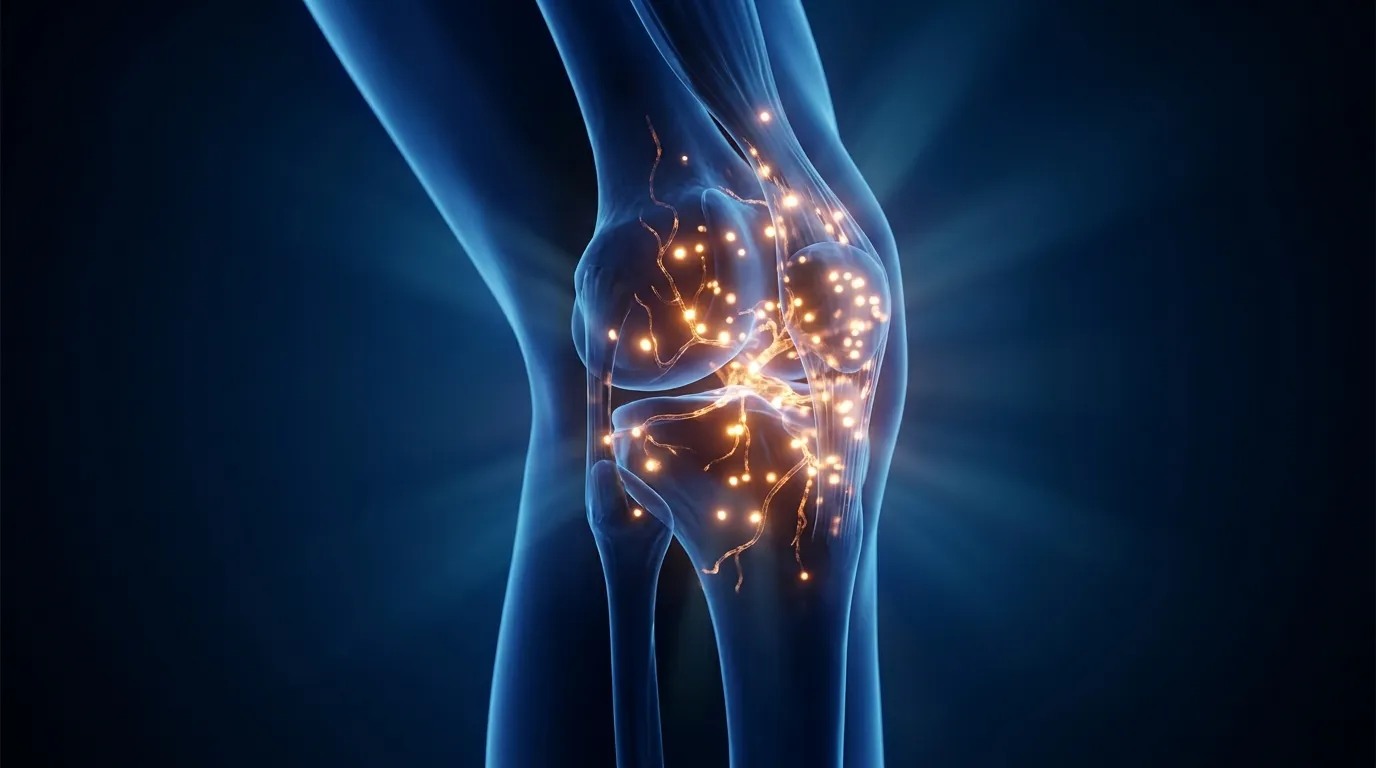
BPC-157 is thought to work mainly by promoting angiogenesis, the growth of new blood vessels at an injury site, which improves blood, oxygen, and nutrient delivery so tissue can repair faster. It is also reported to boost the cells and collagen that rebuild tendons and to calm inflammation. Crucially, this picture comes almost entirely from animal and cell studies, not human trials.
In plain terms, the leading idea is that BPC-157 helps the body build new "plumbing" to a damaged area and then helps the local repair crew (fibroblasts) lay down fresh collagen. A 2025 narrative review describes the core pathway this way: BPC-157 "significantly promotes angiogenesis by enhancing vascular endothelial growth factor receptor-2 (VEGFR2) activity and nitric oxide (NO) signaling primarily through activation of the Akt-endothelial nitric oxide synthase (eNOS) pathway" (Current Reviews in Musculoskeletal Medicine, "Regeneration or Risk? A Narrative Review of BPC-157 for Musculoskeletal Healing", 2025, retrieved 2026-06-15).
Here is what each proposed mechanism contributes, in simple terms:
- Angiogenesis (VEGFR2 + nitric oxide): stimulates new blood-vessel growth so an injured area gets better circulation. This is the most consistently cited mechanism.
- Fibroblast and collagen activity (FAK-paxillin pathway): the review notes BPC-157 "accelerates tendon and ligament repair through enhanced fibroblast proliferation and collagen synthesis, primarily via focal adhesion kinase (FAK)-paxillin signaling pathways" (Current Reviews in Musculoskeletal Medicine, 2025, retrieved 2026-06-15).
- The nitric-oxide system: BPC-157 interacts broadly with NO signaling, which is linked to both blood-vessel function and the protection of the gut lining.
- Growth-factor signaling: it has been reported to increase growth hormone receptor expression in fibroblasts, another route to faster tissue building.
The receptor-and-signaling deep dive (how angiogenesis is regulated, why nitric oxide matters) is its own topic. We keep it at overview level here and link out to how peptides work for the foundations.
What is BPC-157 used for?
BPC-157 is studied and used mainly for healing musculoskeletal injuries (tendons, ligaments, muscle, bone) and for gut health, with additional preclinical interest in inflammation and neuroprotection. None of these are FDA-approved uses; they are the directions animal research and community use have pointed.
The headline use is tissue and injury repair. In animal models, BPC-157 has shown healing of transected ligaments, improved tendon-to-bone integration "even in the presence of corticosteroids," enhanced muscle-fiber regeneration, and accelerated bone healing in compromised conditions like delayed union (Current Reviews in Musculoskeletal Medicine, 2025, retrieved 2026-06-15). Its second well-known angle is the gut: because it comes from a gastric protein and is stable in stomach acid, it has the strongest preclinical data on the gut lining, intestinal motility, and protection against ulcers.
A quick overview of the areas BPC-157 is studied for, and where the evidence stands:
| Studied area | What preclinical research suggests | Evidence level |
|---|---|---|
| Tendon / ligament repair | Faster healing, better tendon-to-bone integration | Animal studies; very limited human data |
| Muscle injury | Enhanced muscle-fiber regeneration and recovery | Animal studies |
| Bone healing | Accelerated healing, including delayed union | Animal studies |
| Gut health | Protects the gut lining; studied for ulcers, IBD-like models | Animal studies; one early human (PL 14736) trial line |
| Inflammation | Reduced inflammatory signaling at injury sites | Animal / cell studies |
| Neuroprotection | Protective effects in nerve-injury models | Animal studies (early) |
Because each of these is a distinct future spoke, we keep them brief here. The honest headline: BPC-157 is promising across a wide range in animals, but the human evidence has not caught up to the marketing.
How strong is the evidence for BPC-157?
The evidence for BPC-157 is broad but almost entirely preclinical: extensive animal and cell data, and only about three small human studies. That gap between dramatic rat results and a near-empty human file is the most important thing to understand before considering it.
The 2025 review is blunt about this: "Despite broad preclinical support, human data are extremely limited. Only three pilot studies have examined BPC-157 in humans," and it concludes that "until well-designed clinical trials are conducted, BPC-157 should be considered investigational, and its use approached with caution" (Current Reviews in Musculoskeletal Medicine, 2025, retrieved 2026-06-15). BPC-157 was registered in a clinical trial under the name Bepecin in 2015, but that study did not lead to any approved use, and a later Phase I trial in healthy volunteers reportedly never had its results submitted (Wikipedia, "BPC-157", retrieved 2026-06-15).
Why the human evidence is so thin
It helps to see how small the human file actually is. According to the 2025 review, the three published human pilot studies were tiny: one looked at roughly 16 patients receiving knee injections, one at about 12 individuals receiving bladder injections, and one at just 2 healthy adults given intravenous infusions (Current Reviews in Musculoskeletal Medicine, 2025, retrieved 2026-06-15). No large, well-designed randomized controlled trial of BPC-157 has been completed and published, which is the kind of study that would actually establish whether it works and at what dose. There is also almost no human pharmacokinetic data, meaning we do not really know how much of an injected or oral dose reaches the bloodstream, how long it lasts, or how it is cleared. That missing pharmacokinetic picture is part of why every dose figure in this guide can only be a reported convention rather than a validated number.
This matters for a practical reason. The same review states that "while animal studies have shown promising results, it is important to recognize that there is still a lack of extensive human studies to fully assess the impact of BPC-157," and it goes a step further than "investigational," adding that "until well-designed human trials are conducted and published, BPC-157 should not be recommended for clinical use in musculoskeletal medicine" (Current Reviews in Musculoskeletal Medicine, 2025, retrieved 2026-06-15). For a reader, the honest takeaway is that BPC-157 sits firmly in experimental territory: it is not FDA-approved, it has never cleared a real efficacy trial in people, and any decision to use it is being made without the safety net that an approved medicine provides.
Our take: The most common mistake we see is treating "thousands of studies" as if they were human evidence. The volume of BPC-157 research is real, but it is dominated by rodent models. Impressive animal healing does not reliably translate to humans, and "investigational" is the honest label for where this compound sits in 2026.
What doses of BPC-157 do people report using?
There is no validated dose for BPC-157, but reported research and community protocols cluster around 250 to 500 mcg once or twice daily, run in cycles of about four to eight weeks. These are figures people report, not an established or recommended dose, and there is no approved label to anchor them.
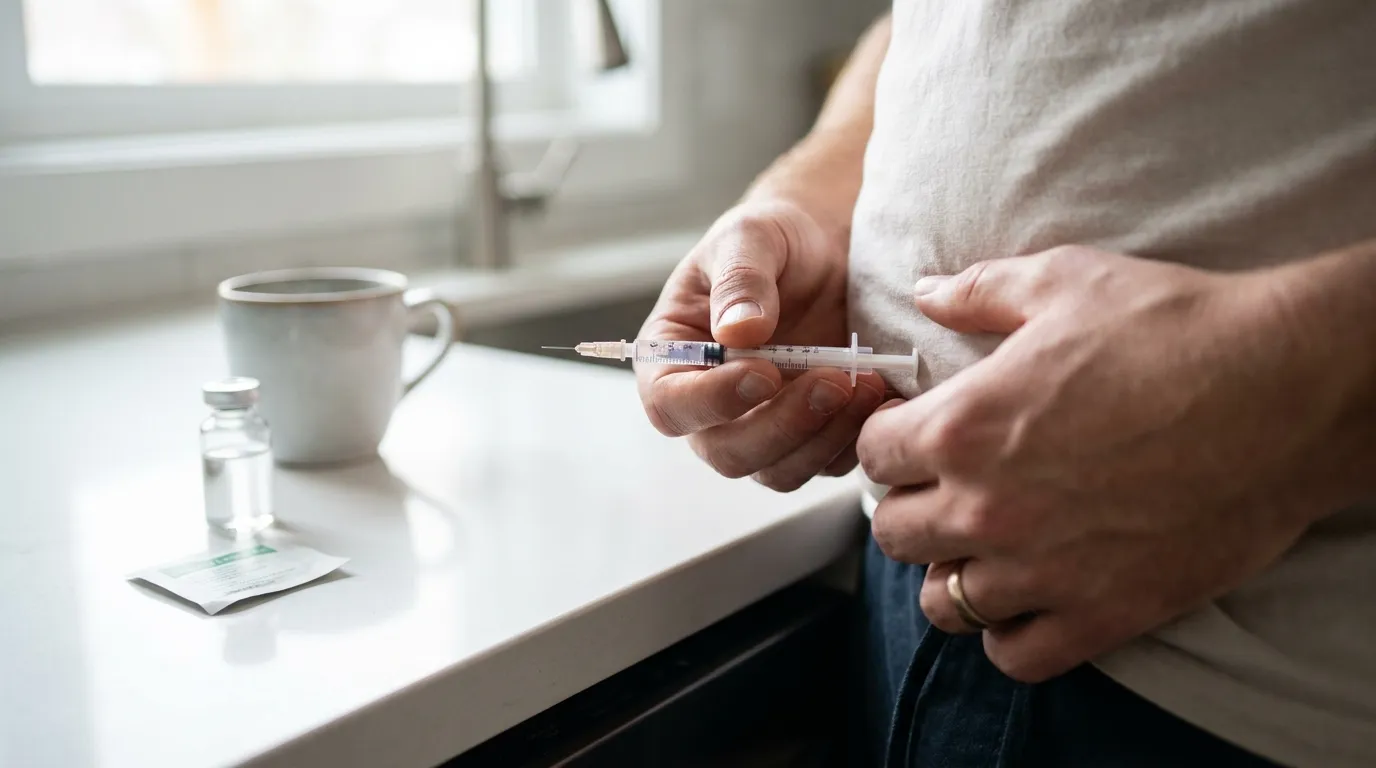
The most commonly cited range is 250-500 mcg per day by subcutaneous injection, sometimes split into two doses, often given near the injured area, with 500 mcg/day frequently described as the typical effective dose in community write-ups (Swolverine, "BPC-157 Dosage Guide", 2025, retrieved 2026-06-15). Oral capsules (commonly sold around 200-500 mcg) are also used, leaning on BPC-157's gastric stability, though they are expected to reach much lower blood levels than injection. We label all of this as a community/research convention because no regulator has reviewed a dose, and the underlying human pharmacokinetics are essentially unstudied (OPSS / U.S. Department of Defense, 2025, retrieved 2026-06-15).
The detailed titration ladder, dose-conversion math, reconstitution volumes, and injection-site choices are a dedicated spoke. We cover only the high-level framing here and link out to the full BPC-157 dosing and titration chart, the step-by-step reconstitution guide, and the general peptide injections guide.
For orientation only, here is how people commonly describe the reported routes (not a recommendation):
| Route | Reported dose range | Notes |
|---|---|---|
| Subcutaneous injection | 250-500 mcg, 1-2x/day | Often given near the injury; peak plasma ~30-90 min |
| Oral capsule / powder | 200-500 mcg, 1-2x/day | Relies on gastric stability; lower blood levels than injection |
| Cycle length | ~4-8 weeks | Commonly cycled rather than taken continuously |
Our take: Numbers like "500 mcg twice a day" get repeated so often they start to sound official. They are not. They are community conventions built on animal-dose extrapolation, not human dose-finding trials, which is exactly why we never present them as a validated dose.
What are the side effects of BPC-157?
Because BPC-157 has barely been tested in humans, its true side-effect profile is unknown; reported issues are mostly mild and include injection-site reactions, with theoretical longer-term risks raised by researchers. "Unknown" is the honest headline, not "safe."
In the handful of completed human studies, the safety profile has been described as promising, with no reported adverse effects, and animal work found BPC-157 "well tolerated at high doses" with no teratogenic, genotoxic, or local toxic effects in those models (Current Reviews in Musculoskeletal Medicine, 2025, retrieved 2026-06-15). But major medical centers and regulators stress that because human testing is so limited, the safety profile remains unknown, with potential effects ranging from mild to severe, including allergic reactions and injection-site complications (OPSS / U.S. Department of Defense, 2025, retrieved 2026-06-15).
A hub-level overview of what is reported and what is theorized:
- Commonly reported (mild): injection-site redness, swelling, or irritation; occasional fatigue, headache, or nausea (anecdotal).
- Quality-related risks: because the market is unregulated, contamination, mislabeled potency, or impurities are real concerns independent of the peptide itself.
- Theoretical, researcher-raised: the same angiogenesis that aids healing is also implicated in tumor growth, prompting caution about a theoretical cancer-promotion risk; strong nitric-oxide stimulation has been flagged for possible effects on other body systems (Current Reviews in Musculoskeletal Medicine, 2025, retrieved 2026-06-15).
- Unknown: true long-term safety in humans, because the long-horizon data simply do not exist.
This is the hub-level summary. A full side-effect deep-dive, including the cancer-risk debate and how researchers frame it, is a dedicated spoke: BPC-157 side effects and safety deep-dive.
How does BPC-157 compare to TB-500?
BPC-157 and TB-500 are the two most popular "healing" peptides, and they are often stacked because their proposed mechanisms differ: BPC-157 acts more locally through angiogenesis, while TB-500 works more systemically to help cells migrate into damaged tissue. Both are unapproved research compounds with limited human data.
In rough terms, BPC-157 is reported to drive local blood-vessel growth and fibroblast activity (and has the stronger gut data), so it is often used near a single-site injury, while TB-500 (a thymosin beta-4 fragment) is described as circulating systemically and promoting cell migration, so it does not need to be injected at the injury site (Klarovel, "BPC-157 + TB-500 stack: what the evidence actually says", 2025, retrieved 2026-06-15). The combination, nicknamed the "Wolverine stack," is the most frequently discussed healing-peptide pairing, but it lacks clinical trials comparing it head-to-head with either peptide alone.
The clearest way to hold the two apart is origin and mechanism. BPC-157 is a 15-amino-acid fragment derived from a protein in human gastric juice, and its leading proposed action is angiogenesis (building new blood vessels) through the VEGFR2 and nitric-oxide pathways. TB-500 is a synthetic fragment of thymosin beta-4, a naturally occurring protein, and it is thought to work mainly by regulating actin, a structural protein inside cells, which helps various repair cells migrate into damaged tissue (Wikipedia, "Thymosin beta-4", retrieved 2026-06-15). So at a high level: BPC-157 is the more local, vessel-and-gut peptide, and TB-500 is the more systemic, cell-migration peptide. Both share the same honest caveat, though, as neither is FDA-approved and both rest mostly on animal data.
That is the hub-level contrast, and it is deliberately brief. The full comparison, including the TB-500 mechanism, the stack rationale, the dosing differences, and which one people reach for in which situation, is its own spoke. We keep it short here to avoid overlapping that future article: see BPC-157 vs TB-500 comparison and the Wolverine stack. People weighing BPC-157 against the copper peptide GHK-Cu for skin and connective-tissue repair can compare them in our GHK-Cu vs BPC-157 head-to-head.
Is BPC-157 safe and legal?
BPC-157 is not approved by any regulator, so there is no official safety determination, and it is not legal to sell or prescribe as an approved medicine or to include in dietary supplements; the products sold online are unapproved "research chemicals." That status matters more than any single study.
On safety, the trial-and-animal data look reassuring for an investigational compound, but "reassuring in rats and three small human studies" is not the same as "established safe," and researchers themselves call for caution until proper trials exist (Current Reviews in Musculoskeletal Medicine, 2025, retrieved 2026-06-15). On legality, the U.S. picture is clear and has tightened: the FDA classifies BPC-157 as an unapproved drug, states that "BPC-157 is not a dietary ingredient" and "cannot be legally prescribed or sold over the counter," and in 2023 placed it in Category 2 of its 503A interim bulk-drug-substances list, the "significant safety risks" tier, which means compounding pharmacies cannot legally compound it for human use (OPSS / U.S. Department of Defense, 2025, retrieved 2026-06-15).
BPC-157 is also banned in sport. It appears on the World Anti-Doping Agency Prohibited List under class S0 (Non-Approved Substances) and on the U.S. Department of Defense Prohibited Dietary Supplement Ingredients List, so athletes and service members face additional rules beyond the FDA's (OPSS / U.S. Department of Defense, 2025, retrieved 2026-06-15). For the full legal picture and how to evaluate a vendor, see are peptides legal and how to vet peptide quality.
Our take: The single most common misunderstanding is assuming that because BPC-157 is sold openly online, it must be legal and vetted to use. It is sold "for research use only," it is an unapproved drug, and the FDA has specifically flagged it for safety risks. Easy to buy is not the same as legal or safe.

How do people obtain BPC-157?
Because BPC-157 is unapproved, the main way people access it is by buying unapproved "research chemical" vials or capsules online, which is a legal and safety gray market; reputable U.S. compounding pharmacies have largely stopped making it since the FDA's 2023 action. There is no legitimate "get a prescription" route for an unapproved drug, outside of a clinical trial.
The research-peptide market is where most online searches end up: vendors sell lyophilized BPC-157 "for research use only," and buyers reconstitute and use it off-label. That market carries real risks of mislabeled potency, impurities, and non-sterile product, with no regulatory oversight. Since the FDA placed BPC-157 in Category 2 of the 503A list, compounding it for humans is off the table for compliant pharmacies, pushing supply further toward unregulated overseas and online sellers (OPSS / U.S. Department of Defense, 2025, retrieved 2026-06-15).
If you are researching that path despite the risks, the responsible groundwork is the same as for any research peptide:
- Confirm the legal status for your country and situation, including sport and workplace rules. See are peptides legal.
- Demand a certificate of analysis (COA) from independent third-party testing, and learn to read it for identity and purity. See how to vet peptide quality.
- Understand handling before anything else. Reconstitution and cold storage are not optional. See getting started with peptides and the peptide injections guide.
- Talk to a qualified clinician who can weigh your specific health situation, interactions, and contraindications.
We are describing what people do, not endorsing it. Using an unapproved drug means accepting unknown risks with no regulatory safety net.
A realistic look at expectations
The dramatic "healed in days" stories around BPC-157 come mostly from animal studies and anecdotes, not controlled human results, so realistic expectations should be modest and skeptical. Going in calibrated is part of using any of this information responsibly.
Two honest caveats sit on top of the hype. First, animal healing at controlled doses does not reliably predict human outcomes, and the few human studies are small. Second, much of what people attribute to BPC-157 (recovery from an injury over several weeks) overlaps with what the body would do on its own with rest, so it is hard to separate signal from natural healing without controlled trials. For grounded before-and-after context and how to read transformation claims, see peptides before and after.
Frequently Asked Questions
The bottom line
BPC-157 is the clearest example in the peptide world of a compound where the excitement has outrun the evidence. Its proposed mechanism, building new blood vessels and recruiting the cells that rebuild tissue, is genuinely interesting, and the animal data on tendon, muscle, bone, and gut healing are broad and consistent. That is the real reason it earned the "healing peptide" reputation.
The other half of the story is discipline: BPC-157 is unapproved, barely tested in humans, flagged by the FDA for safety risks, banned in sport, and sold only as an unregulated research chemical with no guarantee of what is in the vial. The honest label is investigational. If you take one thing from this hub, let it be the gap between "remarkable in rats" and "proven and safe in people," and the value of a qualified clinician in navigating it. From here, the natural next reads are how to vet peptide quality, are peptides legal, and getting started with peptides.
Sources
- Wikipedia. "BPC-157." Retrieved 2026-06-15. https://en.wikipedia.org/wiki/BPC-157
- Wikipedia. "Thymosin beta-4." Retrieved 2026-06-15. https://en.wikipedia.org/wiki/Thymosin_beta-4
- Operation Supplement Safety (OPSS) / U.S. Department of Defense. "BPC-157: A prohibited peptide and an unapproved drug found in health and wellness products." 2025. Retrieved 2026-06-15. https://www.opss.org/article/bpc-157-prohibited-peptide-and-unapproved-drug-found-health-and-wellness-products
- "Regeneration or Risk? A Narrative Review of BPC-157 for Musculoskeletal Healing." Current Reviews in Musculoskeletal Medicine / PMC, 2025. Retrieved 2026-06-15. https://pmc.ncbi.nlm.nih.gov/articles/PMC12446177/
- Rupa Health. "BPC 157: Science-Backed Uses, Benefits, Dosage, and Safety." Retrieved 2026-06-15. https://www.rupahealth.com/post/bpc-157-science-backed-uses-benefits-dosage-and-safety
- Swolverine. "BPC-157 Dosage Guide: How Much Should You Take for Recovery and Injury Healing?" 2025. Retrieved 2026-06-15. https://swolverine.com/blogs/blog/bpc-157-dosage-guide-how-much-should-you-take-for-recovery-and-injury-healing
- Klarovel. "BPC-157 + TB-500 stack: what the evidence actually says." 2025. Retrieved 2026-06-15. https://www.klarovel.com/en/blog/bpc-157-tb-500-stack
- U.S. Food and Drug Administration. "Bulk Drug Substances Used in Compounding Under Section 503A of the FD&C Act." Retrieved 2026-06-15. https://www.fda.gov/drugs/human-drug-compounding/bulk-drug-substances-used-compounding-under-section-503a-fdc-act
- D.J. Holt Law. "Regulatory Alert: The Legal Status of BPC-157 in Compounding and Clinical Practice." Retrieved 2026-06-15. https://djholtlaw.com/regulatory-alert-the-legal-status-of-bpc-157-in-compounding-and-clinical-practice/