
NAD+ Therapy: The Cellular-Energy Molecule Everyone Calls a Peptide (But Isn't)
Let us clear up the confusion in the first sentence, because it is the whole reason this page exists: NAD+ is not a peptide. It is filed under "peptides" on half the clinic menus and biohacking forums where you will find it, but NAD+ (nicotinamide adenine dinucleotide) is a coenzyme, a small helper molecule your cells use to turn food into energy. Peptides are short chains of amino acids; NAD+ is built from two nucleotides. They are different categories of molecule entirely, and the mix-up matters because it changes how you should think about what NAD+ does and what the evidence actually shows.
This is the high-level hub for the whole NAD+ topic, and one of the compounds we weigh in our roundup of the best peptides for longevity. We cover what NAD+ really is, how it powers your cells, why levels seem to fall as you age, the honest difference between an IV drip and an oral NMN or NR capsule, what the science does and does not support for energy and longevity, the safety picture, the cost, and the genuinely strange regulatory story around NMN. Each section is a clean overview; the deep-dive spokes (full NMN-versus-NR breakdowns, dosing protocols, clinic comparisons) link out so this page stays a map, not a maze.
Key Takeaways
- NAD+ is a coenzyme, not a peptide. Nicotinamide adenine dinucleotide is a dinucleotide found in every living cell that carries electrons in the redox reactions of energy metabolism (molecular formula C21H27N7O14P2) (PubChem, CID 5892, retrieved 2026-06-15; Wikipedia, "Nicotinamide adenine dinucleotide", retrieved 2026-06-15).
- NAD+ levels decline with age. A 2021 review reported roughly a 68% drop in skin NAD+ from newborn to young adult, with further losses into middle age, though the authors stress human data are limited and variable (Nutrients, 2021).
- You raise NAD+ with precursors, not by eating NAD+. In a 2018 randomized trial, 1,000 mg/day of oral nicotinamide riboside (NR) for six weeks raised NAD+ in blood cells by about 60% versus placebo, and was well tolerated (Nature Communications, 2018).
- IV NAD+ is processed, not absorbed whole. Infused NAD+ is broken down outside cells into NMN and NR before uptake, so whether an IV drip meaningfully raises NAD+ inside your tissues is not established (Frontiers in Aging Neuroscience, 2019).
- It is not an approved anti-aging therapy. A 2026 systematic review concluded human longevity and wellness evidence for NAD+ precursors remains limited and heterogeneous, framing them as experimental rather than established (Ageing Research Reviews, 2026).
- NMN's legal status flip-flopped. The FDA excluded NMN from the supplement definition in 2022 under the drug-preclusion clause, then reversed that position in 2025 (Nutritional Outlook, 2022; NutraIngredients-USA, 2025).
What is NAD+ (and why isn't it a peptide)?
NAD+ is a coenzyme, a small molecule that almost every cell uses to carry electrons during the chemical reactions that release energy from food. It is not a peptide and not a drug. Its full name is nicotinamide adenine dinucleotide, and the clue is in the word "dinucleotide": it is built from two nucleotides, not from amino acids. Peptides are short amino-acid chains. NAD+ belongs to a completely different molecular family.
In plain terms, NAD+ is one of the most-used helper molecules in your body. It shuttles electrons back and forth in the reactions that make ATP, the cell's energy currency, flipping between an oxidized form (NAD+) and a reduced form (NADH). It is also a fuel for important "housekeeping" enzymes, including the sirtuins linked to cell repair and the PARP enzymes involved in DNA repair. Chemically, NAD+ has the molecular formula C21H27N7O14P2 and is catalogued as PubChem CID 5892 (PubChem, "Nicotinamide adenine dinucleotide", CID 5892, retrieved 2026-06-15). Because it is a coenzyme found in all living cells rather than a synthetic injectable peptide, the way it is studied, regulated, and used differs from the research peptides covered elsewhere on this site. If injectable compounds and the peptide world are new to you, start with how peptides work.
So why does it keep getting filed with peptides? Mostly marketing and habit. NAD+ is sold by the same compounding pharmacies and wellness clinics that sell research peptides, often on the same menu, frequently as an injectable, so it gets lumped in. A glutathione drip sits on that same menu for similar reasons, which is why people often ask about the two together; see our glutathione overview. But the honest framing for this entire guide is that NAD+ is a vitamin-derived coenzyme, and that shapes everything that follows.
Citation capsule. NAD+ (nicotinamide adenine dinucleotide) is a coenzyme present in all living cells, a dinucleotide that acts as an electron carrier in redox reactions of energy metabolism (oxidized NAD+ accepts electrons to form NADH). Molecular formula C21H27N7O14P2; PubChem CID 5892. It is not a peptide and not an amino-acid chain. Source: PubChem CID 5892, 2026; Wikipedia, "Nicotinamide adenine dinucleotide," 2026.

How does NAD+ work in your body?
NAD+ works as the electron shuttle at the center of energy metabolism, accepting and donating electrons so your cells can convert food into usable ATP, and it also fuels repair enzymes like the sirtuins and PARPs. When people talk about NAD+ and "cellular energy," this is what they mean. The more freely NAD+ can cycle between its forms, the more smoothly those energy and repair reactions run.
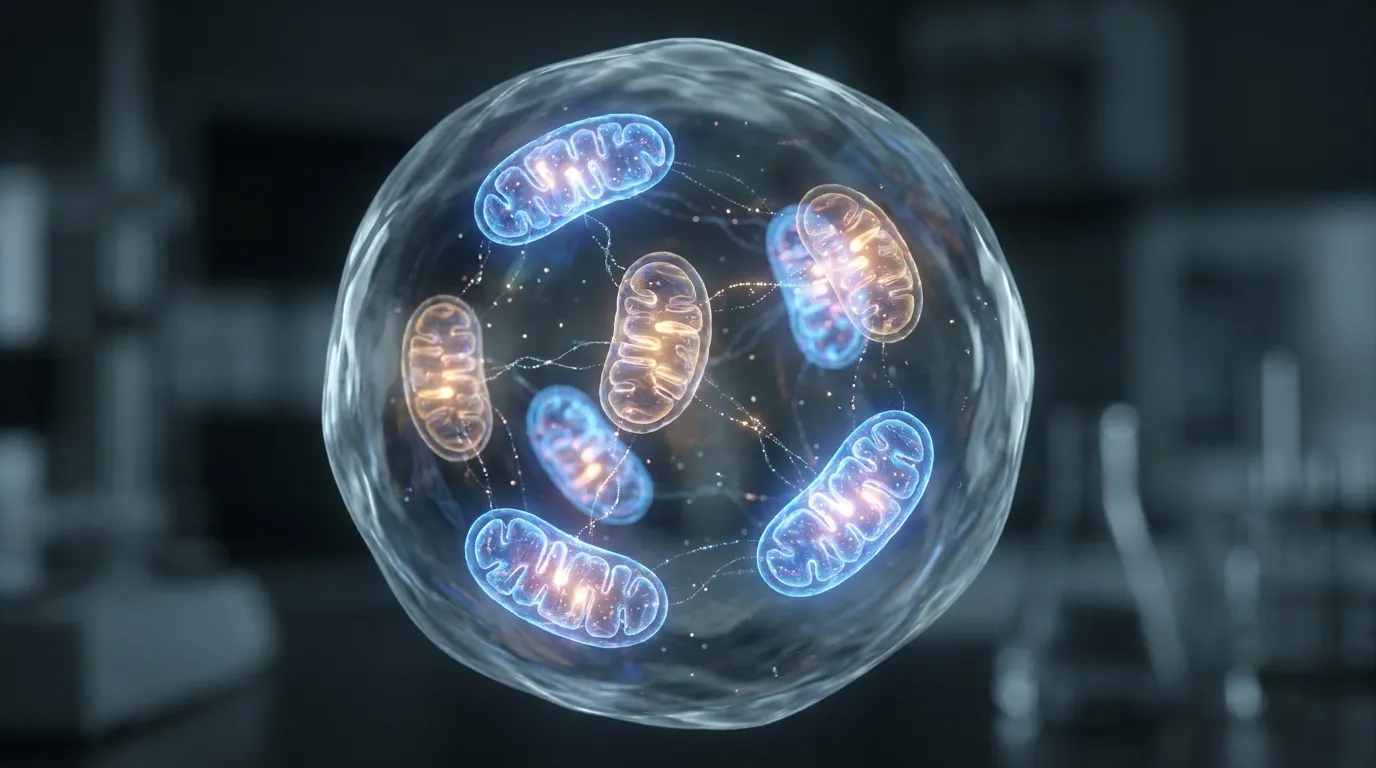
Here is the simple version. In the reactions that break down glucose and fats, NAD+ picks up electrons and becomes NADH; that NADH then feeds the mitochondria, where the electrons are used to generate ATP. Separately, NAD+ is consumed (not just recycled) by sirtuins and PARP enzymes that govern cellular maintenance and DNA repair, which is why the molecule is so central to theories about aging. Your body keeps NAD+ topped up through two routes. The main one is the salvage pathway, in which the enzyme NAMPT converts nicotinamide back into NMN, the immediate building block of NAD+. The body can also build NAD+ from scratch (de novo) starting from the amino acid tryptophan, and dietary vitamin B3 feeds in as a precursor (AHA Circulation, "NAD+ Metabolism in Cardiac Health, Aging, and Disease", 2021, retrieved 2026-06-15).
The receptor-level and enzyme-kinetic deep dive (how sirtuins read NAD+ levels, how NAMPT is regulated) is its own scientific rabbit hole. We keep it at overview level here. The single idea worth carrying forward is that you do not "absorb NAD+" by swallowing or infusing it intact; you feed the salvage pathway with the right precursors, and your cells rebuild it.
Why do NAD+ levels fall as you age?
NAD+ levels appear to decline with age across several tissues, which is the central reason NAD+ became a longevity target, though the human data are limited and the size of the drop varies a lot by tissue and study. The working theory is that as cells age they both make less NAD+ and burn through more of it, leaving less available for energy and repair.
A 2021 review pulling together the human evidence reported some striking but uneven numbers. Skin NAD+ was estimated to fall roughly 68% between newborns and young adults, with a further drop of around 60% from young adulthood into middle age; liver NAD+ fell about 30% between people under 45 and over 60; and brain NAD+ measured by spectroscopy dropped on the order of 10 to 20% across adulthood (Nutrients, "Age-Dependent Decline of NAD+ Universal Truth or Confounded Consensus?", 2021, retrieved 2026-06-15). The same review is careful to add that the human evidence is sparse and inconsistent, so these figures are best read as a direction of travel, not a precise clock.
Why would it fall? Two ideas dominate. First, the enzyme that drives recycling, NAMPT, becomes less active with age, slowing the salvage pathway. Second, age-related stress and inflammation activate NAD+-consuming enzymes (especially PARPs and the CD38 enzyme), which drain the pool faster. The result is a supply-and-demand squeeze. This is exactly the gap that NAD+ therapy and precursor supplements are marketed to fill, by feeding more raw material into the salvage pathway.
IV NAD+ vs oral NMN vs NR vs niacin: what is the difference?
They are different ways to raise NAD+: an IV drip infuses NAD+ directly into the blood, while NMN, NR, and niacin are oral precursors your cells convert into NAD+. The catch is that you do not absorb infused NAD+ whole, so precursors may actually be a more direct route to raising NAD+ inside cells. Cost, convenience, and evidence differ sharply between them.
The honest science here is the most important and least-covered part of the topic. Exogenous NAD+ is largely not taken up by cells intact; outside the cell it is broken down into NMN and then NR, which is what actually crosses into the cell (Frontiers in Aging Neuroscience, "A Pilot Study Investigating Changes in the Human Plasma and Urine NAD+ Metabolome During a 6 Hour Intravenous Infusion of NAD+", 2019, retrieved 2026-06-15). That 2019 pilot found plasma NAD+ did not rise until after about two hours of infusion. So the popular pitch that an IV "delivers NAD+ straight to your cells" oversimplifies what is happening. By contrast, the cleanest human evidence we have is for an oral precursor: a 2018 randomized trial found that 1,000 mg/day of nicotinamide riboside (NR) for six weeks raised NAD+ in blood cells by roughly 60% versus placebo, with no serious adverse events (Nature Communications, "Chronic nicotinamide riboside supplementation is well-tolerated and elevates NAD+ in healthy middle-aged and older adults", 2018, retrieved 2026-06-15). Niacin (nicotinic acid), the original vitamin B3, is the cheapest precursor of all, though it famously causes skin flushing at supplemental doses (NIH Office of Dietary Supplements, "Niacin Health Professional Fact Sheet", retrieved 2026-06-15).
Here is how the main routes compare at a glance (not a recommendation, just orientation):
| Route | What it is | Evidence it raises NAD+ | Flushing? | Regulatory status | Typical cost |
|---|---|---|---|---|---|
| IV NAD+ drip | NAD+ infused into a vein at a clinic | Raises plasma NAD+ over hours, but tissue/intracellular effect unproven; broken down to NMN/NR first | No | Clinic service; NAD+ not an FDA-approved drug | High (hundreds of dollars per session) |
| NMN (oral) | Nicotinamide mononucleotide capsule | Raises NAD+ markers in trials; human longevity data early | No | Status flip-flopped (excluded 2022, reinstated 2025) | Moderate |
| NR (oral) | Nicotinamide riboside capsule | Strongest human data: ~60% rise in blood-cell NAD+ (2018 RCT) | No | Marketed as a supplement; generally recognized | Moderate |
| Niacin (oral) | Nicotinic acid, vitamin B3 | Long-established NAD+ precursor; raises NAD+ | Yes, common | Established vitamin/supplement | Very low |
The full head-to-head on NMN versus NR (conversion pathways, which raises NAD+ more efficiently, how to choose) is its own deep-dive and would cannibalize this hub if we ran it here. We keep it to the table above and link out to the full NMN vs NR comparison.
Our take: The biggest myth in this space is that an IV "puts NAD+ directly into your cells." It does not, at least not in the simple way the marketing implies, because the molecule is dismantled outside the cell first. That does not make IV NAD+ useless, but it does mean the breathless "direct delivery" claim is not supported, and a far cheaper oral precursor has the cleaner human evidence for actually raising NAD+.
How strong is the evidence for NAD+ therapy?
The evidence is promising in mice but still preliminary in humans: precursors reliably raise NAD+ markers in people, but proof that this slows aging or delivers the big energy and longevity benefits is limited and mixed. Raising a biomarker is not the same as living longer or feeling dramatically better, and that gap is the heart of the honest picture.
The mouse literature is genuinely exciting. In rodents, boosting NAD+ has improved metabolism, exercise capacity, and various markers of aging. The problem is translation. A 2026 systematic review of NAD+ precursor supplementation concluded that human evidence of reliable benefit on wellness and aging endpoints remains limited and heterogeneous, and framed precursors as experimental adjuncts rather than established anti-aging therapies, while noting short-term safety looks generally favorable (Ageing Research Reviews, "NAD+ supplementation for anti-aging and wellness: a PRISMA-guided systematic review", 2026, retrieved 2026-06-15). In other words, the trials consistently show you can raise NAD+ levels in the blood, but they have not consistently shown that doing so produces the dramatic clinical payoffs people are chasing.
The practical takeaway for a reader is to separate three different claims that often get blurred together. "Precursors raise NAD+ markers in humans" is well supported. "IV NAD+ raises NAD+ inside your tissues" is unproven. And "NAD+ therapy reverses aging or restores youthful energy" is, in 2026, a hope built mostly on animal studies and small human pilots, not on large clinical trials.
Our take: Treat the energy and longevity claims the way you would treat any early-stage science: interesting, plausible in parts, and far from settled. The strongest honest statement is narrow, that oral precursors measurably raise NAD+, and the leap from there to "anti-aging therapy" is exactly the leap the evidence has not yet made.
Is NAD+ therapy safe?
For most people, oral NAD+ precursors look well tolerated in short studies, and slow IV infusions are generally manageable, but fast IV drips commonly cause uncomfortable infusion-related effects, and long-term human safety data are thin. "Generally tolerated short-term" is the honest headline, not "proven safe for years of use."
On the oral side, trials of NR have reported good tolerability with no serious adverse events at doses up to 1,000 mg/day over six weeks (Nature Communications, 2018, retrieved 2026-06-15). Niacin is the exception for a predictable reason: nicotinic acid causes flushing (redness, warmth, tingling) at supplemental doses, while nicotinamide does not (NIH Office of Dietary Supplements, "Niacin", retrieved 2026-06-15). The IV picture is more nuanced and clearly rate-dependent. A small 2026 tolerability study found that all six people receiving IV NAD+ experienced moderate-to-severe infusion-related effects such as cramping, nausea, a faster heart rate, and chest pressure, which resolved immediately when the infusion was slowed or stopped; IV nicotinamide riboside was far better tolerated (Frontiers in Aging, "Intravenous infusion of NAD+ versus nicotinamide riboside: a retrospective tolerability pilot study", 2026, retrieved 2026-06-15). A slower six-hour infusion in the 2019 pilot reported no adverse events, reinforcing that the discomfort tracks infusion speed rather than the molecule being inherently dangerous.
A hub-level summary of what is and is not known:
- Commonly reported with fast IV drips: nausea, abdominal cramping, flushing or warmth, chest tightness or pressure, faster heart rate during the infusion; these typically resolve when the drip is slowed.
- Oral precursors (NR, NMN): generally well tolerated short-term in trials; niacin causes flushing.
- Quality-related risks: clinic-compounded and online products are not standardized, so purity and dose accuracy vary; this is independent of the molecule itself.
- Unknown: long-term safety of repeated high-dose NAD+ therapy in humans, because the long-horizon data do not yet exist.
The full safety and side-effect deep-dive, including how clinics manage infusion rate, lives in our dedicated NAD+ side effects guide. Before sourcing any injectable or compounded product, read how to vet peptide quality.
Is NAD+ therapy legal, and what happened with NMN?
NAD+ itself and its precursors are legal to buy in most places, but none are FDA-approved drugs for anti-aging, and NMN in particular has had a genuinely confusing back-and-forth regulatory history in the United States. The short version: IV NAD+ is offered as a clinic service rather than an approved treatment, NR is sold freely as a supplement, and NMN's supplement status flipped twice in three years.
The NMN saga is the citable controversy worth knowing. In 2022, the FDA concluded that NMN was excluded from the legal definition of a dietary supplement under the "drug-preclusion" clause, because NMN had been authorized for investigation as a new drug (a drug company had an active investigational program) before being widely marketed as a supplement (Nutritional Outlook, "NMN not a dietary ingredient, says FDA, citing drug preclusion clause", 2022, retrieved 2026-06-15). That effectively put NMN's supplement sales in limbo. Then, in 2025, the FDA reversed course, reinstating NMN's status as a lawful dietary ingredient after acknowledging it had been marketed as a supplement before the drug investigation began (NutraIngredients-USA, "FDA reinstates NDI status of NMN", 2025, retrieved 2026-06-15). So as of 2026, NMN is sold as a supplement again, but the episode is a useful reminder that "available to buy" and "FDA-endorsed" are not the same thing.
None of this makes NAD+ therapy an approved anti-aging treatment. The 2026 systematic review is explicit that these remain experimental for longevity and wellness endpoints (Ageing Research Reviews, 2026, retrieved 2026-06-15). For the broader legal landscape around research compounds and supplements, see are peptides legal.
Our take: The NMN flip-flop is the clearest sign of how young this field is regulating itself. A molecule went from "legal supplement" to "excluded" to "legal supplement again" inside three years. None of that says anything about whether it works; it says the rules are still being written, so buyer diligence matters more here than usual.
What does NAD+ therapy cost, and how do people use it?
IV NAD+ drips are the most expensive route, often running into the hundreds of dollars per session at a clinic, while oral NMN and NR precursors are a fraction of that per day, and niacin is the cheapest of all. How people use it splits cleanly along that cost line.
In practice, the people chasing the dramatic "reset" experience tend to do a course of IV drips at a clinic, sitting for an infusion that is deliberately slowed to stay comfortable. The people taking a maintenance approach tend to use a daily oral precursor (most commonly NR or NMN) at home, which is cheaper, needs no clinic visit, and has the cleaner human evidence for actually raising NAD+. Because there is no approved protocol, dosing and frequency are conventions rather than validated regimens, and they vary widely between clinics and individuals.
If you are researching this path, the responsible groundwork is the same as for any compounded or research-grade product:
- Confirm the legal and regulatory status for your country and product, especially given the NMN history. See are peptides legal.
- Demand quality documentation. For compounded NAD+ or precursors, ask for a certificate of analysis and learn to read it. See how to vet peptide quality.
- Match the route to the goal and the evidence. Oral precursors have the cleanest human data for raising NAD+; IV is costlier and its intracellular benefit is unproven.
- Talk to a qualified clinician who can weigh your health situation, medications, and whether any of this is worth it for you.
We are describing what people do, not endorsing it. None of these are approved anti-aging treatments, and the cheaper, better-evidenced option is often the oral one.
Frequently Asked Questions
The bottom line
NAD+ is a fascinating molecule wearing a misleading label. It is a coenzyme, not a peptide, and it sits at the literal center of how your cells make energy and repair themselves. The observation that NAD+ levels fall with age is real, the mouse data on restoring it are genuinely interesting, and oral precursors like NR can measurably raise NAD+ in people. That is the legitimate core of the excitement.
The discipline is in the gaps. Infused NAD+ is taken apart before it reaches your cells, so the "direct delivery" pitch behind expensive IV drips is not supported the way it is sold. Raising a blood marker is not the same as reversing aging, and the human evidence for those headline longevity benefits is still preliminary. NMN's status flipped from legal to excluded to legal again in three years, none of these are FDA-approved anti-aging treatments, and the cheaper oral route often has the better evidence. If you take one thing from this hub, let it be that NAD+ science is promising and early, and that a qualified clinician beats a clinic menu. From here, the natural next reads are NMN vs NR, how to vet peptide quality, and are peptides legal.
Sources
- PubChem. "Nicotinamide adenine dinucleotide, CID 5892." Retrieved 2026-06-15. https://pubchem.ncbi.nlm.nih.gov/compound/5892
- Wikipedia. "Nicotinamide adenine dinucleotide." Retrieved 2026-06-15. https://en.wikipedia.org/wiki/Nicotinamide_adenine_dinucleotide
- "Age-Dependent Decline of NAD+ Universal Truth or Confounded Consensus?" Nutrients / PMC, 2021. Retrieved 2026-06-15. https://pmc.ncbi.nlm.nih.gov/articles/PMC8747183/
- "Chronic nicotinamide riboside supplementation is well-tolerated and elevates NAD+ in healthy middle-aged and older adults." Nature Communications, 2018. Retrieved 2026-06-15. https://pmc.ncbi.nlm.nih.gov/articles/PMC5876407/
- Trammell, S.A.J. et al. "Nicotinamide riboside is uniquely and orally bioavailable in mice and humans." Nature Communications, 2016. Retrieved 2026-06-15. https://www.nature.com/articles/ncomms12948
- "A Pilot Study Investigating Changes in the Human Plasma and Urine NAD+ Metabolome During a 6 Hour Intravenous Infusion of NAD+." Frontiers in Aging Neuroscience, 2019. Retrieved 2026-06-15. https://pmc.ncbi.nlm.nih.gov/articles/PMC6751327/
- "Intravenous infusion of NAD+ versus nicotinamide riboside: a retrospective tolerability pilot study in a real-world setting." Frontiers in Aging, 2026. Retrieved 2026-06-15. https://pmc.ncbi.nlm.nih.gov/articles/PMC12907335/
- "NAD+ Metabolism in Cardiac Health, Aging, and Disease." Circulation (AHA Journals), 2021. Retrieved 2026-06-15. https://www.ahajournals.org/doi/10.1161/CIRCULATIONAHA.121.056589
- "NAD+ supplementation for anti-aging and wellness: a PRISMA-guided systematic review of preclinical and clinical evidence." Ageing Research Reviews, 2026. Retrieved 2026-06-15. https://www.sciencedirect.com/science/article/pii/S1568163726000498
- NIH Office of Dietary Supplements. "Niacin Health Professional Fact Sheet." Retrieved 2026-06-15. https://ods.od.nih.gov/factsheets/Niacin-HealthProfessional/
- Nutritional Outlook. "NMN not a dietary ingredient, says FDA, citing drug preclusion clause." 2022. Retrieved 2026-06-15. https://www.nutritionaloutlook.com/view/nmn-not-a-dietary-ingredient-says-fda-citing-drug-preclusion-clause
- NutraIngredients-USA. "FDA reinstates NDI status of NMN with new letters to ingredient players." 2025. Retrieved 2026-06-15. https://www.nutraingredients.com/Article/2025/12/09/fda-reinstates-ndi-status-of-nmn-with-new-letters-to-ingredient-players/