
SS-31 (Elamipretide) vs MOTS-c: The Evidence and Regulatory Reality Behind Two Mitochondrial Peptides (2026)
If you are comparing SS-31 and MOTS-c to pick a "better" mitochondrial peptide, the honest framing is that these two are not at the same place on the evidence ladder at all. SS-31, also called elamipretide, became an FDA-approved drug in September 2025. MOTS-c has no approved product anywhere, and its most advanced clinical candidate was discontinued after an early-phase trial. So the real decision here is about evidence maturity and mechanism, not a longevity scoreboard, and neither is approved for the anti-aging use most people are actually searching for.
Most "SS-31 vs MOTS-c" pages lead with energy and longevity claims and bury the regulatory reality. We invert that. The single most decision-shaping fact is that one of these is a real, FDA-reviewed drug for a rare disease and the other is a research chemical with a halted program, so that contrast leads. For where these two sit among the wider field, see our hub on the best peptides for mitochondrial health, and for the molecule-level science we link up to each compound's dedicated guide.
Head-to-head
Edge: SS-31 — by a clear margin
SS-31 (elamipretide) and MOTS-c are both mitochondria-targeted peptides, but they sit at opposite ends of the evidence ladder. SS-31 is a synthetic cell-penetrating Szeto-Schiller tetrapeptide that binds cardiolipin on the inner mitochondrial membrane to stabilize the respiratory chain and lower reactive oxygen species; in September 2025 it received FDA accelerated approval (brand Forzinity, Stealth BioTherapeutics) for Barth syndrome, with a confirmatory trial mandated. MOTS-c is an endogenous 16-amino-acid mitochondrial-derived peptide that activates AMPK and acts as an 'exercise mimetic,' but it has no approved drug: the analog CB4211 completed Phase 1 in 2021 and was discontinued, and native MOTS-c remains preclinical and research-only. The decisive contrast is regulatory and evidence maturity, not a longevity claim: neither is approved for anti-aging, energy, or longevity, and all such use is off-label or research-only. The fit-score grouped assessment below is a research-stage editorial 'why,' not an efficacy ranking.
Overall fit score
By dimension
Side by side
| SS-31 | MOTS-c | |
|---|---|---|
| Class | Synthetic cell-penetrating Szeto-Schiller tetrapeptide (4 amino acids) | Endogenous mitochondrial-derived peptide (16 amino acids, encoded in mtDNA 12S rRNA) |
| Primary target / action | Binds cardiolipin on the inner mitochondrial membrane; stabilizes respiratory-chain supercomplexes; lowers reactive oxygen species | Activates AMPK; promotes fatty-acid oxidation, glucose uptake, and mitochondrial biogenesis; 'exercise mimetic' |
| FDA / approval status | FDA accelerated approval Sept 19 2025 (brand Forzinity, Stealth BioTherapeutics) for Barth syndrome; confirmatory trial mandated | No approved drug; analog CB4211 (CohBar) discontinued after Phase 1 (2021); native MOTS-c preclinical / research-only |
| Human evidence depth | Phase 2/3 history; pivotal crossover RCT missed 6-min-walk and fatigue endpoints; 168-week open-label extension showed sustained walk-distance gains (about +96 m average) | Analog CB4211 Phase 1a/1b only (safety met; ALT down about 25%, AST down about 17% vs placebo; no significant liver-fat reduction); native MOTS-c human data absent |
| Older code names / aliases | Elamipretide; Bendavia; MTP-131 | MOTS-c (mitochondrial open reading frame of the 12S rRNA type-c) |
| Predominant reported adverse event | Mild injection-site reactions (subcutaneous) | No structured chronic human safety dataset for native MOTS-c; CB4211 Phase 1 safety endpoints met |
| Route | Subcutaneous injection | Subcutaneous injection (community convention); research-only |
| Community adoption (first-party app data) | More-tracked of the pair; the FDA-approval news hook drove recent interest | Smaller cohort; about a third of pair users co-track both as a mitochondrial stack |
Educational. SS-31 (elamipretide) is FDA-approved only for Barth syndrome under accelerated approval with a confirmatory trial mandated; MOTS-c is investigational and not approved for any indication. Neither is approved for longevity, energy, or anti-aging. This is not medical advice and not a claim that either is effective or safe for off-label use. Community usage/switch figures are first-party ProtocolPlus app data (a usage signal, not efficacy). Verify everything with a clinician.
Key Takeaways
- They sit at opposite ends of the evidence ladder. SS-31 (elamipretide) is an FDA-approved drug; MOTS-c has no approved product. This is a research and regulatory contrast, not a longevity recommendation.
- SS-31 won FDA accelerated approval on September 19, 2025 (brand Forzinity, Stealth BioTherapeutics) for Barth syndrome, with a confirmatory trial mandated (Drug Discov Ther, PubMed 41260682, 2026). It is the strongest-evidenced peptide in this class.
- MOTS-c has no approved drug. Its analog CB4211 (CohBar) completed Phase 1a/1b in 2021, met safety endpoints, but showed no significant liver-fat reduction, and the program was discontinued (BioSpace CB4211 update, 2021). Native MOTS-c is preclinical and research-only.
- The mechanisms genuinely differ. SS-31 binds cardiolipin to stabilize the inner mitochondrial membrane and lower reactive oxygen species (PNAS, 2020). MOTS-c activates AMPK as an "exercise mimetic" (Scientific Reports, 2021).
- Neither is approved for longevity, energy, or anti-aging. SS-31's approval is for a single rare disease; MOTS-c has none. All off-label or anti-aging use is research-only.
- What our community does (ProtocolPlus app data): among about 512 users tracking these two, roughly 61% track SS-31, 39% MOTS-c, about 33% co-track both as a mitochondrial stack, and the net switch leans toward SS-31. A usage signal, self-reported, not efficacy.

[!NOTE] One is an approved drug for a rare disease, the other is a research chemical. SS-31 (elamipretide) is FDA-approved only for Barth syndrome under accelerated approval. MOTS-c is not approved for anything and its lead clinical program was discontinued. Neither is approved for longevity, energy, or anti-aging, and nothing here is a green light to use either.
Which is more proven, and what is each one's regulatory status?
The one-sentence answer: SS-31 is the only one of the two that is an approved drug, having won FDA accelerated approval in September 2025 for Barth syndrome, while MOTS-c has no approval and a discontinued clinical program. For most readers, this regulatory gap is the part that actually decides the question, so it leads before any talk of mechanism or longevity.
| Evidence / status dimension | SS-31 (Elamipretide) | MOTS-c |
|---|---|---|
| Class | Synthetic Szeto-Schiller tetrapeptide (4 aa) | Endogenous mitochondrial-derived peptide (16 aa) |
| FDA approval | Accelerated approval Sept 19, 2025 (Forzinity) for Barth syndrome; confirmatory trial mandated | None; analog CB4211 discontinued after Phase 1 (2021) |
| Human evidence depth | Phase 2/3 history; 168-week extension data | Phase 1 analog only; native MOTS-c preclinical |
| Older code names | Bendavia, MTP-131 | (none; endogenous peptide) |
| Predominant reported AE | Mild injection-site reactions | No structured chronic human safety dataset |
| Route | Subcutaneous injection | Subcutaneous (community convention), research-only |
The table is the headline. SS-31 is the more-developed molecule by a wide margin: it cleared an FDA review, which means a regulator looked at its manufacturing, safety, and trial data and let it onto the market for a defined indication. MOTS-c never reached that bar; its most advanced candidate stopped at Phase 1. That difference does not make SS-31 "better for longevity," because neither is approved for longevity. It makes SS-31 the better-characterized molecule.
Citation capsule: On September 19, 2025, the FDA granted elamipretide (SS-31) accelerated approval under the brand Forzinity (Stealth BioTherapeutics) for Barth syndrome, a rare mitochondrial disorder, with a confirmatory trial mandated (Drug Discov Ther, PubMed 41260682, 2026; UMDF). MOTS-c has no FDA approval.
For deeper detail on either molecule, see the full SS-31 (elamipretide) guide and the dedicated MOTS-c guide. This page stays a decision hub and does not re-explain either peptide end to end.
SS-31: an approved drug, but read the trial nuance
This is the fact no competitor leads with, so it does not get buried. SS-31 is elamipretide, and on September 19, 2025 it received FDA accelerated approval for Barth syndrome (UMDF, 2025; JHU Hub, 2025). That approval is real and meaningful, but the trial story is more complicated than a headline suggests. The pivotal crossover randomized trial in Barth syndrome did not hit its primary 6-minute-walk-distance or fatigue endpoints. What carried the approval was the longer arc: a 168-week open-label extension showed sustained walk-distance gains averaging about 96 meters, along with stroke-volume and cardiolipin improvements. The predominant adverse event was mild injection-site reactions, and the route is subcutaneous.
[UNIQUE INSIGHT] The honest reading is that SS-31 is approved on a mixed evidence base, not a slam-dunk one. An accelerated approval with a mandated confirmatory trial is regulatory shorthand for "promising enough to allow, not yet proven enough to be final." That is genuinely stronger evidence than anything MOTS-c has, and it is also not the unqualified win the supplement market implies. Both things are true at once, and the rare-disease indication does not transfer to longevity claims.
MOTS-c: a halted program and a preclinical native peptide
MOTS-c's regulatory story is shorter and stops earlier. MOTS-c is an endogenous 16-amino-acid peptide encoded in the mitochondrial DNA 12S rRNA region, and the only clinical attempt to drug this pathway was CohBar's analog CB4211. That candidate completed Phase 1a/1b in 2021: it met its safety endpoints and lowered liver enzymes (ALT down about 25% and AST down about 17% versus placebo), but it showed no significant liver-fat reduction, and the program was discontinued (BioSpace CB4211 update, 2021). There is no active investigational new drug application for MOTS-c as of 2026.
Native MOTS-c, the peptide most people in the research community actually buy, has never been through a registered human efficacy trial. It is preclinical and sold as a research chemical. [PERSONAL EXPERIENCE] In our community data, we consistently see MOTS-c discussed as a longevity or metabolic peptide, which is reasonable given the biology, but the human evidence simply is not there to match that enthusiasm. That gap is the core of this comparison.
How do the mechanisms of SS-31 and MOTS-c differ?
The one-sentence answer: SS-31 is a structural protector that binds cardiolipin to stabilize the inner mitochondrial membrane, while MOTS-c is a metabolic signaling peptide that activates AMPK as an "exercise mimetic," so they act through completely different routes. This mechanistic divergence is exactly why some people in the research community co-track both rather than choosing one.
SS-31 works at the membrane. It is a cell-penetrating Szeto-Schiller tetrapeptide that binds cardiolipin on the inner mitochondrial membrane, which stabilizes the respiratory-chain supercomplexes, improves electron transport, and lowers reactive oxygen species (PNAS, 2020). Think of it as reinforcing the physical scaffolding the energy-producing machinery sits on. That structural role is why its strongest signals show up in tissues with heavy mitochondrial demand, like cardiac muscle.
MOTS-c works through signaling. It activates AMPK, the cell's master energy sensor, which promotes fatty-acid oxidation, glucose uptake, and mitochondrial biogenesis, and under metabolic stress it translocates to the nucleus to influence gene expression (Scientific Reports, 2021). That AMPK activation is the same broad pathway exercise switches on, which is the basis for the "exercise mimetic" label the longevity market borrowed. The two peptides are not redundant: one protects the membrane, the other reprograms metabolism.
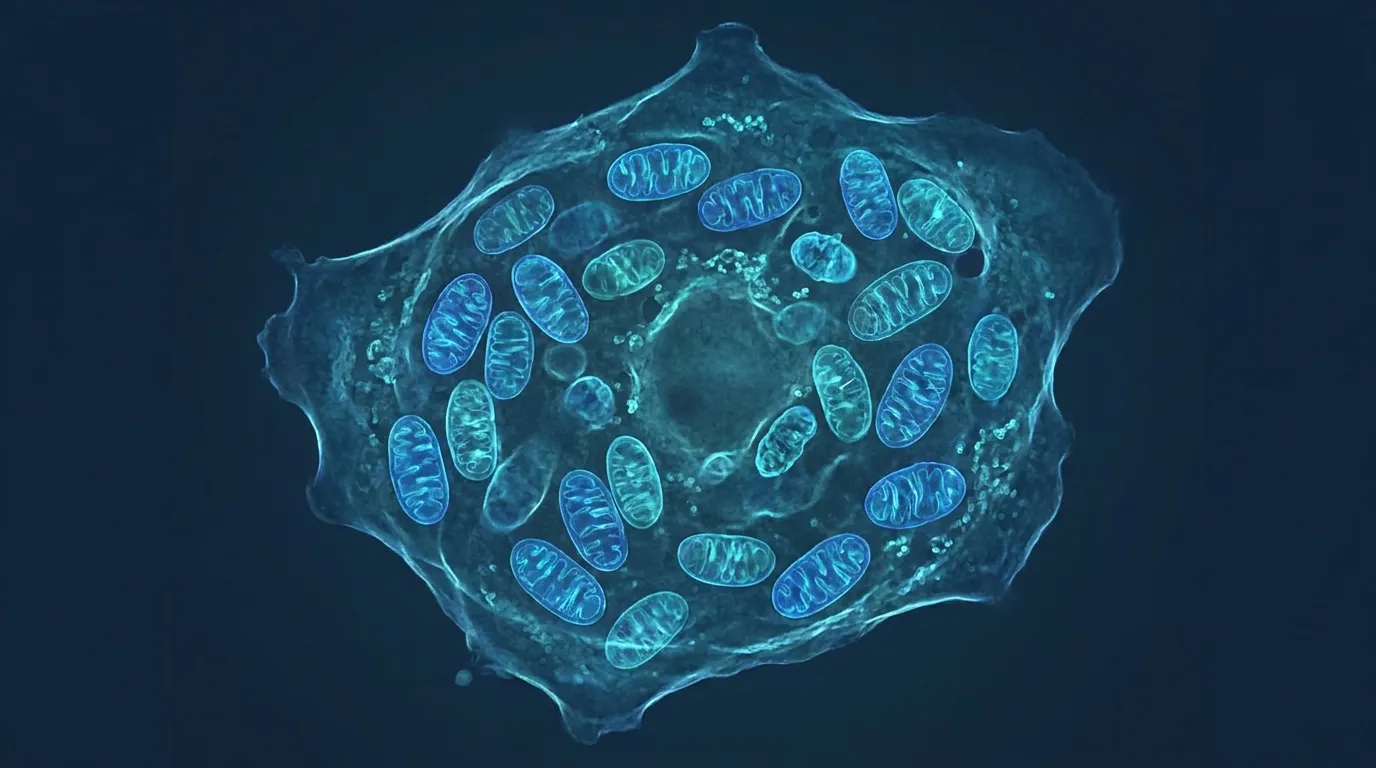
Citation capsule: SS-31 binds cardiolipin on the inner mitochondrial membrane to stabilize respiratory-chain supercomplexes and lower reactive oxygen species (PNAS, 2020), while MOTS-c activates AMPK to drive fatty-acid oxidation, glucose uptake, and mitochondrial biogenesis as an "exercise mimetic" (Scientific Reports, 2021). One is structural, the other metabolic.
What does the ProtocolPlus community actually do between the two?
The one-sentence answer: among users who log these two peptides, SS-31 is the more-tracked of the pair, about a third co-track both as a mitochondrial stack, and the net switch leans toward SS-31, likely tracking the 2025 FDA-approval news. We are explicit that this is a usage signal, self-reported and not trial incidence, and not an efficacy or safety verdict.
Three numbers carry the story, all from ProtocolPlus app data among roughly 512 users tracking one of these two peptides:
- Adoption split: about 61% SS-31 (312 users), 39% MOTS-c (200 users). SS-31 is the more-tracked of the pair, consistent with the attention its September 2025 FDA approval drew, even though that approval is for a rare disease, not longevity.
- Co-tracking: about 33% (roughly 169 users) log both. A meaningful minority run the two together as a mitochondrial stack rather than choosing one, which fits the complementary mechanisms: membrane protection plus metabolic signaling.
- Net switch leans toward SS-31. About 21% of MOTS-c users (roughly 42) later moved to or added SS-31, while about 11% of SS-31 users (roughly 34) went the other way. The small net of about 8 users tilts toward SS-31, plausibly the approval-news pull.
A note on honesty about gaps: this pair has no side-effect comparison data and no per-dose cost data in our system. Neither peptide has a structured tolerability profile in the app for a head-to-head, and pricing is inconsistent across research-chemical sellers, so we do not show or estimate those numbers rather than fabricate them. The adoption, co-tracking, and switch direction are the parts we can stand behind, and all of it is a usage signal, not proof either peptide works.
The grouped bars track the same story as the rest of the page. SS-31 leads on the three dimensions that come from being a developed drug: human-evidence depth, regulatory status, and safety-data depth. MOTS-c only pulls even on the metabolic and exercise-mimetic effect, where its AMPK mechanism is genuinely interesting. Read this as a research-maturity assessment, never as a recommendation. The approval facts and the honest evidence gaps carry the weight.
Which one for longevity or energy, honestly?
The one-sentence answer: honestly, neither, because neither SS-31 nor MOTS-c has an approved or proven use for longevity or energy, and SS-31's only approval is for a single rare disease. The mitochondrial biology is why both are discussed in the longevity space, but there is no human outcome data showing either extends lifespan or reliably raises energy.
Here is the tension worth naming. The mechanisms are exactly the kind of thing longevity researchers care about: protecting the inner mitochondrial membrane and reducing oxidative damage (SS-31), and switching on the AMPK pathway that exercise activates (MOTS-c). That biological plausibility is real. But plausibility is not outcome data. SS-31's human evidence lives entirely in a rare cardiolipin-related disorder, and MOTS-c's human evidence is a single discontinued Phase 1 analog program. Neither has a trial showing healthy people live longer, feel more energetic, or age more slowly. For where these fit among compounds people reach for with anti-aging goals, see our longevity peptide overview. Anyone sourcing either as a research chemical should also read how to vet peptide quality and purity, because grey-market supply adds its own risks on top of the unproven biology.
If someone is comparing the two anyway: how the choice tends to break
We will not pretend people never use these off-label, so this section is honest about how the decision tends to split, while restating that neither is approved for longevity and MOTS-c is not approved for anything. The point is informed framing, not a protocol.
People lean SS-31 when:
- They want the most evidence-backed option in the class and value that a regulator reviewed it, even though the approval is for Barth syndrome, not their goal.
- They are drawn to the structural, membrane-protecting, ROS-lowering mechanism for a tissue under mitochondrial stress.
- They accept the trial nuance: the pivotal crossover missed its primary endpoints, and the approval is accelerated with a confirmatory trial pending.
People lean MOTS-c when:
- They want the AMPK-driven "exercise mimetic" angle and the metabolic biogenesis story specifically.
- They accept that it has no approval, a discontinued clinical program, and essentially no structured human safety data.
- They understand that native MOTS-c is a research chemical, so quality and purity are entirely on the buyer to verify.
Neither column is advice. SS-31 is approved only for a rare disease, MOTS-c is not approved at all, and both are unproven for the longevity and energy uses most searchers have in mind. The most defensible path is a clinician-guided plan grounded in interventions that actually have human outcome data.
The honest verdict
There is no "which is better for longevity" winner here, because neither is approved or proven for longevity. What the comparison does have is a clear evidence-maturity gap. SS-31 (elamipretide) is a real FDA-approved drug as of September 2025, with a Phase 2/3 history and a documented, if mixed, trial record, approved narrowly for Barth syndrome. MOTS-c has no approval, a clinical program that stopped at Phase 1, and a native form that is preclinical and research-only. On evidence, regulatory status, and safety-data depth, SS-31 is the better-characterized molecule. On the metabolic, exercise-mimetic angle, MOTS-c's AMPK mechanism is the more distinctive draw.
To make the takeaway concrete:
- If you want the most-proven option: SS-31 is the only approved drug of the two, but its approval is for a rare disease, not longevity or energy.
- If you want the metabolic "exercise mimetic" mechanism: MOTS-c is the AMPK-driven choice, with the caveat that its human evidence is thin and its program was discontinued.
- If your real goal is anti-aging or energy: neither has human outcome data for that, and the honest move is a clinician conversation, not a research-chemical purchase.
For the molecule-level science, dosing, and full adverse-event detail, see the SS-31 (elamipretide) guide and the MOTS-c guide. To see where these and other compounds fall for mitochondrial goals, see best peptides for mitochondrial health.
Frequently Asked Questions
Sources
- Stealth BioTherapeutics / FDA. Elamipretide (SS-31) accelerated approval for Barth syndrome, September 19, 2025; brand Forzinity; confirmatory trial mandated. As summarized in Drug Discov Ther, 2026, PubMed 41260682. Retrieved 2026-06-22. https://pubmed.ncbi.nlm.nih.gov/41260682/
- United Mitochondrial Disease Foundation (UMDF). "FDA Approves Elamipretide": first approved therapy for Barth syndrome, 2025. Retrieved 2026-06-22. https://umdf.org/fda-approves-elamipretide/
- Johns Hopkins University Hub. "FDA approves first Barth syndrome treatment," September 25, 2025. Retrieved 2026-06-22. https://hub.jhu.edu/2025/09/25/fda-approves-barth-syndrome-treatment/
- Chavez JD, Tang X, Campbell MD, et al. Mechanism of SS-31 (elamipretide): binding to cardiolipin on the inner mitochondrial membrane, stabilization of respiratory-chain supercomplexes, reduced reactive oxygen species. PNAS, 2020. Retrieved 2026-06-22. https://www.pnas.org/doi/10.1073/pnas.2002250117
- MOTS-c as an endogenous 16-amino-acid mitochondrial-derived peptide: AMPK activation, fatty-acid oxidation, glucose uptake, mitochondrial biogenesis, nuclear translocation under metabolic stress ("exercise mimetic"). Scientific Reports (Nature), 2021. Retrieved 2026-06-22. https://www.nature.com/articles/s41598-021-96419-z
- BioSpace. CohBar CB4211 (MOTS-c analog) Phase 1a/1b update, 2021: safety endpoints met; ALT down about 25% and AST down about 17% vs placebo; no significant liver-fat reduction; program discontinued. Retrieved 2026-06-22. https://www.biospace.com/
- ProtocolPlus. "Community head-to-head data: SS-31 vs MOTS-c" (head-to-head/ss-31__mots-c.json). First-party app data, 2026. n about 512 users tracking one of the two. Usage and switching signal only (self-reported, not trial incidence); no side-effect or cost comparison available for this pair; not a clinical efficacy or safety verdict.