
MOTS-c: The Complete Guide to the Mitochondrial Peptide
MOTS-c is a tiny natural peptide your own mitochondria make, and it has become one of the most talked-about "longevity" and metabolism compounds in the research-peptide world. Your body produces it during exercise, its levels fall as you age, and in mice it does some genuinely striking things, like roughly doubling running capacity in older animals. That mix of real science and big promises is exactly why it draws so much attention.
This is the complete, high-level guide to the compound: what MOTS-c actually is, how it works, what the research does and does not show, the dosing ranges reported in research planning, side effects, results people hope for, its legal status, and how it is obtained. It sits alongside the other top longevity and healthspan peptides worth knowing. We keep each topic at an honest overview level and link out to dedicated deep-dives, because the single most important fact about MOTS-c is also the easiest to lose in the hype: the impressive results are almost entirely from animals, and the native peptide has never completed a human trial.
Key Takeaways
- MOTS-c is a mitochondrial-derived peptide (MDP) of just 16 amino acids, encoded inside the mitochondrial 12S rRNA gene, discovered in 2015 (Cell Metabolism, 2015).
- It mainly acts on metabolism through AMPK, the cell's master energy sensor, improving how skeletal muscle uses glucose and burning fat in animal models.
- It is exercise-induced and age-declining. Exercise raises MOTS-c sharply, and circulating levels are higher in young people than in older people (PMC review, 2023).
- The human evidence is thin. The native peptide has no completed trials. A MOTS-c analog, CB4211, completed a small Phase 1a/1b trial that was safe but showed only modest, mixed efficacy signals (CohBar, 2021).
- Dosing has no validated human figure. Research-planning and community protocols commonly cite about 5–10 mg subcutaneously, a few times per week, in 4–8 week cycles — a convention, not a validated dose. Treat dosing details as a future spoke. MOTS-c dosing chart deep-dive
- Legally it is research-only: not FDA-approved, sold "for research use only," and banned at all times by WADA as an AMPK activator. See are peptides legal?.
What is MOTS-c?
MOTS-c is a short peptide that your mitochondria themselves encode and release, acting as a metabolic signal that helps the body manage energy. It is one of a small family of "mitochondrial-derived peptides" (MDPs), and at just 16 amino acids it is one of the smallest signaling peptides studied for human health.
The name is a clue to where it comes from. MOTS-c stands for "Mitochondrial ORF (open reading frame) of the 12S rRNA type-c." In plain terms, it is coded by a tiny stretch of DNA hidden inside the mitochondrial 12S ribosomal RNA gene, not by the cell's main nuclear genome. That is unusual and important: most of the body's signals are written in the nucleus, but MOTS-c is written by the mitochondria, the structures that turn food and oxygen into usable energy (Cell Metabolism, "The Mitochondrial-Derived Peptide MOTS-c Promotes Metabolic Homeostasis and Reduces Obesity and Insulin Resistance," 2015, retrieved 2026-06-15)).
MOTS-c was discovered in 2015 by Changhan Lee, Pinchas Cohen, and colleagues at the University of Southern California. Its sequence is highly conserved across at least 14 species, including humans and mice, which usually signals that a molecule does something biologically fundamental (PMC, "MOTS-c: A promising mitochondrial-derived peptide for therapeutic exploitation," 2023, retrieved 2026-06-15). If you are new to this category, our what are peptides primer explains how peptides differ from proteins and hormones.
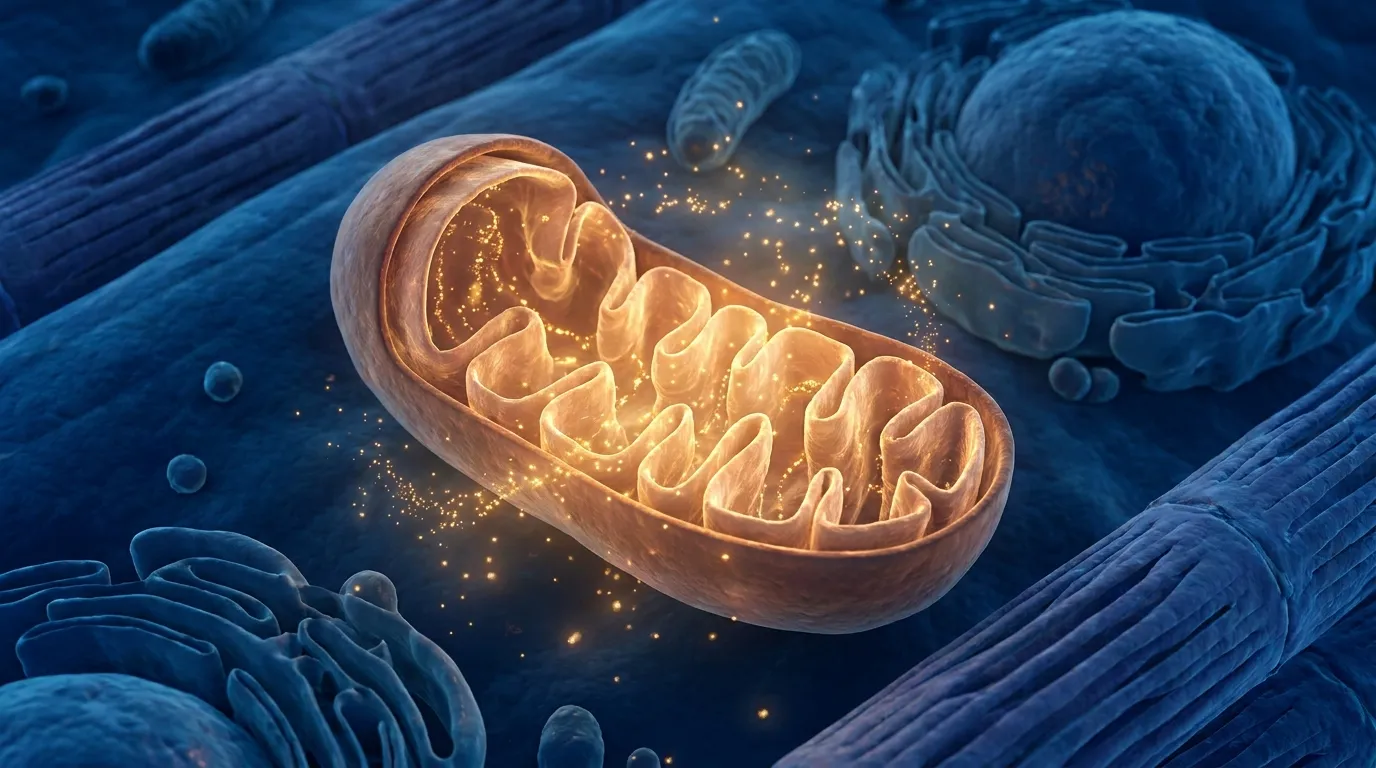
Citation capsule. MOTS-c is a 16-amino-acid mitochondrial-derived peptide encoded within the mitochondrial 12S rRNA gene, identified in 2015 at USC. It acts mainly on metabolism by activating AMPK, is induced by exercise, and declines with age. As of 2026 it is not FDA-approved and the native peptide has no completed human trials. Sources: Cell Metabolism 2015; PMC review 2023.
How does MOTS-c work in the body?
MOTS-c works mostly by switching on AMPK, the cell's "low-fuel" energy sensor, which tells muscle to pull in glucose, burn fat, and use energy more efficiently. Think of AMPK as a thermostat for cellular energy: when it turns on, the cell shifts toward making and using fuel rather than storing it.
The mechanism has a clever twist. Inside the cell, MOTS-c interferes with the folate cycle and the linked purine-building pathway, which raises a signal (AICAR) that activates AMPK (PMC review, 2023, retrieved 2026-06-15). Once AMPK is active, MOTS-c helps muscle cells take up more glucose and improves insulin sensitivity, which is why most research frames skeletal muscle as its main target organ.
There is a second, longer-range action. Under metabolic stress, MOTS-c can move into the cell's nucleus and influence which nuclear genes are switched on, including stress-defense and metabolism genes (PMC review, 2023, retrieved 2026-06-15). In other words, a peptide written by the mitochondria travels to the nucleus to help coordinate the whole cell's response, a kind of "mitochondria-to-nucleus" messaging. The deeper receptor-and-signaling biology is its own topic; our how peptides work guide covers the general mechanisms.
The folate-AICAR-AMPK pathway, step by step
For readers who want the molecular detail, the leading mechanistic model is the folate-AICAR-AMPK axis, and it is more elegant than "MOTS-c turns on AMPK." Rather than docking onto a single receptor, MOTS-c interferes with one-carbon (folate) metabolism: in treated cells the levels of 5-methyltetrahydrofolate and methionine both fall while homocysteine rises, a fingerprint of a partly blocked folate cycle (Journal of Translational Medicine, "Mitochondria-derived peptide MOTS-c: effects and mechanisms related to stress, metabolism and aging," 2023, retrieved 2026-06-15). Because the folate cycle feeds the de novo purine-building pathway, slowing it causes the intermediate AICAR to pile up. AICAR is an AMP-mimetic, meaning it looks like a low-energy signal and directly binds and switches on AMPK (Journal of Translational Medicine, 2023, retrieved 2026-06-15). So MOTS-c does not push AMPK directly; it engineers an internal "low-fuel" signal that AMPK reads.
That distinction is what makes MOTS-c interesting as a metabolic regulator rather than a blunt stimulant. Once AMPK is active, downstream effects in muscle include greater GLUT4-mediated glucose uptake, improved insulin sensitivity through the Akt pathway, and a shift toward fatty-acid oxidation, the same broad pattern the body produces during exercise (PMC review, 2023, retrieved 2026-06-15).
Why MOTS-c is called a "mitokine"
Researchers increasingly group MOTS-c with a class of signals called mitokines — molecules made by mitochondria that act beyond their own organelle to coordinate the rest of the body's metabolism. That label captures the retrograde, mitochondria-to-nucleus direction of its signaling: when MOTS-c translocates to the nucleus, it can bind the promoter regions of NRF2 target genes carrying antioxidant response element (ARE) sequences, helping switch on antioxidant and stress-defense programs (Journal of Translational Medicine, 2023, retrieved 2026-06-15). The same review notes MOTS-c is concentrated in skeletal muscle and blood and that its concentration decreases with age, which is the biological basis for treating it as both an exercise mediator and a candidate "longevity" signal (Journal of Translational Medicine, 2023, retrieved 2026-06-15). One practical caveat from that same literature: it is still not fully understood how the intact peptide enters cells without being degraded, and no validated clinical method of delivering MOTS-c has been established.
Why is MOTS-c called an "exercise peptide"?
Because your body makes a lot more of it when you exercise. In one study, MOTS-c rose roughly 12-fold in skeletal muscle after exercise, and circulating levels also climb with physical activity in humans (PMC review, 2023, retrieved 2026-06-15). That has led researchers to describe MOTS-c as a natural mediator of some of exercise's metabolic benefits, which is part of its appeal to athletes and biohackers.
What is MOTS-c used for and what does the research show?
In research, MOTS-c is studied mainly for metabolism, body composition, exercise capacity, and aging, but nearly all of the promising results come from cell and animal studies, not humans. The honest summary is that the preclinical story is genuinely interesting and the human story is barely written.
Here is what the strongest preclinical research has reported:
- Metabolism and weight. In the original 2015 work, MOTS-c prevented diet-induced obesity and insulin resistance in mice, increasing energy expenditure without requiring them to eat less (Cell Metabolism, 2015, retrieved 2026-06-15).
- Exercise and aging. A 2021 Nature Communications study found MOTS-c improved physical capacity across young, middle-aged, and old mice, and that treatment started late in life (around 23.5 months, equivalent to older age) increased physical capacity and healthspan (Nature Communications, "MOTS-c is an exercise-induced mitochondrial-encoded regulator of age-dependent physical decline and muscle homeostasis," 2021, retrieved 2026-06-15).
- Insulin and diabetes models. MOTS-c improved glucose handling and insulin sensitivity in multiple rodent models, and newer work suggests it may protect insulin-producing pancreatic islet cells (Nature, Experimental & Molecular Medicine, 2025, retrieved 2026-06-15).
These are the findings behind the "longevity" and "fat-loss" reputation. But none of them are human outcomes, and animal metabolic results frequently fail to translate. We cover realistic expectations versus marketing claims in peptides before and after.
Has MOTS-c been tested in humans?
The native MOTS-c peptide has no completed human clinical trials, but a modified MOTS-c analog called CB4211 did complete a small Phase 1 study. This is the single most important nuance in the whole topic, and most marketing pages get it wrong.
The biotech CohBar developed CB4211, "a novel and improved analog of MOTS-c," and ran a Phase 1a/1b trial for NASH (fatty liver disease) and obesity. The Phase 1b portion gave a 25 mg daily subcutaneous dose for four weeks to 20 obese subjects in a randomized, double-blind, placebo-controlled design. It met its primary safety endpoint (well-tolerated, no serious adverse events) and showed significant drops in the liver enzymes ALT and AST and a small glucose decrease (CohBar, "Positive Topline Results from the Phase 1a/1b Study of CB4211," 2021, retrieved 2026-06-15)).
Read it honestly, though: the liver-fat result was essentially a wash (about 36 percent of the drug group versus 33 percent of placebo hit the threshold), and CB4211 is a different molecule than the MOTS-c sold as a research chemical. So this is real, but limited, human safety data for an analog, not proof that injecting MOTS-c does anything specific in people.
How big is the animal-vs-human evidence gap?
It is the central fact about MOTS-c: the impressive results are almost entirely rodent and cell data, while the human evidence for the native peptide is effectively zero. This gap is not a small footnote, it is the whole story, and it is why every responsible source labels MOTS-c investigational rather than proven.
Look at where the headline claims come from. The "doubles endurance" reputation traces to a 2021 study in which 22-month-old mice given MOTS-c for two weeks roughly doubled their running capacity, and on a treadmill test that ended in a sprint, 100 percent of the high-dose mice reached the final 23 m/min stage versus only about 16.6 percent of low-dose and control mice; the same paper showed that intermittent treatment begun in late life (around 23.5 months, given three times weekly) increased physical capacity and healthspan (Nature Communications, "MOTS-c is an exercise-induced mitochondrial-encoded regulator of age-dependent physical decline and muscle homeostasis," 2021, retrieved 2026-06-15). Those are genuinely striking numbers, but they are numbers in mice.
There are three reasons not to read mouse results as human promises. First, species translation is unreliable: metabolic and aging effects that are robust in rodents frequently shrink or vanish in people. Second, dose and delivery do not transfer — the amounts and schedules used in mice cannot be scaled directly to humans, and the literature openly notes that no validated clinical method for delivering MOTS-c has been established (PMC review, 2023, retrieved 2026-06-15). Third, the one piece of actual human data is for the CB4211 analog, a different and deliberately modified molecule, and even there the efficacy signals were modest and mixed (CohBar, 2021, retrieved 2026-06-15). The honest bottom line: MOTS-c is a strong animal hypothesis awaiting its first real human test of the native peptide.
What dose of MOTS-c is used in research?
There is no validated, regulator-approved human dose of MOTS-c, because the native peptide has never been through a dosing trial. What exists are research-planning conventions and community protocols, and they should be read as common-use conventions, not medical guidance.
Across research-planning references and clinic-style write-ups, the most frequently cited pattern is roughly 5–10 mg subcutaneously, given a few times per week (often 2–3x weekly or every 5 days), in cycles of about 4–8 weeks, sometimes with a break afterward (Jay Campbell, "MOTS-c Peptide Dosage Chart," 2025, retrieved 2026-06-15)). For context, the one human analog study (CB4211) used 25 mg daily, but of a different molecule, so it does not validate the figures above.
The table below summarizes the reported conventions at a glance. These are not recommendations.
| Parameter | Commonly reported convention | Evidence level |
|---|---|---|
| Typical amount | ~5–10 mg per injection | Community / research-planning convention |
| Frequency | 2–3x per week, or every 5 days | Community convention |
| Cycle length | ~4–8 weeks, then a break | Community convention |
| Route | Subcutaneous injection | Standard for the lyophilized peptide |
| Vial sizes sold | 5 mg and 10 mg | Market observation |
| Human analog (CB4211) | 25 mg daily x 4 weeks | Phase 1 trial of an analog, not MOTS-c |
The detailed dosing math, reconstitution, and cycle design belong in a dedicated guide rather than this overview. MOTS-c dosage chart, reconstitution, and cycle length deep-dive. For the general injection procedure, see our peptide injections guide, and for first-timer basics, getting started with peptides.
How is MOTS-c prepared for use?
Like most research peptides, MOTS-c ships as a freeze-dried (lyophilized) powder that has to be reconstituted with bacteriostatic water before it can be drawn into a syringe. This is a high-level overview only; the exact volumes and unit math live in the dosing spoke above.
- Inspect the vial. The powder should be intact and the vial sealed; the science of what spoiled product looks like is covered in how to vet peptide quality.
- Add bacteriostatic water slowly down the vial wall (commonly 1–3 mL), without spraying it directly onto the powder.
- Swirl gently until dissolved; do not shake hard.
- Store cold. Reconstituted peptide is kept refrigerated; the powder is more stable, so the lyophilized vial tolerates longer storage than the mixed solution.
- Draw the calculated dose with an insulin syringe.

What are the side effects and risks of MOTS-c?
The honest answer is that MOTS-c's human side-effect profile is largely unknown, because it has not been formally studied in people. What gets reported is a mix of mild, mostly injection-related effects plus important theoretical risks that come from how the peptide works.
In the one human analog trial, CB4211 was well-tolerated with no serious adverse events over four weeks (CohBar, 2021, retrieved 2026-06-15)). Anecdotally, the most commonly reported issues with injectable research peptides in general are injection-site reactions (redness, soreness), fatigue, headache, and occasional nausea, none of which are unique to MOTS-c and none of which are formally established for it. Because MOTS-c lowers blood glucose, a plausible theoretical concern is hypoglycemia, especially for anyone on glucose-lowering medication, but this is mechanistic reasoning, not a documented human rate.
It helps to separate what is genuinely known from what is merely assumed. What is reasonably supported: in the four-week CB4211 study an analog was tolerated without serious adverse events, and across the rodent literature the reviews that document MOTS-c's metabolic benefits do not report overt toxicity in the animals studied (Journal of Translational Medicine, 2023, retrieved 2026-06-15). What is not known is far larger: there is no formal human side-effect rate for the native peptide, no long-term safety data at any duration, and no established maximum tolerated dose, because a native-peptide dosing trial has never been run (PMC review, 2023, retrieved 2026-06-15). The absence of reported harm in short studies is not the same as a clean safety record; it usually just means no one has looked carefully over time.
Two risks deserve specific mention beyond the generic injectable issues. The first is the glucose-lowering interaction above: an AMPK activator that improves glucose uptake could, in theory, stack with insulin or other diabetes medication and push blood sugar too low. The second is a product-quality risk that has nothing to do with the molecule itself — because MOTS-c is sold "for research use only" with no regulator checking purity, a given vial may be underdosed, mislabeled, or contaminated, and contamination (not pharmacology) is often the realistic hazard in the unregulated peptide market. That sourcing risk is covered in how to vet peptide quality.
The deeper, sourced side-effect breakdown is a dedicated topic. MOTS-c side effects and safety deep-dive. The category-wide safety picture, including unknown long-term effects and contamination risk in the unregulated market, is covered in are peptides legal? and how to vet peptide quality.
Our take: The biggest risk with MOTS-c is not a known side effect; it is the unknowns. No long-term human data, no FDA oversight of product quality, and a market full of unverified vials. "Well-tolerated in a 4-week analog trial" is not the same as "safe to inject for months."
What results can people realistically expect from MOTS-c?
Realistically, no one can promise specific human results from MOTS-c, because the human outcome data does not exist. The animal findings (fat loss, better endurance, improved insulin sensitivity) are what people hope to translate, but hope is not evidence.
People who use it generally report goals rather than measured outcomes: improved body composition, better workout recovery, more energy, and "metabolic" or longevity benefits. These map onto the animal mechanisms, which is why the hope is reasonable, but the gap between a mouse doubling its running capacity and a human noticing a real change is enormous. The most credible expectation is uncertainty.
A practical way to think about it: if someone is going to research MOTS-c anyway, the only meaningful "results" are ones you can actually measure, like body composition, fasting glucose, or a fitness metric, ideally with clinician-ordered labs. We discuss honest before-and-after framing in peptides before and after.

Is MOTS-c legal and FDA-approved?
No. MOTS-c is not FDA-approved for any use, is sold "for research use only," and is banned in sport at all times by WADA. Its legal status is the clearest part of this whole topic: it is a research-only compound, not a medicine you can be prescribed in the normal way.
A few specifics anchor the picture. MOTS-c was added to the 2025 WADA Prohibited List as an example of an AMP-activated protein kinase (AMPK) activator, prohibited at all times, and the U.S. Anti-Doping Agency notes it is not eligible for a Therapeutic Use Exemption (Triathlon.org / WADA, "WADA publishes 2025 Prohibited List," 2024, retrieved 2026-06-15). On the FDA side, MOTS-c is not approved and is not legally marketed for human therapeutic use; in April 2026 it was actually removed from the FDA's Category 2 compounding list (after the nomination was withdrawn), which does not make it legal to sell or compound, it simply leaves its status unresolved pending future review (BSCG, "What's Changing With Peptide Regulation in 2026," 2026, retrieved 2026-06-15).
The bottom line: buying MOTS-c means buying an unapproved research chemical whose quality and contents are not guaranteed by any regulator. The full legal nuance, including what "research use only" really means, lives in are peptides legal?.
How do people obtain MOTS-c?
MOTS-c is generally sold online by research-chemical suppliers as a lyophilized powder labeled "for research use only, not for human consumption." It is not available through normal pharmacies as an approved drug, and that "research use only" label is a legal boundary, not a wink.
Because the market is unregulated, product quality varies enormously, and that is the central practical risk: vials may be underdosed, impure, or contaminated. This is why anyone researching the compound is pushed toward third-party testing and certificates of analysis (COAs). The how-to-buy-safely details, what a COA shows, and red flags for vendors are a dedicated topic, not a hub section. vetting suppliers and reading a COA and our how to vet peptide quality guide.
How does MOTS-c compare to other peptides?
MOTS-c sits in the metabolic and longevity corner of the peptide world, distinct from growth-hormone peptides and from GLP-1 weight-loss drugs. A quick orientation helps place it without going deep.
- vs. GLP-1 drugs (semaglutide, tirzepatide): GLP-1 drugs are FDA-approved, heavily studied, and work mainly through appetite. MOTS-c is research-only and works through cellular energy metabolism (AMPK). Not comparable in evidence.
- vs. SS-31 (elamipretide): another mitochondria-targeted peptide, but SS-31 stabilizes the inner mitochondrial membrane rather than acting as an AMPK signal.
- vs. 5-Amino-1MQ: another metabolism-focused longevity compound that works through a different mechanism, which we line up directly in our MOTS-c versus 5-Amino-1MQ comparison.
- vs. tesamorelin / GH peptides: those drive growth-hormone release; MOTS-c does not.
The detailed head-to-head comparisons each deserve their own article. See our SS-31 vs MOTS-c comparison for the mitochondrial-peptide showdown. For the broader map of peptide categories, see what are peptides and the peptide glossary.
Frequently Asked Questions
The bottom line
MOTS-c is a genuinely fascinating molecule: a 16-amino-acid peptide your mitochondria write themselves, that rises with exercise, falls with age, and does striking things to metabolism and endurance in animals. The science behind the hype is real, and it is why researchers take it seriously.
But the same honesty that makes the science interesting also sets the limits. The native peptide has never completed a human trial, the only human data is from a different analog with modest results, there is no validated human dose, the side-effect profile in people is unknown, and it is an unapproved research chemical banned in sport. If you remember one thing, make it this: MOTS-c is a promising animal story and an unproven human one. Treat any dosing figure as a community convention, not a recommendation, and talk to a qualified clinician before going further. From here, the natural next steps are how peptides work, are peptides legal?, and how to vet peptide quality.
Sources
- Lee C, Zeng J, Drew BG, et al. "The Mitochondrial-Derived Peptide MOTS-c Promotes Metabolic Homeostasis and Reduces Obesity and Insulin Resistance." Cell Metabolism, 2015. Retrieved 2026-06-15. https://www.cell.com/cell-metabolism/fulltext/S1550-4131(15)00061-3
- Reynolds JC, Lai RW, Woodhead JST, et al. "MOTS-c is an exercise-induced mitochondrial-encoded regulator of age-dependent physical decline and muscle homeostasis." Nature Communications, 2021. Retrieved 2026-06-15. https://www.nature.com/articles/s41467-020-20790-0
- "MOTS-c: A promising mitochondrial-derived peptide for therapeutic exploitation." Frontiers in Endocrinology / PMC, 2023. Retrieved 2026-06-15. https://pmc.ncbi.nlm.nih.gov/articles/PMC9905433/
- "Mitochondria-derived peptide MOTS-c: effects and mechanisms related to stress, metabolism and aging." Journal of Translational Medicine / PMC, 2023. Retrieved 2026-06-15. https://pmc.ncbi.nlm.nih.gov/articles/PMC9854231/
- "Mitochondrial-encoded peptide MOTS-c prevents pancreatic islet cell senescence to delay diabetes." Experimental & Molecular Medicine (Nature), 2025. Retrieved 2026-06-15. https://www.nature.com/articles/s12276-025-01521-1
- CohBar, Inc. "CohBar Announces Positive Topline Results from the Phase 1a/1b Study of CB4211 Under Development for NASH and Obesity." 2021. Retrieved 2026-06-15. https://www.globenewswire.com/news-release/2021/08/10/2278324/0/en/CohBar-Announces-Positive-Topline-Results-from-the-Phase-1a-1b-Study-of-CB4211-Under-Development-for-NASH-and-Obesity.html
- World Anti-Doping Agency / Triathlon.org. "WADA publishes 2025 Prohibited Substances and Methods List." 2024. Retrieved 2026-06-15. https://triathlon.org/news/wada-publishes-2025-prohibited-substances-and-methods-list
- BSCG. "What's Changing With Peptide Regulation in 2026." 2026. Retrieved 2026-06-15. https://www.bscg.org/blogs/single/whats-changing-with-peptide-regulation-in-2026
- Jay Campbell. "MOTS-c Peptide Dosage Chart: Complete Protocol for Fat Loss and Longevity." 2025. Retrieved 2026-06-15. https://jaycampbell.com/peptides/mots-c-peptide-dosage-chart-protocol/