Mitochondrial Performance: The New Supplement Boom (2026)
Cellular energy went mainstream because a single, simple idea took hold: if aging is partly your mitochondria slowing down, then "fixing" mitochondria might buy back energy, performance, and years - and a fast-growing market of supplements, peptides, and research chemicals now sells that promise. This is the orientation pillar for that whole trend: what mitochondria actually do, the six categories of "mitochondrial performance" enhancers, the real market figures, the influencers who lit the fuse, and an honest reckoning of where the evidence stands versus where the hype runs ahead of it.
If you only remember one thing, make it this: the category is real, the biology is real, and the marketing is decades ahead of the human data. Some of these compounds have genuine randomized trials behind them; most have mouse studies, mechanism stories, and vendor claims. This page keeps every compound at orientation depth and sends you to focused guides for the deep dive - to our companion decision hub, the best peptides and compounds for mitochondrial health, for the "which one should I actually consider" answer, and to the wider best peptides for longevity roundup when your goal is healthspan rather than raw cellular energy.
Key Takeaways
- What's booming and why: "cellular energy" became a supplement megatrend because mitochondrial decline is one of the leading theories of aging - so anything that promises to restore mitochondrial function gets framed as a performance and longevity play.
- It is a real, sized market. The broader longevity-supplements market is estimated at roughly $8.75 billion in 2025, projected toward $14.29 billion by 2030 (analyst estimate); the NAD+ precursor niche alone is estimated around $350 million in 2025 (The Business Research Company; Future Market Insights, 2025).
- Six categories, very different evidence. NAD+ precursors (NMN, NR), mitophagy activators (Urolithin A), classic cofactors (CoQ10, creatine, PQQ), exercise-mimetic research chemicals (SLU-PP-332, Cardarine), mitochondrial peptides (MOTS-c, SS-31), and a fringe (methylene blue, DNP). Evidence ranges from strong human RCTs to "mouse only" to "do not touch."
- One genuine pharma milestone. In September 2025 the FDA approved elamipretide (SS-31) - a mitochondria-targeted peptide - for the rare disease Barth syndrome, the first FDA-approved mitochondrial-targeted drug and the category's strongest legitimacy signal (FDA, 2025).
- The honest catch: raising NAD+ or activating a pathway in a lab is not the same as living longer or performing better. NMN and NR reliably raise NAD+ but human hard-endpoint benefits remain limited; viral "methylene blue +30-40% ATP" claims are unverified vendor marketing; and Cardarine and DNP are dangerous, not "performance" options.
- Where to go next: for the ranked, compound-by-compound "what should I take," read the mitochondrial-health decision hub; for the lead peptide, the MOTS-c guide; for the most-hyped molecule, the NAD+ guide.
Why did "cellular energy" become a supplement boom?
Cellular energy became a boom because mitochondrial decline is one of the most compelling stories in aging science - and "restore your mitochondria" is a far more sellable promise than "eat less and exercise more." The trend sits at the intersection of real biology, a maturing longevity industry, and a wave of high-profile biohackers who turned NAD+ and "mitochondrial health" into household terms.
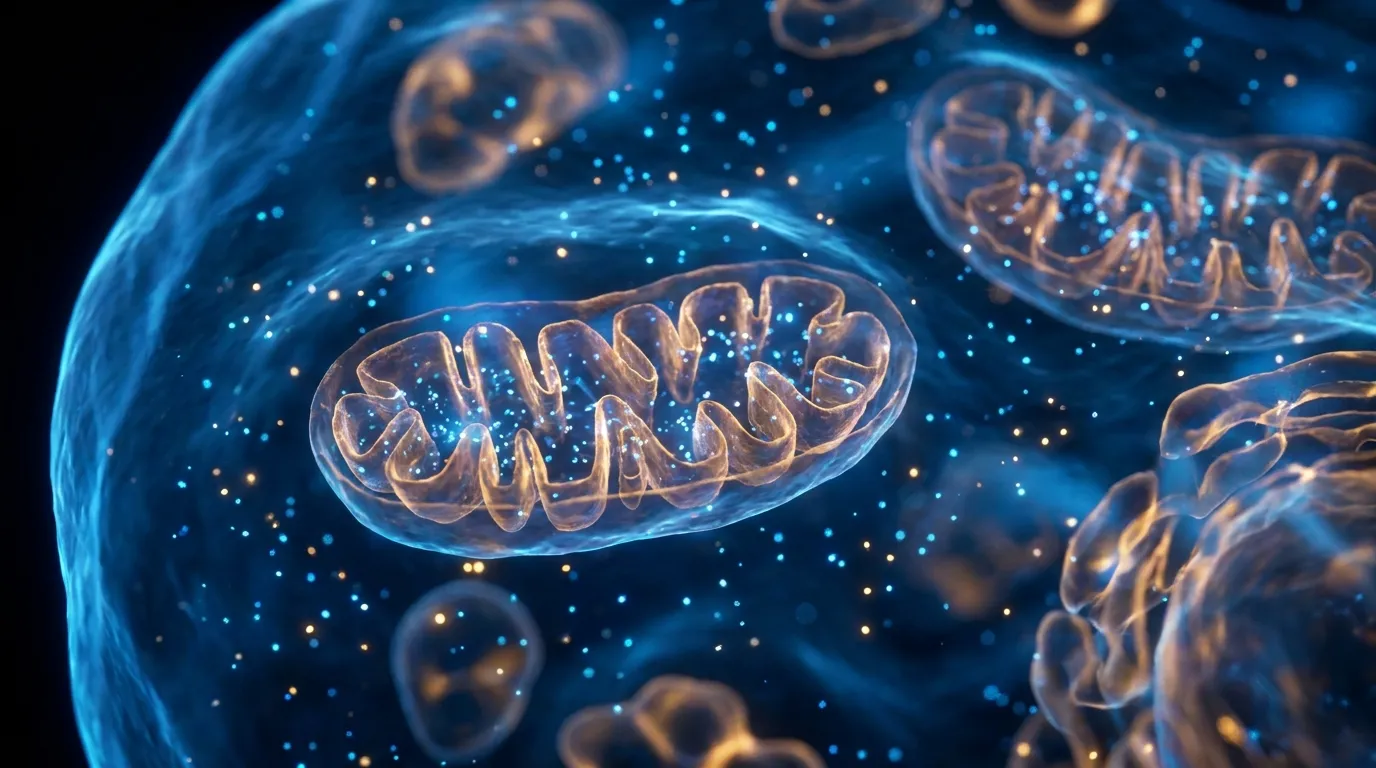
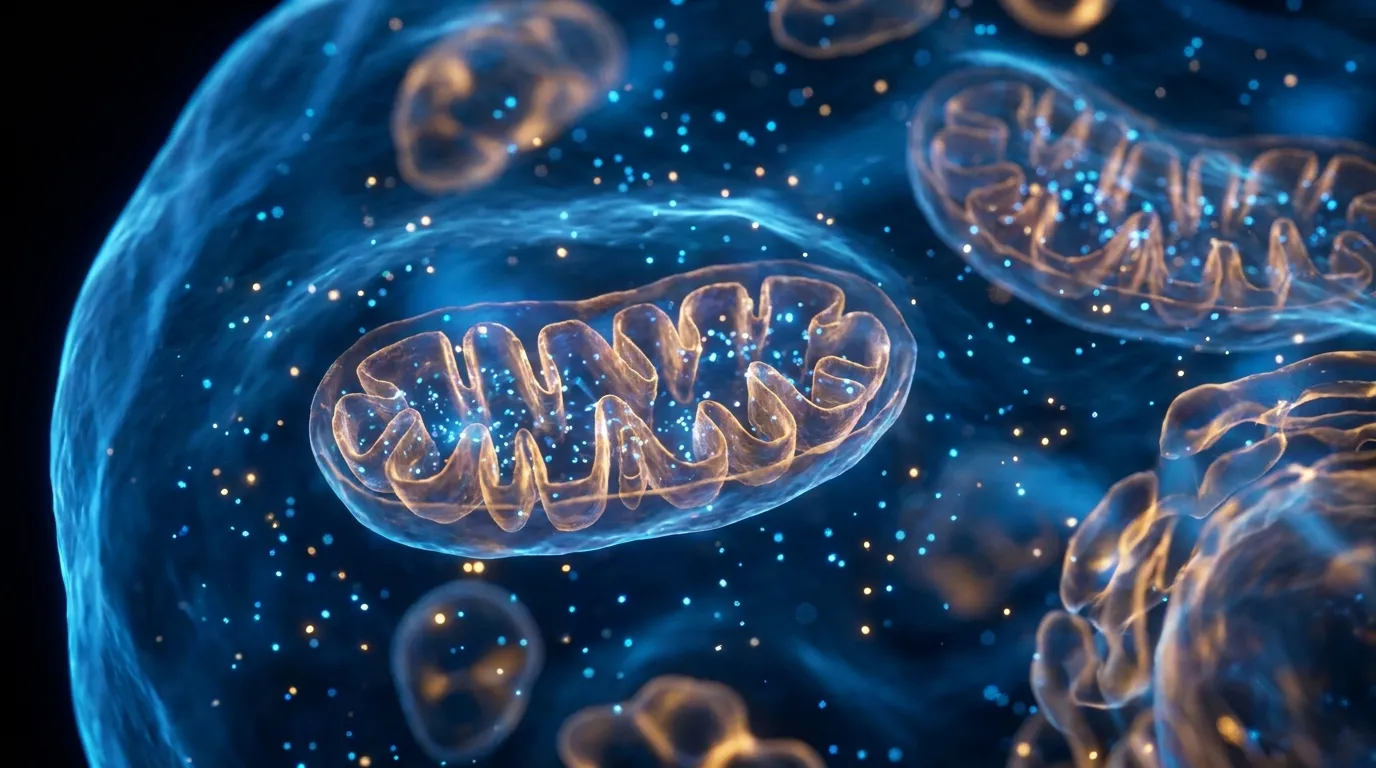
The biology underneath is genuine. Mitochondria are the organelles that convert food and oxygen into ATP, the chemical energy that powers nearly everything your cells do. Mitochondrial dysfunction is formally recognized as one of the hallmarks of aging - the loss of mitochondrial quality and efficiency over time is one of the cellular processes scientists believe drives age-related decline (López-Otín et al., "Hallmarks of Aging: An Expanding Universe," Cell, 2023, retrieved 2026-06-19). That single idea - aging is partly your power plants wearing out - is the engine of the entire boom.
What turned a textbook concept into a shopping category was timing. Longevity went from fringe to funded; supplement brands learned the language of "NAD+," "mitophagy," and "biogenesis"; and a handful of charismatic advocates gave the public a simple, hopeful narrative. The result is a market where mechanism words do a lot of marketing work, and where the gap between "this raises a biomarker in a study" and "this will make you feel and perform better" is exactly where buyers get lost. The rest of this page is built to close that gap honestly.
What do mitochondria actually do (in plain language)?
Mitochondria are your cells' power plants: they burn fuel and oxygen to make ATP, the universal energy currency, and they also help control cell repair, signaling, and self-cleanup. When people say "boost cellular energy," they almost always mean "make mitochondria work better" - which can mean making more of them, cleaning out broken ones, or running the existing ones more efficiently.
Three plain-English ideas explain almost every compound in this market:
- ATP production - the core job. Inside each mitochondrion, an "electron transport chain" passes electrons down a series of proteins to ultimately produce ATP. Many supplements claim to support some step in this chain (CoQ10 is literally an electron carrier in it).
- Biogenesis - making more mitochondria. A master regulator called PGC-1alpha tells cells to build new mitochondria, and exercise is its most reliable trigger. "Exercise-mimetic" compounds try to flip this switch pharmacologically.
- Mitophagy - recycling broken ones. Cells tag and digest damaged mitochondria so the population stays healthy; this housekeeping declines with age, which is the entire pitch for Urolithin A.
The honest framing matters here. These are real, well-characterized processes - but "this molecule activates mitophagy in a cell dish" is a mechanism, not a guarantee that you will feel more energetic or live longer. Mechanism is where marketing lives; human outcomes are where evidence lives. Keep the two separate as you read the categories below.

What are the categories of the mitochondrial supplement boom?
The boom breaks into six categories, and they could not be more different on evidence: NAD+ precursors (the "engine fuel"), mitophagy activators (the "cleanup crew"), classic cofactors (the old guard), exercise-mimetic research chemicals (the gray market), mitochondrial peptides (the pharma frontier), and a dangerous fringe. Knowing which bucket a compound lives in tells you most of what you need to know about how seriously to take it.
The single most useful filter is which mitochondrial process a category targets, paired with how much human evidence stands behind it. The map below sorts the whole field by both at once; the sections that follow walk each category at orientation depth, then hand off to the dedicated guides for the deep science.
1. NAD+ precursors - the engine fuel (NAD+, NMN, NR)
This is the category that built the boom. NAD+ (nicotinamide adenine dinucleotide) is a coenzyme central to energy metabolism that declines with age, so the logic is direct: take a precursor, raise NAD+, restore youthful function. NR (nicotinamide riboside) is the best-characterized for safety - a randomized trial showed blood NAD+ rose roughly +22%, +51%, and +142% at 100, 300, and 1000 mg with no excess adverse events (Conze, Brenner et al., "Safety and metabolism of NR," Scientific Reports, 2019, retrieved 2026-06-19). NMN (nicotinamide mononucleotide) is the poster child; a 2021 trial in prediabetic women found improved muscle insulin sensitivity at 250 mg/day (Yoshino, Klein et al., Science, 2021;372:1224-29, retrieved 2026-06-19). The honest catch runs through both: these compounds reliably raise NAD+, but downstream "live longer, perform better" benefits in healthy humans remain limited. Full detail lives in the NAD+ guide.
2. Mitophagy activators - the cleanup crew (Urolithin A / Mitopure)
The freshest evidence in the whole field belongs here. Urolithin A, a gut-microbiome metabolite of pomegranate ellagitannins sold as Mitopure, activates mitophagy - the clearing of damaged mitochondria. A randomized trial (n~66, 4 months) reported improved muscle strength (about +12%) and endurance (about +17%) versus placebo, and it holds FDA GRAS status with a clean safety record (Singh, Andreux et al., "Urolithin A," Cell Reports Medicine, 2022, retrieved 2026-06-19). Two caveats keep it honest: effect sizes are modest, and the pivotal trials were funded by the ingredient company (Amazentis) - peer-reviewed and real, but worth disclosing.
3. Classic cofactors - the old guard (CoQ10, PQQ, creatine, ALCAR, ALA)
Before "mitochondrial health" was a marketing category, these were the mitochondrial supplements. Creatine has the strongest overall human evidence of anything here - it buffers ATP and reliably improves strength and power, with emerging cognition data, and it is cheap and very safe. CoQ10/Ubiquinol is a genuine electron-transport-chain carrier with strong evidence in specific contexts (statin-associated muscle symptoms, heart failure, mitochondrial disease) but weaker support for general "energy." PQQ, acetyl-L-carnitine, and alpha-lipoic acid are real but indirect, with modest, narrow effects. This is the category where the science is most settled and the marketing is least exciting.
4. Exercise-mimetics and research chemicals - the gray market (SLU-PP-332, Cardarine, AICAR)
This is where the boom gets dangerous. These compounds promise "exercise in a pill" by forcing biogenesis or fat oxidation. SLU-PP-332 (an ERR agonist) made headlines when mice ran roughly 70% longer and 45% farther - but it has zero human trials. Cardarine (GW-501516) produced strong endurance effects in animals, but its development was halted after dose-dependent cancers across multiple organs in rats, and it is WADA-banned (USADA, "What athletes should know about GW1516", retrieved 2026-06-19). AICAR is an AMPK activator with no human efficacy data and is also WADA-prohibited. The honest verdict: these are research chemicals, several are banned in sport, and one is a known animal carcinogen - they belong in a "do not recommend" column, not a performance stack.
5. Mitochondrial peptides - the pharma frontier (MOTS-c, SS-31, humanin)
This is the category that just earned the boom its first real legitimacy. Elamipretide (SS-31), a peptide that stabilizes cardiolipin in the inner mitochondrial membrane to improve energy-production efficiency, received FDA accelerated approval in September 2025 for the rare disease Barth syndrome (marketed as FORZINITY) - the first FDA-approved mitochondria-targeted drug (Johns Hopkins Hub, "FDA approves Barth syndrome treatment," 2025, retrieved 2026-06-19). That is a real milestone - but it is an approval for a rare disease, not a green light for healthy adults. MOTS-c, a mitochondrial-derived peptide that activates AMPK like exercise does, is the community favorite but remains animal-only for performance (a human RCT is recruiting). Humanin sits in the same animal/in-vitro bucket. For the lead peptide's full science, see the MOTS-c guide.
6. The fringe - hype to lethal (methylene blue, BAM15, DNP)
Every boom has a tail, and this one's is a cautionary tale. Methylene blue had a viral 2024-25 moment (the "blue tongue" trend), pitched as an alternative electron carrier that bypasses damaged links in the chain; it is a real, FDA-approved drug for methemoglobinemia, but its "energy and cognition" claims are mostly preclinical, and it carries serotonin-syndrome interaction risk. BAM15 is a mitochondrial uncoupler that reversed obesity in mice - dubbed the "new DNP" - with no human safety data. DNP itself is the line nobody should cross: an uncoupler banned by the FDA in 1938 that keeps killing people through fatal hyperthermia. We cover the fringe to be complete and to warn, not to recommend.
How big is the mitochondrial and longevity supplement market?
The mitochondrial-and-longevity supplement market is large and growing fast: analyst estimates put the broader longevity-supplements market near $8.75 billion in 2025, rising toward $14.29 billion by 2030, with the NAD+ precursor niche estimated around $350 million in 2025. These are proprietary analyst estimates, so treat them as directional ranges rather than precise figures - but the direction is unmistakably up, and faster than the supplement industry overall.
A few sourced anchors give the boom its scale. The longevity-supplements market is estimated at roughly $8.75 billion in 2025, projected to about $14.29 billion by 2030 (~10.5% CAGR) (The Business Research Company, "Longevity Supplements Global Market Report," 2025, retrieved 2026-06-19). The NAD+ precursor segment alone is estimated near $350 million in 2025, projected toward $779 million by 2035 (~8.4% CAGR), with NMN making up close to 45% of NAD-precursor revenue (Future Market Insights, "NAD+ Supplements Market," 2025, retrieved 2026-06-19). And a distinct "healthy aging" supplement category is estimated near $1.3 billion at end-2025, growing about 14.3% a year - roughly three times the ~5.2% growth of the overall supplement industry.
What gives the market its credibility are the brand anchors. ChromaDex / Tru Niagen built the NR category around patented Niagen. Amazentis / Timeline (backed by Nestlé Health Science) built Urolithin A / Mitopure on GRAS status and a clinical program spanning 25 human trials and 2,200+ participants. And the elamipretide / FORZINITY FDA approval in September 2025 is the proof point the whole sector points to - a pharma-grade, regulator-blessed mitochondrial drug. The chart below puts the two cleanest market figures side by side.
Who fueled the mitochondrial hype? The influence layer
The science created the opportunity, but a handful of high-profile advocates created the boom: longevity scientist David Sinclair made NAD+ and NMN household terms, tech founder Bryan Johnson turned anti-aging into a public spectacle, and a viral methylene blue moment showed how fast a fringe compound can go mainstream. Understanding the influence layer is part of reading the trend honestly - because a lot of demand here was manufactured by personality, not just evidence.
Three forces did most of the work. David Sinclair, a Harvard aging researcher, popularized the NAD+/sirtuin theory of aging and made NMN a flagship "longevity molecule" in books, podcasts, and interviews - which is a large part of why NMN became the NAD-precursor category leader despite thin human outcome data. Bryan Johnson, the tech entrepreneur behind the "Don't Die" / Blueprint protocol, turned a six-figure personal anti-aging regimen into a public dataset and a movement, normalizing the idea of measuring and "optimizing" your own biology. And the methylene blue moment of 2024-25 - blue-tongued influencers dosing a century-old dye for "cellular energy" - demonstrated how a single viral aesthetic can outrun the evidence entirely. None of this is a reason to dismiss the category; it is a reason to separate the messenger from the data, which the next section does.
Hype vs evidence: an honest reckoning
Here is the uncomfortable core of the boom: raising a biomarker or activating a pathway is not the same as living longer or performing better, and most of this market is sold on the former while implying the latter. The compounds split cleanly into a few with real human trials, many with only animal data, and a dangerous handful that should not be in any stack - and the marketing rarely makes those distinctions for you.
Four honest framings cut through the noise. First, animal results rarely translate: the headline numbers ("ran 70% farther," "reversed obesity") are almost all from mice, and this field has a long record of rodent wins that vanish in humans. Second, biomarker is not benefit: NMN and NR reliably raise NAD+, but the jump from "NAD+ went up" to "you are healthier or faster" is exactly where the human evidence thins out. Third, regulatory turbulence is a tell: the FDA delisted NMN as a lawful supplement ingredient in 2022, then declared it lawful again in 2025 - a whiplash that shows how immature the category's oversight still is (NutraIngredients, "FDA declares NMN lawful in dietary supplements," 2025, retrieved 2026-06-19). Fourth, some "performance" options are simply dangerous: Cardarine is a carcinogen halted in development and banned in sport, and DNP is illegal and lethal - neither is a performance choice, full stop.
It is also worth naming the unverified claims directly, because they spread fastest. The viral "methylene blue boosts ATP by 30-40%" and similar oxygen-consumption figures trace to vendor blogs, not peer-reviewed human trials - we could not verify them and you should treat them as marketing. And for transparency on the strongest evidence: the pivotal Urolithin A and NR trials were funded by the ingredient companies (Amazentis, ChromaDex). Those studies are real and peer-reviewed, but disclosed funding is part of an honest read. The quadrant below plots the whole field by the only two axes that matter to a buyer - how much human evidence exists, and how popular the compound is.
How the NAD+ engine actually works
NAD+ is the boom's central character because it is a coenzyme your mitochondria literally cannot make ATP without - and because its levels fall with age, "topping it back up" became the simplest possible longevity pitch. Understanding the pathway in plain terms explains why NMN and NR exist, what they do well, and where the story gets oversold.
The mechanism is a relay. Your body recycles NAD+ through a "salvage pathway," and NMN and NR are precursors that feed into it - take them, and your cells convert them into NAD+. Higher NAD+ supports the electron-transport chain (more raw capacity to make ATP) and activates sirtuins, a family of enzymes tied to DNA repair and metabolic regulation. That is a clean, real story, and it is why blood NAD+ rises predictably with dosing. The schematic below traces the relay from precursor to payoff - and marks the exact step where the evidence currently stops.
So which mitochondrial supplement should you actually consider?
For most people, the short, honest answer is the boring one: the best-evidenced "mitochondrial" compounds are creatine, CoQ10 (in specific contexts), and Urolithin A - not the loudest names in the boom - and "which one" depends entirely on your goal, which is why we keep the ranked, compound-by-compound verdict in a dedicated decision hub. This pillar exists to orient you across the whole category; it deliberately does not crown a single winner, because the right pick for an aging-and-energy goal differs from a performance or a peptide-curious goal.
Two principles keep the decision sane. First, weight human evidence over mechanism and over marketing - a compound that "activates mitophagy in a dish" but has no human trial is a hypothesis, not a product benefit. Second, weight safety hard: a known animal carcinogen (Cardarine) or a lethal uncoupler (DNP) has no place in a stack regardless of any performance story. When you are ready for the ranked, side-by-side "what should I take and why," read the companion hub - it puts every compound on one honest, evidence-tiered ladder with a safety flag column.
Mitochondrial-health decision hub
The ranked, evidence-tiered ladder of the best mitochondrial compounds and peptides, with a safety and legality flag column. the best peptides for mitochondrial health
MOTS-c
The lead mitochondrial peptide - full molecular science and the honest evidence read. the MOTS-c guide
NAD+ / NMN / NR
The most-hyped molecule of the boom - what it is, IV vs oral precursors, and the real evidence. the NAD+ guide
Endurance & performance
The performance-cluster hub, where mitochondrial mechanisms meet WADA reality. peptides for endurance

Our take: The mitochondrial-performance boom is the rare trend where the underlying science is genuinely exciting and the consumer marketing is genuinely overheated - both at once. The category just earned its first FDA-approved drug (elamipretide, for a rare disease), which is a real milestone, while the same week's headlines sold century-old dyes and unproven precursors as energy miracles. The defensible posture is neither dismissal nor enthusiasm: respect the biology, demand human evidence, avoid the dangerous fringe entirely, and treat every "+30-40%" claim without a peer-reviewed human citation as marketing until proven otherwise.
Frequently Asked Questions
The bottom line
The mitochondrial-performance boom is real, large, and built on genuine science - but it is sold decades ahead of the human evidence. Mitochondria really are your cells' power plants, their decline really is a leading theory of aging, and the market has grown to billions on the strength of that idea. Within it, a small set of compounds has earned real human trials (Urolithin A, NR, plus the old guard of creatine and CoQ10), one peptide just earned an FDA approval for a rare disease (elamipretide), and a much larger set rides on mouse data, mechanism stories, and influencer momentum - while a dangerous fringe (Cardarine, DNP) should be avoided outright.
The reader who navigates this trend well does three things: respects the biology without being seduced by it, weights human evidence over mechanism and marketing, and refuses to verify a "+30-40% energy" claim with a vendor blog. From here, the natural next reads are the ranked verdict in the mitochondrial-health decision hub, the lead-peptide deep dive at the MOTS-c guide, and the most-hyped molecule at the NAD+ guide. The biology is worth your attention; the marketing has to earn it.
Sources
- López-Otín C, Blasco MA, Partridge L, Serrano M, Kroemer G. "Hallmarks of Aging: An Expanding Universe." Cell, 2023, 186(2):243-278. Retrieved 2026-06-19. https://www.cell.com/cell/fulltext/S0092-8674(22)01377-0
- Yoshino M, Yoshino J, Kayser BD, et al. "Nicotinamide mononucleotide increases muscle insulin sensitivity in prediabetic women." Science, 2021, 372(6547):1224-1229. Retrieved 2026-06-19. https://www.science.org/doi/10.1126/science.abe9985
- Conze D, Brenner C, Kruger CL. "Safety and Metabolism of Long-term Administration of NIAGEN (Nicotinamide Riboside Chloride)." Scientific Reports, 2019, 9:9772. Retrieved 2026-06-19. https://www.nature.com/articles/s41598-019-46120-z
- Singh A, D'Amico D, Andreux PA, et al. "Urolithin A improves muscle strength, exercise performance, and biomarkers of mitochondrial health." Cell Reports Medicine, 2022, 3(5):100633. Retrieved 2026-06-19. https://www.sciencedirect.com/science/article/pii/S2666379122001586
- U.S. Food and Drug Administration / Johns Hopkins University Hub. "FDA approves first treatment for Barth syndrome (elamipretide / FORZINITY)." September 2025. Retrieved 2026-06-19. https://hub.jhu.edu/2025/09/25/fda-approves-barth-syndrome-treatment/
- NutraIngredients. "FDA declares NMN lawful in dietary supplements." September 30, 2025. Retrieved 2026-06-19. https://www.nutraingredients.com/Article/2025/09/30/fda-declares-nmn-lawful-in-dietary-supplements/
- U.S. Anti-Doping Agency (USADA). "What Should Athletes Know About GW1516 (Cardarine)?" Retrieved 2026-06-19. https://www.usada.org/spirit-of-sport/what-should-athletes-know-gw1516/
- The Business Research Company. "Longevity Supplements Global Market Report 2025." Analyst estimate (~$8.75B in 2025 to ~$14.29B by 2030). Retrieved 2026-06-19. https://www.thebusinessresearchcompany.com/report/longevity-supplements-global-market-report
- Future Market Insights. "NAD+ Supplements Market Outlook 2025-2035." Analyst estimate (~$350M in 2025 to ~$779M by 2035). Retrieved 2026-06-19. https://www.futuremarketinsights.com/reports/nad-supplements-market
- U.S. Food and Drug Administration. "GRAS Notice No. 791 (Urolithin A)." Retrieved 2026-06-19. https://www.fda.gov/media/132889/download
- COULD NOT VERIFY (flagged in text as unverified vendor claims): methylene blue "+30-40% ATP / +70% oxygen consumption" figures (sourced only to vendor blogs, no peer-reviewed human trial); MOTS-c and humanin "longevity/performance" benefits in humans (animal/in-vitro only). Market figures are proprietary analyst estimates and should be read as directional ranges.