
TRT: The Complete Beginner's Guide to Testosterone Replacement Therapy (2026)

Testosterone replacement therapy (TRT) restores testosterone to a healthy range in men who have a medical deficiency — clinically low blood levels plus symptoms. Done properly, it's a supervised, long-term therapy built around two things: getting your testosterone into a target range, and watching your bloodwork so the therapy stays safe. This guide walks through who TRT is for, how low testosterone is diagnosed, the forms it comes in, how it's dosed and monitored, the real risks, and what to expect — with the depth most clinic pages skip and the marketing they don't.
A quick honesty note up front: TRT is a genuine medical treatment for a genuine condition, not a shortcut. It needs a diagnosis, a prescription, and regular labs. Where a topic gets deep — esters, estradiol management, the full bloodwork panel — we summarize here and link to a dedicated guide so this page stays a clear map rather than a wall.
Key Takeaways
- TRT treats diagnosed low testosterone, defined by the major guidelines as a low morning blood level (the American Urological Association uses a total testosterone below 300 ng/dL) confirmed on two separate tests, together with symptoms.
- It's a prescription therapy, not a supplement. Testosterone is a controlled substance; legitimate TRT means a clinician, a diagnosis, and ongoing monitoring.
- Injectable esters are the most common form in a TRT-clinic setting (testosterone cypionate or enanthate), alongside gels, pellets, and oral options — each with trade-offs.
- Bloodwork is half the therapy. Beyond testosterone, you monitor estradiol, hematocrit, SHBG, PSA, and lipids; an estimated 9% of trackers cross the 54% hematocrit threshold that prompts action.
- The cardiovascular picture improved in 2023. The large TRAVERSE trial found no increased risk of major cardiac events in men with hypogonadism and high CV risk, though it flagged other signals; the FDA updated testosterone labeling accordingly.
- Results arrive in stages — libido and mood in the first weeks, body composition and blood markers over months.
What is TRT, and who is it for?
TRT is the medically supervised use of testosterone to restore normal levels in men with hypogonadism — a deficiency confirmed by both low blood levels and symptoms — not a performance or anti-aging enhancer for men with normal testosterone. The distinction matters medically and legally.
Hypogonadism comes in two forms. Primary hypogonadism is a problem in the testicles themselves (they can't make enough testosterone despite normal signaling). Secondary hypogonadism is a problem upstream, in the pituitary or hypothalamus, where the signal to produce testosterone is weak — which is relevant because some alternatives to TRT work only in secondary cases. Symptoms of low testosterone overlap with everyday life, which is why a blood test is required rather than a symptom checklist alone: low libido, erectile changes, fatigue, low mood, loss of muscle and gains in fat, and reduced morning erections are the common ones. Major guidelines are explicit that testosterone should be offered only when low levels and symptoms are both present (Endocrine Society, 2018, "Testosterone Therapy in Men With Hypogonadism", retrieved 2026-06-16).
It's just as important to be clear who TRT is not for. A man with testosterone in the normal range who simply wants more energy or muscle is not a candidate; testosterone in that setting isn't replacing a deficiency, it's supraphysiologic use, with the risks but not the medical justification. Guidelines also caution against starting testosterone in men actively trying to conceive (it suppresses fertility), and against treating a single borderline reading or vague tiredness as "low T." The rise of direct-to-consumer "low-T" marketing has blurred this line, which is exactly why the diagnostic bar — two confirmed low morning levels plus real symptoms — exists. A good provider will also look for reversible causes of low testosterone, such as poor sleep, obesity, untreated sleep apnea, certain medications, or excess alcohol, because fixing those can sometimes restore levels without lifelong therapy.
How is low testosterone diagnosed?
Diagnosis rests on two separate morning blood tests showing a low total testosterone, plus matching symptoms — a single low reading or symptoms alone is not enough. Testosterone naturally peaks in the morning and varies day to day, so timing and repetition are built into the guidelines.
The American Urological Association defines testosterone deficiency as a total testosterone below 300 ng/dL on two early-morning measurements, in a man with consistent signs or symptoms (AUA, 2018, amended 2023, "Evaluation and Management of Testosterone Deficiency", retrieved 2026-06-16). When SHBG (the protein that binds testosterone) is unusually high or low — common with age, obesity, or thyroid issues — total testosterone can mislead, and a free testosterone measurement is added to see how much hormone is actually available. We cover why that distinction matters in detail in our free vs total testosterone and SHBG guide. A proper workup also looks for the cause (LH/FSH to separate primary from secondary, plus prolactin and other labs), because finding a reversible cause can change the plan entirely.
How do you start TRT the right way?
Starting TRT properly means working with a licensed clinician through a clear sequence: confirm the diagnosis with repeat morning labs, rule out reversible causes, establish a baseline panel, then begin at a conservative dose and titrate against follow-up bloodwork. The order protects you, and skipping steps is where most problems begin.
A sound path looks like this. First, get diagnosed — two early-morning total testosterone tests below range, plus symptoms, ideally interpreted alongside LH and FSH so the clinician knows whether the problem is primary or secondary. Second, baseline everything before the first dose: testosterone, a complete blood count (for hematocrit), estradiol, PSA, and lipids, so later changes have something to compare against. Third, start conservatively — clinicians generally begin in the lower part of the studied range and adjust, rather than chasing a high number on day one. Fourth, retest and titrate: levels are rechecked after the first weeks to months, and the dose, frequency, or form is adjusted toward a stable target. This is not a one-appointment treatment; the first few months are a calibration period.
The reason to resist the temptation of gray-market or unsupervised testosterone isn't only legal (though it is a controlled substance). Without baseline labs and follow-up, you can't tell whether your dose is right, whether your hematocrit is climbing toward a dangerous level, or whether a symptom is from the testosterone or something else entirely. The monitoring is the therapy; the injection is just the part people focus on.
What forms does testosterone come in?
Testosterone is delivered as injectable esters, transdermal gels or creams, long-acting pellets, and oral or nasal formulations — and in a TRT-clinic setting, injectable esters are the most common because they're inexpensive, flexible, and well understood. The form changes how steady your levels are and how often you dose.
The main options:
- Injectable esters — testosterone cypionate and enanthate are the workhorses, injected subcutaneously or intramuscularly. They differ mainly in half-life, which sets how the level rises and falls between shots. Propionate (short) and undecanoate (very long, given in a clinic) sit at the extremes. We compare them in our testosterone esters compared guide.
- Transdermal gels and creams — applied daily, they avoid needles and give steady levels, but carry a transfer risk to others and variable absorption.
- Pellets — implanted under the skin every few months for hands-off dosing, at the cost of flexibility.
- Oral and nasal — newer oral testosterone undecanoate and nasal gels exist; oral testosterone historically had liver concerns that the modern formulations are designed around.
A few practical differences shape the choice. Injectables are the cheapest and most adjustable — you can fine-tune dose and frequency to the milligram — but they involve needles and produce a peak-and-trough pattern that the longer esters exaggerate. Gels sidestep needles and give very steady day-to-day levels, but absorption varies between individuals, and there's a real transfer risk: skin-to-skin contact can pass testosterone to a partner or child, so application sites and timing matter. Pellets are the most hands-off — implanted every three to six months — but you lose the ability to adjust between procedures, and removing them if a problem arises is harder than skipping an injection. Oral testosterone undecanoate in its modern formulation is designed to avoid the liver toxicity that plagued older oral androgens, while nasal gel offers another needle-free route at the cost of multiple daily doses. No single form is "best"; the choice balances steadiness, convenience, cost, transfer risk, and how your body responds, and many people switch forms once before settling.
How is TRT dosed, and how often do you inject?
Clinic protocols and trials typically use injectable testosterone in the range of roughly 100–200 mg per week, and many providers split that into two or more smaller injections to keep levels steadier — but the right dose is set by a clinician against your bloodwork, not by a fixed number. Dose and frequency are tuned to land your levels in a healthy range without overshooting.
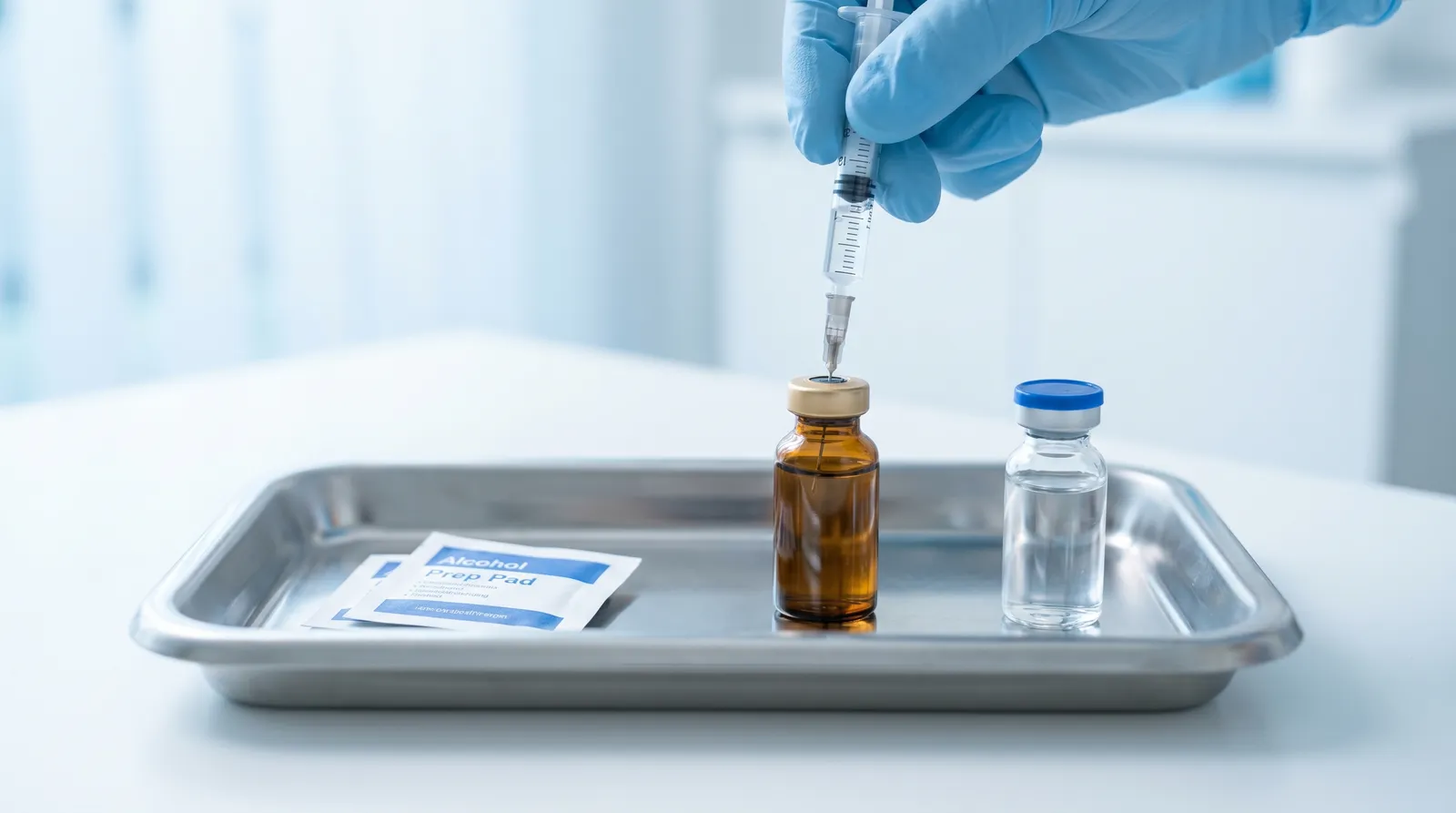
The frequency debate is really about stability. A longer interval (once weekly) is convenient but produces a higher peak after the shot and a lower trough before the next, which some people feel as a roller-coaster in mood and energy. Splitting the same weekly amount into two or more smaller injections flattens that curve. Our tracking data shows where people actually land:
The largest group splits the weekly dose across two injections (often every 3.5 days), with smaller groups injecting once weekly or every other day. There's no universally correct cadence — it depends on the ester, how you feel, and your labs. The full breakdown, including subcutaneous versus intramuscular, lives in our TRT dosing protocols and injection frequency guide. Every dose figure here is what's been studied or used in clinics, presented for context, not as a recommendation.
Ancillary medications: HCG and estradiol control
Two add-on medications come up constantly with TRT: HCG (or gonadorelin) to keep the testicles working, and an aromatase inhibitor to manage estradiol if it climbs too high — but both are used selectively, under supervision, not by default. They address the predictable downstream effects of adding testosterone.
When you take exogenous testosterone, your body slows its own production, and the testicles can shrink and reduce sperm output. HCG (human chorionic gonadotropin) or gonadorelin mimics the natural signal to keep the testicles active, which matters for testicular size and especially fertility — covered in our TRT and HCG/gonadorelin protocol guide and TRT and fertility guide. Separately, some of the testosterone you take converts to estradiol (a form of estrogen), which men need in moderation for libido, mood, and bone health. If estradiol rises and causes symptoms, a low dose of an aromatase inhibitor may be used — but the common mistake is over-suppressing it, which causes its own problems. The nuanced version is in our managing estradiol on TRT guide. The theme with both: treat the number and the symptom, not the number alone.
The bloodwork: what to monitor on TRT
Monitoring is half of TRT — beyond testosterone itself, a proper panel tracks free testosterone, estradiol, hematocrit, SHBG, PSA, and lipids, checked at baseline, around the first few months, and periodically after. The therapy is only as safe as the labs that watch it.
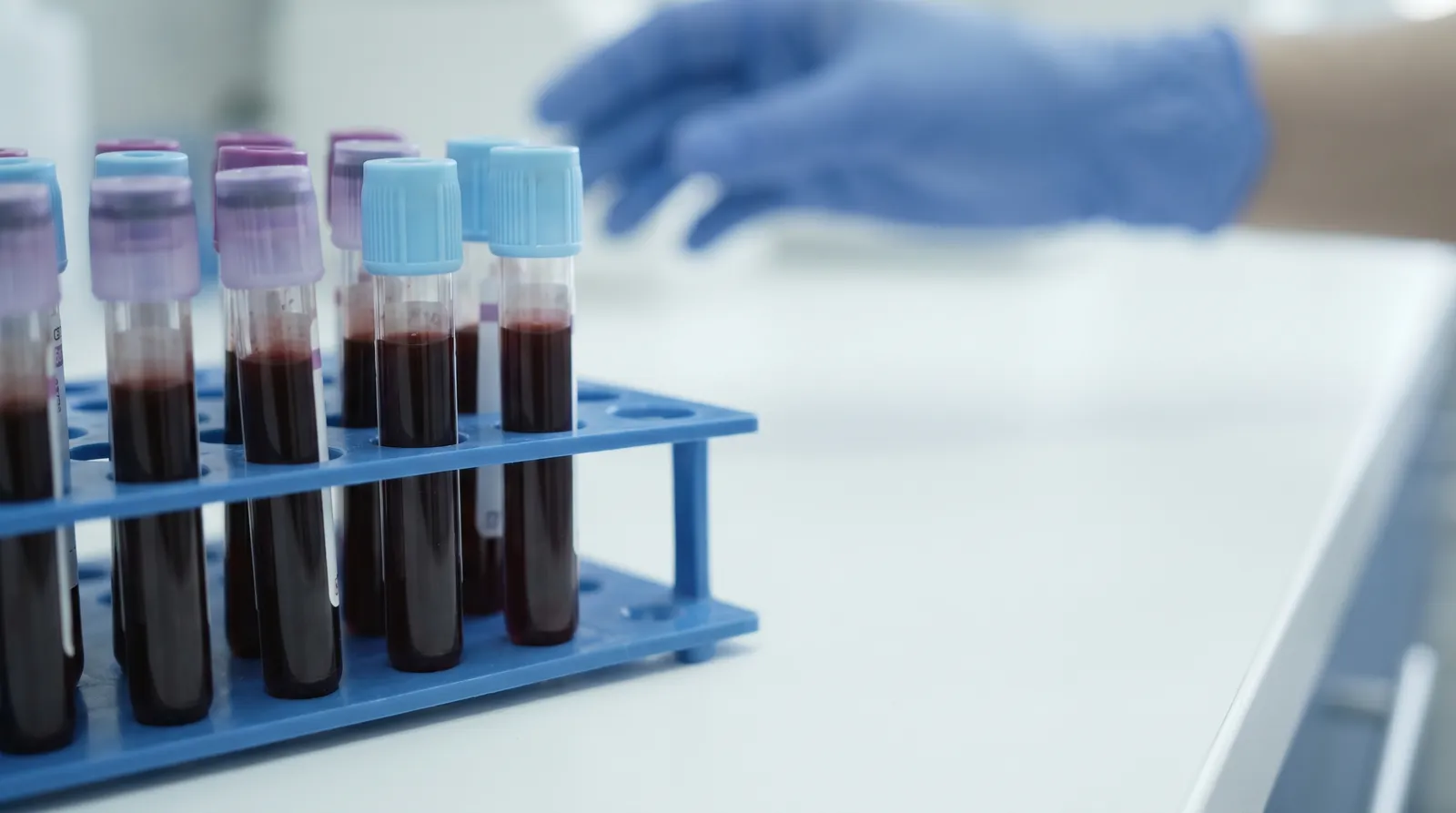
Each marker answers a specific question, and several have target zones that matter more than the textbook "normal" range:
- Total and free testosterone confirm you're in range; free testosterone matters most when SHBG is abnormal.
- Estradiol should sit moderate, not crashed — see the estradiol guide above.
- Hematocrit (the fraction of blood that's red cells) is the safety marker that rises on testosterone; crossing about 54% typically prompts dose changes or a blood donation, which we cover in managing hematocrit on TRT guide.
- PSA is checked to monitor the prostate, and lipids to watch cardiovascular markers.
The complete marker-by-marker table, target ranges, and retest cadence are in our TRT bloodwork panel guide. The headline: you don't "set and forget" TRT — you dose, retest, and adjust.
Side effects and risks of TRT
The most consistent risks of TRT are a rising hematocrit (thicker blood), suppressed fertility, acne or oily skin, and fluid retention — and the cardiovascular question, long debated, was substantially clarified by the 2023 TRAVERSE trial. Most risks are monitorable and manageable; a few require an informed decision before you start.
The predictable ones first. Erythrocytosis — an over-rich red blood cell count — is the classic TRT side effect, which is exactly why hematocrit is on every panel; a 2024 review summarizes when it warrants dose reduction or phlebotomy (NCBI/PMC, 2024, "Testosterone therapy-induced erythrocytosis: can phlebotomy be justified?", retrieved 2026-06-16). Fertility falls because exogenous testosterone suppresses the body's own production and sperm output, often reversibly — a critical consideration for anyone who wants children, and the reason HCG and the alternatives below exist.
Beyond those, a cluster of dose-and-estradiol-related effects is common and mostly manageable: acne and oily skin, some fluid retention, and — if estradiol runs high — breast tenderness or, rarely, gynecomastia, which is one reason estradiol is monitored rather than blindly suppressed. Testosterone can also worsen obstructive sleep apnea, so untreated snoring or daytime fatigue is worth flagging to your clinician before starting. Testicular shrinkage and reduced ejaculate volume follow from the suppression of natural production, and are part of why HCG is used by men who care about testicular size or fertility. Mood is bidirectional — many men feel steadier, but a minority notice irritability, often tied to swings in levels that a steadier dosing schedule can smooth. The throughline is that most TRT side effects are predictable, visible on labs or in the mirror, and adjustable; they are reasons to monitor, not automatic reasons to avoid therapy.
On the cardiovascular question, the picture improved markedly. The large randomized TRAVERSE trial found that, in middle-aged and older men with hypogonadism and high cardiovascular risk, testosterone therapy did not increase major adverse cardiac events compared with placebo, though it noted higher rates of some events such as atrial fibrillation and pulmonary embolism (NEJM, 2023, Lincoff et al., "Cardiovascular Safety of Testosterone-Replacement Therapy", retrieved 2026-06-16). On the strength of that evidence the FDA updated testosterone labeling, while continuing to flag blood-pressure and other class effects (FDA, "Testosterone products: drug safety communication and labeling", retrieved 2026-06-16). None of this makes TRT risk-free; it makes the risks specific, monitorable, and worth discussing with a clinician.
What results should you expect, and when?
TRT works in stages: sexual and psychological effects appear in the first weeks, while body composition, red blood cell changes, and other markers develop over months — so the first month is not the verdict. Knowing the timeline prevents both premature disappointment and premature dose increases.
A rough sequence, drawn from the clinical literature and consistent with guideline expectations:
- Weeks 1–6: libido, morning erections, and mood often shift first; energy may begin to improve.
- Weeks 3–12: hematocrit and red blood cell measures start rising (the reason for early labs), and metabolic markers begin to move.
- Months 3–6: changes in body composition — more lean mass, less fat — become noticeable, and these continue to develop beyond six months.
Because the early wins are the felt ones and the slower wins are the measured ones, the discipline of TRT is to judge it on bloodwork and a few months of consistency, not on week-two enthusiasm.
Is TRT a lifelong commitment?
For most men with genuine primary hypogonadism, TRT is a long-term — often lifelong — therapy, because the underlying deficiency doesn't resolve on its own; stopping returns testosterone to its previous low level, sometimes after a temporary dip. It's a commitment worth understanding before you start, not a course you finish.
When you take exogenous testosterone, your body downregulates its own production. If you stop, natural production has to restart from a suppressed baseline, and during that recovery window testosterone can sit below where it was before therapy, bringing symptoms back temporarily. How fully and how fast the body recovers varies with age, how long you were on therapy, and whether you used HCG to keep the testicular machinery active. For men with secondary hypogonadism — especially younger men or those with a reversible cause — the picture can be different, and an alternative that preserves the body's own production (covered below) may avoid the dependency question entirely. This is one more reason the diagnosis matters: it shapes whether TRT is a lifelong plan or one option among several.
Common myths about TRT
TRT is surrounded by misconceptions that pull in both directions — some make it sound like a risk-free fountain of youth, others like dangerous steroid abuse — and the accurate picture is a supervised medical therapy that helps a specific deficiency and does nothing for men who don't have one. Clearing the myths makes the real trade-offs visible.
- "TRT is the same as steroid abuse." Bodybuilding steroid cycles use supraphysiologic doses to push performance far above normal; medical TRT aims to restore a normal level in someone who is deficient. The dose, intent, and monitoring are different categories.
- "TRT causes prostate cancer." The old assumption that testosterone drives prostate cancer has not held up in modern evidence; that's why PSA is monitored rather than testosterone being withheld outright. It remains a clinician-supervised area, not a settled all-clear, which is why prostate screening stays on the panel.
- "More testosterone is better." Pushing levels above the target range adds side effects (notably a rising hematocrit and estradiol) without added benefit, and is not how the therapy is meant to work. The goal is a healthy range, not a high number.
- "TRT will fix everything." Testosterone reliably helps the symptoms caused by low testosterone. It is not a treatment for unrelated fatigue, depression, or relationship issues, and framing it that way leads to disappointment and dose creep.
- "You can just buy it online and self-manage." Beyond the legal status, self-management means no baseline, no monitoring, and no way to catch the predictable problems early — which is the whole point of doing it under a clinician.
What TRT can and can't fix
TRT addresses the symptoms that stem directly from low testosterone — libido, energy, mood, and body composition in deficient men — but it is not a substitute for sleep, training, nutrition, or treatment of other conditions, and it works best layered on top of those, not in place of them. Setting that expectation up front is part of doing it well.
Men who get the most from TRT tend to treat it as one input among several. Testosterone can restore the capacity for better energy and body composition, but realizing it still requires resistance training, adequate protein, and sleep — and untreated sleep apnea, in particular, both lowers testosterone and worsens on therapy if ignored. Likewise, low mood that's driven by life circumstances or clinical depression won't be solved by a hormone. The honest framing is that TRT removes a specific deficiency-shaped obstacle; what you build once it's removed is still up to the fundamentals.
TRT versus the alternatives
TRT is not the only way to address low testosterone — for men with secondary hypogonadism who want to preserve fertility, options like enclomiphene work by stimulating the body's own production, while growth-hormone peptides address different goals entirely and are not a testosterone substitute. The right path depends on the cause and your priorities.
Two alternatives come up most:
- Enclomiphene is a selective estrogen receptor modulator that nudges the pituitary to raise the body's own testosterone, which can preserve fertility in men whose problem is upstream (secondary). It isn't a fit for primary hypogonadism, where the testicles themselves can't respond. We compare the two in our enclomiphene vs TRT guide.
- Growth-hormone secretagogue peptides such as sermorelin, CJC-1295, and ipamorelin are often mentioned in the same breath as TRT, but they act on the growth-hormone axis, not testosterone — they are not a replacement for it. Where they fit (and where they don't) is the subject of our sermorelin and GH peptides vs TRT guide, which bridges to our broader peptide library.
Choosing among them is a clinical decision driven by your diagnosis (primary versus secondary), your fertility plans, and your goals — not by which is most marketed.
What real TRT trackers log
Aggregated tracking data shows what TRT looks like in practice: most people split their weekly dose, testosterone roughly doubles from a low baseline into the target range, and a meaningful minority bump up against the hematocrit ceiling that monitoring exists to catch. These are the patterns behind the guidance above.
In our tracking data, the median total testosterone moves from about 310 ng/dL at baseline to around 720 ng/dL on therapy — out of the deficient range and into the mid-to-upper target zone. Hematocrit tells the cautionary half of the story: the median sits near 48%, comfortably normal, but about 9% of trackers cross the ~54% threshold where clinicians typically intervene with a dose change or blood donation. And as the injection-frequency chart above showed, the most common pattern is splitting the weekly dose rather than a single weekly shot. None of these figures is a target to chase; they're a snapshot of real-world practice that the bloodwork-first approach is built around.
Frequently asked questions
Sources
Factual and clinical claims are sourced below. Testosterone dosing figures are described as studied in trials or typical of clinic practice, not recommendations. ProtocolPlus tracking figures are first-party app data.
- Endocrine Society (2018), JCEM — Bhasin S, et al., Testosterone Therapy in Men With Hypogonadism: An Endocrine Society Clinical Practice Guideline. https://academic.oup.com/jcem/article/103/5/1715/4939465 — retrieved 2026-06-16.
- American Urological Association (2018, amended 2023) — Evaluation and Management of Testosterone Deficiency: AUA Guideline. https://www.auanet.org/guidelines-and-quality/guidelines/testosterone-deficiency-guideline — retrieved 2026-06-16.
- NEJM (2023) — Lincoff AM, et al. (TRAVERSE), Cardiovascular Safety of Testosterone-Replacement Therapy. https://pubmed.ncbi.nlm.nih.gov/37326322/ — retrieved 2026-06-16.
- U.S. Food & Drug Administration — Testosterone products: drug safety communication and labeling on cardiovascular risk and blood pressure. https://www.fda.gov/drugs/drug-safety-and-availability/fda-drug-safety-communication-fda-cautions-about-using-testosterone-products-low-testosterone-due — retrieved 2026-06-16.
- NCBI / PMC (2024) — Testosterone therapy-induced erythrocytosis: can phlebotomy be justified? https://www.ncbi.nlm.nih.gov/pmc/articles/PMC11466264/ — retrieved 2026-06-16.
About this guide. Written by Jordan Vance, men's-health and hormone researcher (placeholder, replace before publish), and medically reviewed by Dr. Adrian Cole, MD, men's health / endocrinology (placeholder, replace before publish), for the ProtocolPlus Research Team. This guide is educational and not medical advice.