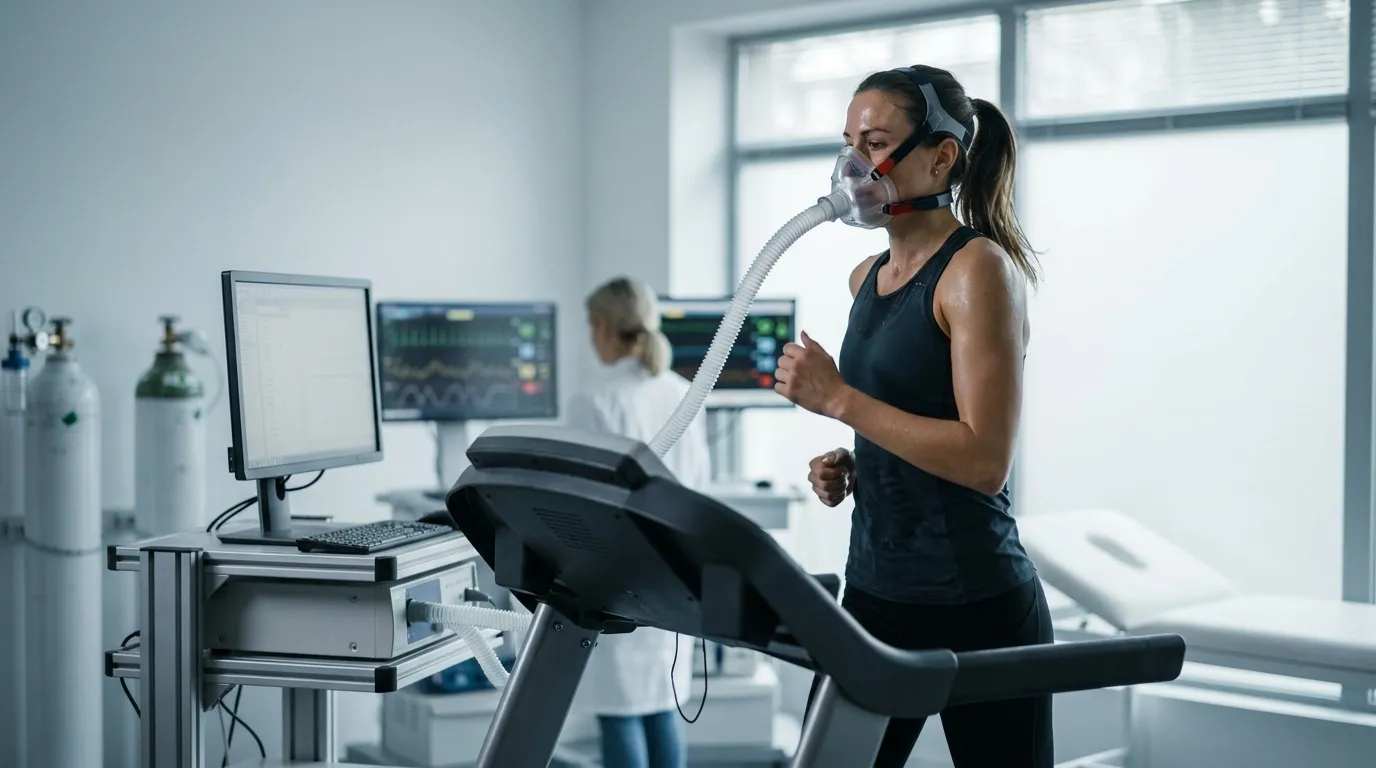
Best Peptides for VO2max: What the Community Uses, and What Actually Moves the Number (2026)
The compounds most used for VO2max in our community are the mitochondrial peptide MOTS-c and the non-peptide PPARδ agonist Cardarine, followed by NAD+ — but VO2max is a number you can measure, and the honest truth is that none of these has ever been shown to move it in a human, while your training and your altitude move it a lot. This is the metric page of the endurance cluster: it answers what VO2max-trackers in our community actually reach for, explains the physiology that genuinely sets your VO2max, and is blunt about where compounds sit in that picture.
VO2max is unusual among performance goals because it is a hard, trackable number — your watch estimates it, a lab measures it directly, and you can watch it rise or fall. That makes it the perfect place to be honest. Most "peptides for VO2max" content either ignores the metric entirely or implies compounds raise it; we do neither. The headline ranking below is first-party usage data — what ~3,200 ProtocolPlus users tracking VO2max actually log — and we keep it strictly separate from the physiology of what moves the number and the evidence (or absence of it) behind each compound. For the deep science on any molecule we link up to its guide; for the broad aerobic overview we link up to the endurance hub.
Key Takeaways
- What the community uses (not an efficacy ranking): across ~3,200 ProtocolPlus users tracking VO2max, the top three are MOTS-c (25%, 800 users), Cardarine (23%, 736), and NAD+ (15%, 480) (ProtocolPlus app data).
- No compound here has a human VO2max trial. Not one of these has been tested in people with VO2max as a measured endpoint. The endurance signals (MOTS-c, Cardarine, SLU-PP-332, SR9009) are from mice; NAD+ and 5-amino-1MQ are indirect or mouse-only.
- Training and altitude move VO2max far more. Structured aerobic and interval training raises VO2max by roughly 5–30% (least-fit gain most), and elite endurance athletes carry a VO2max about double an untrained person's. Nothing pharmacological here comes close to that, in humans.
- Cardarine is not a peptide and is dangerous. GW-501516 is a research chemical whose development was halted after it caused dose-dependent cancers in rats across multiple organs. It is on this list because people use it, not because it is safe.
- Most of it is banned in sport. MOTS-c, Cardarine, SLU-PP-332, and Stenabolic are WADA-prohibited metabolic modulators (S4.4). Filter the selector to "drug-tested" and only NAD+ and 5-amino-1MQ survive — and neither is proven to raise VO2max.
- The number is the honesty test. Because VO2max is measurable, the absence of any human VO2max data is conspicuous. Treat the usage chart as what people try, and the physiology section as what actually works.
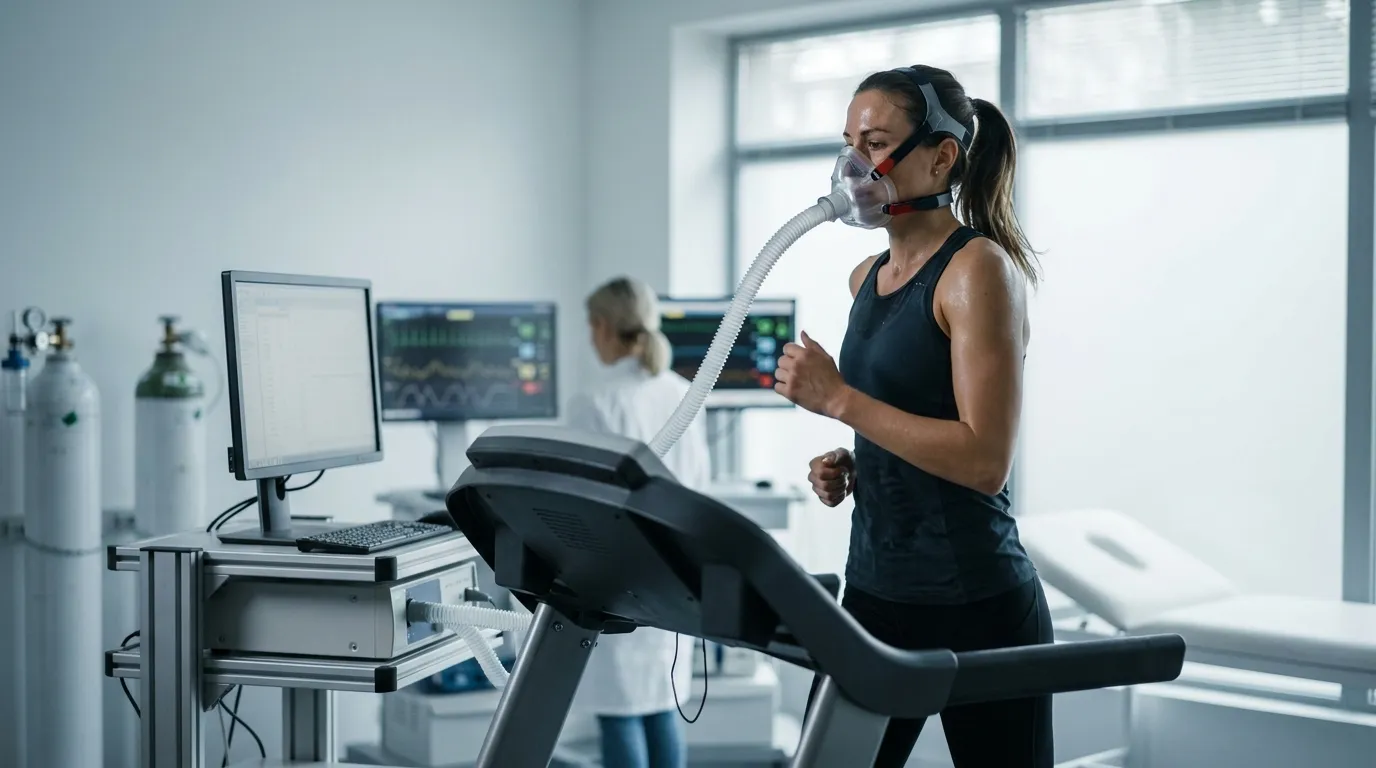
What peptides does the ProtocolPlus community use for VO2max?
Across ~3,200 ProtocolPlus users who track VO2max as a goal, MOTS-c is the most-tracked compound (25%), narrowly ahead of the non-peptide PPARδ agonist Cardarine (23%), with NAD+ third (15%). This is a usage ranking from our own app data, not a clinical verdict on what raises VO2max, and several of these carry real risk.
The split makes sense once you see the logic VO2max-trackers follow. The top two are the "cellular ceiling" bets: MOTS-c and Cardarine are the compounds people reach for when they want to push the mitochondrial and oxidative side of VO2max directly. NAD+ in third is the cofactor play, popular partly because it is the one option here that is not banned in sport. After that, usage spreads into a tail of exercise-mimetics and metabolic compounds: SLU-PP-332 (15%), Stenabolic (13%), and the oral outlier 5-amino-1MQ (9%).
These shares come only from our community-usage dataset and describe behavior, not efficacy. Because VO2max is a measurable number, this is the one goal where usage and evidence are easiest to compare side by side, and the comparison is unflattering: the most-tracked compounds are also among the least-evidenced for actually moving the metric. Read the chart below as "what VO2max-trackers reach for," then cross-check it against the physiology and the WADA read further down.
Citation capsule. Among ~3,200 ProtocolPlus users who logged VO2max as a goal, the most-tracked compounds were MOTS-c (25%, 800 users), Cardarine/GW-501516 (23%, 736), and NAD+ (15%, 480), then SLU-PP-332 (15%, 480), Stenabolic/SR9009 (13%, 416), and 5-amino-1MQ (9%, 288). This is first-party usage data reflecting what the community uses, not a clinical efficacy ranking and not a safety ranking. Source: ProtocolPlus app data (goals/vo2max.json), 2026.
The community's top picks for VO2max (by usage)
The community's three most-tracked VO2max compounds are MOTS-c, Cardarine, and NAD+ — one mitochondrial peptide, one carcinogenic research chemical, and one cofactor. Each card pairs the usage share with the honest reason VO2max-trackers pick it and the caveat that comes with it.
These three account for roughly 63% of VO2max usage in our cohort. The split tells you what VO2max-trackers are betting on: the cellular, peripheral side of the number. MOTS-c and Cardarine target mitochondrial and oxidative capacity, the part of VO2max that lives inside the muscle; NAD+ is the upstream cofactor version of the same idea. Notice what is missing entirely from the top of the list: anything that touches the central, oxygen-delivery side (heart, stroke volume, red-cell mass), which is the half of VO2max that training and altitude move most.
MOTS-c
Why people pick it: a mitochondrial-derived peptide tied to oxidative capacity and the cellular side of a higher VO2max ceiling — the most-tracked VO2max peptide in our data.
Honest caveat: no human VO2max trial; performance data is mouse-only and mechanistic; research-grade only; explicitly named on the WADA list as a prohibited AMPK activator.
Cardarine (GW-501516) ⚠
Why people pick it: a PPARδ agonist that shifted muscle toward oxidative fibers and raised running endurance in mice — the loudest "aerobic" animal signal in the field.
Honest caveat: not a peptide. Development was halted after dose-dependent cancers in rats across multiple organs. No human VO2max data. Prohibited in sport. High risk — we list it because people use it, not because it is defensible.
NAD+ ✓
Why people pick it: a coenzyme central to mitochondrial energy metabolism, and the one top pick that is not banned in sport — the "legal-feeling" VO2max bet for tested athletes.
Honest caveat: no VO2max evidence; the benefit is indirect, and human precursor trials have not shown a consistent performance effect. Not banned, but not proven.
The long tail (ranks 4–6): the remaining ~37% of usage spreads across the exercise-mimetic SLU-PP-332 (15%), the REV-ERB agonist Stenabolic (13%), and the oral NNMT inhibitor 5-amino-1MQ (9%). The first two are non-peptide small molecules with mouse endurance data and no human VO2max evidence; 5-amino-1MQ is mouse-only and metabolism-adjacent, but is the other compound here that is not currently WADA-prohibited. Each gets a mini-section below, with a link up to its full guide.
What actually sets your VO2max (the physiology compounds are trying to shortcut)
VO2max is governed by one equation — the Fick principle — that splits it into a central half (how much oxygen-rich blood your heart pumps) and a peripheral half (how much oxygen your muscles extract from that blood), and almost every compound here targets only one corner of the peripheral half. Understanding the equation is the fastest way to see why the community's bets are so lopsided, so this is where the metric page goes deep.
The Fick principle states it cleanly: VO2max equals cardiac output multiplied by the arteriovenous oxygen difference. Cardiac output is your stroke volume (how much blood the heart ejects per beat) times your heart rate, and the arteriovenous oxygen difference is how much oxygen your working muscles pull out of the blood as it passes. Raise either side and VO2max rises; the gold-standard test simply measures the oxygen you actually consume at maximal effort, the accepted index of cardiorespiratory fitness since the 1960s (UC Davis Sports Medicine, "VO2max", retrieved 2026-06-17).
Why walk through this instead of just listing compounds? Because once you can name the four levers that move VO2max, every claim sorts itself. The central levers are stroke volume (a bigger, stronger heart and more blood plasma to fill it) and the plasma/blood-volume expansion that lets it fill; the peripheral levers are mitochondrial density (more and better cellular engines to consume the oxygen) and capillarization (more tiny vessels delivering blood to the muscle, widening oxygen extraction). Aerobic and interval training drive all four at once, which is why a trained athlete can carry a VO2max roughly double an untrained person's, and why structured training typically raises VO2max by about 5–30%, with the least-fit gaining the most (UC Davis Sports Medicine, retrieved 2026-06-17). The catch the community ranking hides: every compound here aims at one peripheral lever (mitochondria, or oxidative fuel use), in a mouse, and none touches the central half at all.
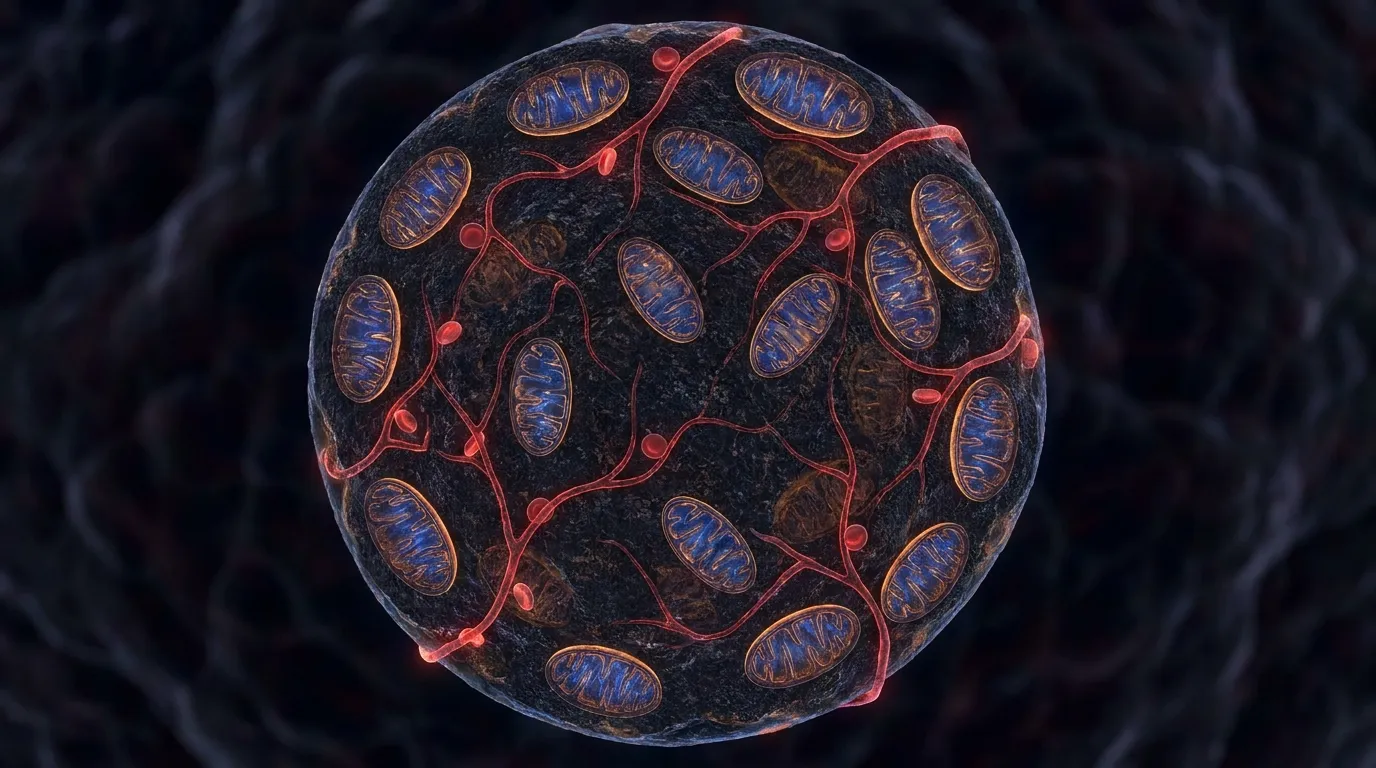
The central half: stroke volume and blood volume (where compounds do nothing)
The central side of VO2max is about plumbing: a heart that ejects more blood per beat, and enough plasma volume to fill it. Endurance training enlarges stroke volume and expands blood volume within weeks, and these central adaptations explain a large share of the VO2max gain in the early months of training. None of the community's compounds acts here in any proven way. The one intervention famous for moving the central/delivery side pharmacologically is the EPO class, which raises red-cell mass and oxygen-carrying capacity, genuinely works, and is exactly why endurance sport is so heavily tested. It is not a peptide people in our cohort track, and it sits well outside the scope of this page, but it is the honest reference point: the lever that most reliably raises VO2max is the one nobody here is pulling.
The peripheral half: mitochondrial density and capillarization (where compounds aim)
The peripheral side is about extraction: more mitochondria to consume oxygen, and more capillaries to deliver it. This is the half the community is betting on, because it is where the "exercise mimetics" plausibly act. Endurance training reliably increases mitochondrial content and capillary density in human muscle, the adaptations behind a wider arteriovenous oxygen difference (Granata et al., "Exercise Training and Mitochondrial and Capillary Growth in Human Skeletal Muscle: A Systematic Review and Meta-Regression," 2024, retrieved 2026-06-17). The master coordinator of mitochondrial biogenesis is PGC-1α, induced by endurance exercise, and overexpressing it in muscle raises mitochondrial content and peak oxygen uptake in animal models (Tadaishi et al., PLOS One, 2011, retrieved 2026-06-17). MOTS-c (via AMPK), Cardarine (via PPARδ), SLU-PP-332 (via ERR), and Stenabolic (via REV-ERB) are all attempts to switch on this same biogenesis-and-oxidation program with a molecule instead of a workout, which is the entire mechanistic case for them.
Why "mitochondria in a pill" keeps failing to raise human VO2max
Even granting the mechanism, there is a deep reason these compounds disappoint in the move from mice to people. They reproduce one transcriptional signal of exercise, switching on some oxidative genes, but a higher VO2max is the integrated product of central and peripheral adaptations firing together over months: stroke volume, blood volume, capillaries, and mitochondria all scaling at once in response to mechanical loading, shear stress, and repeated metabolic stress. A single-pathway agonist mimics a fragment of that, in a mouse, often at doses and routes that do not translate, and it does nothing for the central half. That is why none of these compounds has produced a positive human VO2max result, and why the measurable nature of VO2max is so revealing: with a hard endpoint available, the absence of human data is not an oversight, it is the result.
Citation capsule. VO2max is defined by the Fick principle as cardiac output (stroke volume × heart rate) multiplied by the arteriovenous oxygen difference, so it rises with central adaptations (stroke volume, blood volume) and peripheral ones (mitochondrial density, capillarization). Endurance training drives all of these and raises VO2max by roughly 5–30%; the response is partly heritable (familial aggregation, HERITAGE Family Study). The compounds the community tracks for VO2max target only the peripheral mitochondrial/oxidative pathway, in animals. Sources: UC Davis Sports Medicine (VO2max); Granata et al. 2024 (mitochondrial/capillary training adaptations); Bouchard et al., HERITAGE, J Appl Physiol 1999; Tadaishi et al., PLOS One 2011 (PGC-1α).
What moves VO2max more: training, altitude, or these compounds?
On any honest ranking of what raises VO2max, structured training is first by a wide margin, altitude and "live high, train low" is a real second lever, and the compounds the community tracks come in with zero human VO2max data. This is the honesty visual, and it is the most important chart on the page.
The numbers are not close. Aerobic and interval training reliably raises VO2max by about 5–30%, with the largest gains in the least-fit, and the size of your response is partly inherited — the HERITAGE Family Study found wide, familial variation in how much VO2max improves with the same training program (Bouchard et al., "Familial aggregation of VO2max response to exercise training: HERITAGE Family Study," Journal of Applied Physiology, 1999, retrieved 2026-06-17). Altitude is the second real lever: a "live high, train low" block can raise hemoglobin mass and red-cell volume in trained endurance athletes, lifting the oxygen-delivery (central) side of VO2max (Wehrlin et al., "Live high–train low for 24 days increases hemoglobin mass and red cell volume in elite endurance athletes," Journal of Applied Physiology, 2006, retrieved 2026-06-17). Against those, the compounds offer animal mechanism and no human endpoint. If your actual goal is a higher VO2max number, the chart below is the decision.
Which VO2max compound fits your situation?
The decision turns on three questions the selector asks — injectable or oral, drug-tested or not, new or experienced — and the drug-tested question collapses the list almost to nothing. The matrix below sets all six candidates against the dimensions that actually decide it, including route, WADA status, and the one column that matters most here: whether any human VO2max evidence exists.
This table is the "why" behind the usage ranking, editorial context rather than the headline. The selector quiz at the top runs the same logic interactively. The single most important filter is drug-tested: choose it and only NAD+ and 5-amino-1MQ remain, because the four compounds with the loudest VO2max mechanism are all WADA-prohibited. And the "human VO2max evidence" column is the same for every row, which is the honest point of the whole page.
| Compound | Mechanism (where on VO2max) | Route | WADA status | Human VO2max evidence | Picked when… |
|---|---|---|---|---|---|
| MOTS-c | AMPK / mitochondrial (peripheral) | Injectable | Prohibited (S4.4) | None (mouse only) | You want the most-tracked "cellular" VO2max peptide and accept research-grade risk |
| Cardarine ⚠ | PPARδ / oxidative fibers (peripheral) | Oral | Prohibited (S4.4) | None; halted for animal cancers | (We do not recommend it — listed because it is used) |
| NAD+ | Cofactor / mitochondrial energy | Injectable | Not prohibited | None proven (indirect) | You are tested and want something not banned (but unproven) |
| SLU-PP-332 | ERR exercise-mimetic (peripheral) | Oral | Prohibited (S4.4 class) | None (mouse only, preclinical) | You are experimenting at the frontier (high uncertainty) |
| Stenabolic | REV-ERB / mitochondrial content | Oral | Prohibited (S4.4) | None; poor oral absorption | (Mechanism interest only; oral form likely inert) |
| 5-Amino-1MQ | NNMT inhibitor (metabolic) | Oral | Not prohibited | None (mouse only) | Tested, oral-only, and willing to experiment |
Each candidate, briefly (with where to go deeper)
Here is each of the six compounds in two to four sentences — enough to place it on the VO2max map, with a link up to its full guide for the molecule science. This page owns the "which one for VO2max, and why" decision; the mechanism, dosing, and side-effect depth live on each compound's hub, and the broad aerobic overview lives on the endurance hub.
MOTS-c
A mitochondrial-derived peptide that activates AMPK, is itself induced by exercise, and improved running capacity in young, middle-aged, and old mice. It is the community's most-tracked VO2max compound because it targets the peripheral, mitochondrial side of the number, but there is no human trial measuring its effect on VO2max, and it is explicitly WADA-prohibited. Full mechanism and dosing: the MOTS-c complete guide.
Cardarine (GW-501516)
A PPARδ agonist (not a peptide) that shifted muscle toward oxidative fibers and raised running endurance in mice, the loudest animal "aerobic" signal in the field. Its development was halted after dose-dependent cancers in rats across multiple organs; there is no human VO2max data, and it is WADA-prohibited. We list it because people use it, not because it is defensible. Full record: the Cardarine (GW-501516) guide.
NAD+
A coenzyme central to mitochondrial energy metabolism that declines with age, which is the rationale VO2max-trackers cite. It is the one top pick not currently WADA-prohibited, but the benefit is indirect, human precursor trials have not shown a consistent performance effect, and there is no VO2max evidence. More: the NAD+ guide.
SLU-PP-332
A synthetic pan-ERR agonist exercise-mimetic that increased running capacity in mice (they ran roughly 70% longer and 45% farther). It is a small molecule, not a peptide, entirely preclinical with no human data, and would be treated as a prohibited metabolic modulator in sport. More: the SLU-PP-332 guide.
Stenabolic (SR9009)
A REV-ERB agonist (not a peptide) that increased mitochondrial content and exercise capacity in mice. It has a fatal practical flaw for the oral capsules people buy: near-zero oral bioavailability, so the human-used form likely cannot reproduce the injected-mouse results. No human VO2max data; WADA-prohibited. More: the Stenabolic (SR9009) guide.
5-Amino-1MQ
An oral NNMT inhibitor (not technically a peptide) with a metabolic, energy-adjacent following. The evidence is mouse data only, there is no human VO2max data, and any VO2max claim is extrapolation from rodents. Its one practical virtue is that it is not currently WADA-prohibited. More: the 5-amino-1MQ guide.
The doping reality for VO2max: WADA status by compound
For a drug-tested athlete chasing VO2max, four of the six community picks are on the WADA Prohibited List as metabolic modulators, and only NAD+ and 5-amino-1MQ are not currently prohibited. This is the section that matters most if you compete, and it is where the usage data and the safe-for-competition reality diverge hardest.
The four with the strongest VO2max mechanism are the four that are banned. Cardarine, Stenabolic, SLU-PP-332, and MOTS-c fall under the metabolic modulators class (S4.4): PPARδ agonists, REV-ERB agonists, and related exercise-mimetics are named there, and MOTS-c is explicitly listed as a prohibited AMPK activator, so none of these is a grey area (WADA Prohibited List, retrieved 2026-06-17; USADA, "What athletes should know about GW1516", retrieved 2026-06-17). Only NAD+ and 5-amino-1MQ are not currently prohibited, which is the entire reason they survive the drug-tested filter in the selector — though neither is proven to raise VO2max, and 5-amino-1MQ is an investigational compound that the catch-all S0 (non-approved substances) clause could capture, so verify before competing.
Citation capsule. Of the six VO2max community picks, four are WADA-prohibited metabolic modulators (S4.4): Cardarine/GW-501516 and SLU-PP-332 (PPARδ and ERR exercise-mimetics), Stenabolic/SR9009 (REV-ERB agonist), and MOTS-c (named as a prohibited AMPK activator). NAD+ and 5-amino-1MQ are not currently prohibited, though 5-amino-1MQ is investigational and could fall under the S0 non-approved-substances clause. Drug-tested athletes should assume a substance is prohibited unless verified. Sources: WADA Prohibited List S4.4; USADA athlete advisory on GW1516; Sport Integrity Australia GW1516 information.

What the community does is not what raises VO2max
Treat the usage ranking as a popularity signal shaped by mechanism appeal and availability, not as evidence that any of these raises VO2max — because the one thing a measurable number lets you check, a human VO2max effect, is missing for every compound on this page. The clearest tell is that the community's #2 pick, Cardarine, is a research chemical whose own development was abandoned because it caused cancer in animals.
Three honest framings sit on top of every number here. First, no compound on this page has a human VO2max trial — the headline effects (MOTS-c, Cardarine, SLU-PP-332, SR9009) are mouse running-capacity results, not VO2max measurements in people, and a small human MOTS-c study even found serum MOTS-c did not correlate with peak VO2. Second, Cardarine's safety record is disqualifying: its development was halted after long-term rodent studies showed dose-dependent cancers across multiple organs, findings treated as established by anti-doping authorities who issued health warnings (USADA, "What athletes should know about GW1516", retrieved 2026-06-17; Sport Integrity Australia, "GW1516 information", retrieved 2026-06-17). Third, research-grade vials carry quality risk — unknown potency, purity, and sterility — that no usage statistic captures, layered on top of compounds that are themselves unproven for the goal.
Our take: Read this page as two layers that mostly disagree. The usage chart tells you what VO2max-trackers reach for; the physiology and evidence read tell you how little supports it. When you have a measurable endpoint and still find zero human data, that is the strongest signal there is. The most defensible way to raise your VO2max number is the one the honesty chart shows: train the aerobic system, use altitude if you can, and treat everything on this list as experimental at best and dangerous at worst.
Go deeper: the hub and the sibling spokes
This page owns the VO2max metric on purpose — your sport, your distance, and your recovery biometrics change which compounds and demands matter most, so each has its own focused guide that inherits this page's honest framing. Start with the hub for the full aerobic overview, or a sibling spoke for your context.
Endurance & aerobic performance (hub)
The flagship overview of the whole candidate field, the four-link aerobic science chain, and the full WADA read. the endurance hub
Runners
The everyday and hobby runner's guide — broad, accessible, recovery-led. peptides for runners
Cycling
Aerobic plus power, with the sport's heavy doping context handled directly. peptides for cycling
HRV / autonomic recovery
The other measurable biometric — readiness and autonomic recovery, with what the community's HRV data shows. peptides and HRV
For the cellular-energy angle that overlaps the most with VO2max-trackers' mitochondrial bets, see peptides for mitochondrial energy. And before sourcing anything, read how to vet peptide quality and are peptides legal.
Who should not go near these
These compounds are not for anyone competing under drug testing, not for anyone outside research or clinical oversight, and Cardarine and Stenabolic are not for anyone, full stop. The honest contraindication list here is short and firm.
A few hard lines. Drug-tested athletes should treat the four most-effective-on-paper picks as a failed test waiting to happen — they are WADA-prohibited metabolic modulators, and "I didn't know" is not a defence. Anyone considering Cardarine or Stenabolic should weigh that these are non-peptide research chemicals with a carcinogenicity signal (Cardarine) and near-zero oral bioavailability plus off-target effects (Stenabolic); there is no version of the risk-reward that favours them for an unproven VO2max benefit. And for every research compound here, the responsible answer is the same: there is no validated safe-use protocol for raising VO2max, so they belong in a trial or under a clinician, not in a self-directed cycle. None of this page is a substitute for that conversation.
Frequently Asked Questions
The bottom line
If you came here for a single "best peptide for VO2max," the honest answer is shaped by the fact that VO2max is measurable: there is no peptide with human VO2max evidence behind it, and the absence of that data, when the endpoint is right there to test, is the whole story. The community's most-tracked options, MOTS-c and Cardarine, have the most interesting mitochondrial mechanisms in animals and the least support in people, and Cardarine carries a disqualifying carcinogenicity record on top. NAD+ ranks third largely because it is the one top pick not banned in sport, not because it is proven.
For a drug-tested athlete the practical answer is shorter still: the four compounds with the loudest VO2max mechanism are all prohibited, and the two that are not (NAD+, 5-amino-1MQ) are unproven. The selector at the top narrows the field to your constraints, but the most defensible VO2max decision is the one the honesty chart keeps pointing to: train the aerobic system that actually moves the number, use altitude if you can, and treat these compounds as experimental at best. From here, the natural next reads are the endurance hub for the full field, the science on the lead compound at the MOTS-c guide, and, before sourcing anything, how to vet peptide quality.
Sources
- UC Davis Sports Medicine. "VO2max and Oxygen Consumption." Retrieved 2026-06-17. https://health.ucdavis.edu/sports-medicine/resources/vo2description
- Bouchard C, An P, Rice T, et al. "Familial aggregation of VO2max response to exercise training: results from the HERITAGE Family Study." Journal of Applied Physiology, 1999, 87(3):1003–1008. Retrieved 2026-06-17. https://pubmed.ncbi.nlm.nih.gov/10484570/
- Wehrlin JP, Zuest P, Hallén J, Marti B. "Live high–train low for 24 days increases hemoglobin mass and red cell volume in elite endurance athletes." Journal of Applied Physiology, 2006, 100(6):1938–1945. Retrieved 2026-06-17. https://journals.physiology.org/doi/full/10.1152/japplphysiol.01284.2005
- Granata C, Caruana NJ, Botella J, et al. "Exercise training and mitochondrial and capillary growth in human skeletal muscle: a systematic review and meta-regression." 2024 (PMID 39390310). Retrieved 2026-06-17. https://pubmed.ncbi.nlm.nih.gov/39390310/
- Tadaishi M, Miura S, Kai Y, et al. "Skeletal muscle-specific expression of PGC-1α-b increases mitochondrial biogenesis and peak oxygen uptake." PLOS One, 2011. Retrieved 2026-06-17. https://pmc.ncbi.nlm.nih.gov/articles/PMC3234261/
- Reynolds JC, Lai RW, Woodhead JST, et al. "MOTS-c is an exercise-induced mitochondrial-encoded regulator of age-dependent physical decline and muscle homeostasis." Nature Communications, 2021, 12:470. Retrieved 2026-06-17. https://www.nature.com/articles/s41467-020-20790-0
- Narkar VA, Downes M, Yu RT, et al. "AMPK and PPARδ Agonists Are Exercise Mimetics." Cell, 2008, 134(3):405–415. Retrieved 2026-06-17. https://www.sciencedirect.com/science/article/pii/S0092867408008386
- Billon C, Schoepke E, Avdagic A, et al. "A Synthetic ERR Agonist Induces an Acute Aerobic Exercise Response and Enhances Exercise Capacity." ACS Chemical Biology, 2023. Retrieved 2026-06-17. https://pubs.acs.org/doi/abs/10.1021/acschembio.2c00720
- U.S. Anti-Doping Agency (USADA). "What Should Athletes Know About GW1516?" Retrieved 2026-06-17. https://www.usada.org/spirit-of-sport/what-should-athletes-know-gw1516/
- Sport Integrity Australia. "GW1516 Information." Retrieved 2026-06-17. https://www.sportintegrity.gov.au/what-we-do/anti-doping/substance-education/gw1516-information
- World Anti-Doping Agency. "The Prohibited List" — S4.4 Metabolic Modulators (GW1516/Cardarine, SR9009/Stenabolic, ERR agonists, MOTS-c as an AMPK activator). Retrieved 2026-06-17. https://www.wada-ama.org/en/prohibited-list
- ProtocolPlus. "Community goal-usage data: VO2max" (goals/vo2max.json). First-party app data, 2026. n ≈ 3,200 users tracking VO2max. Usage signal, not a clinical efficacy or safety ranking.