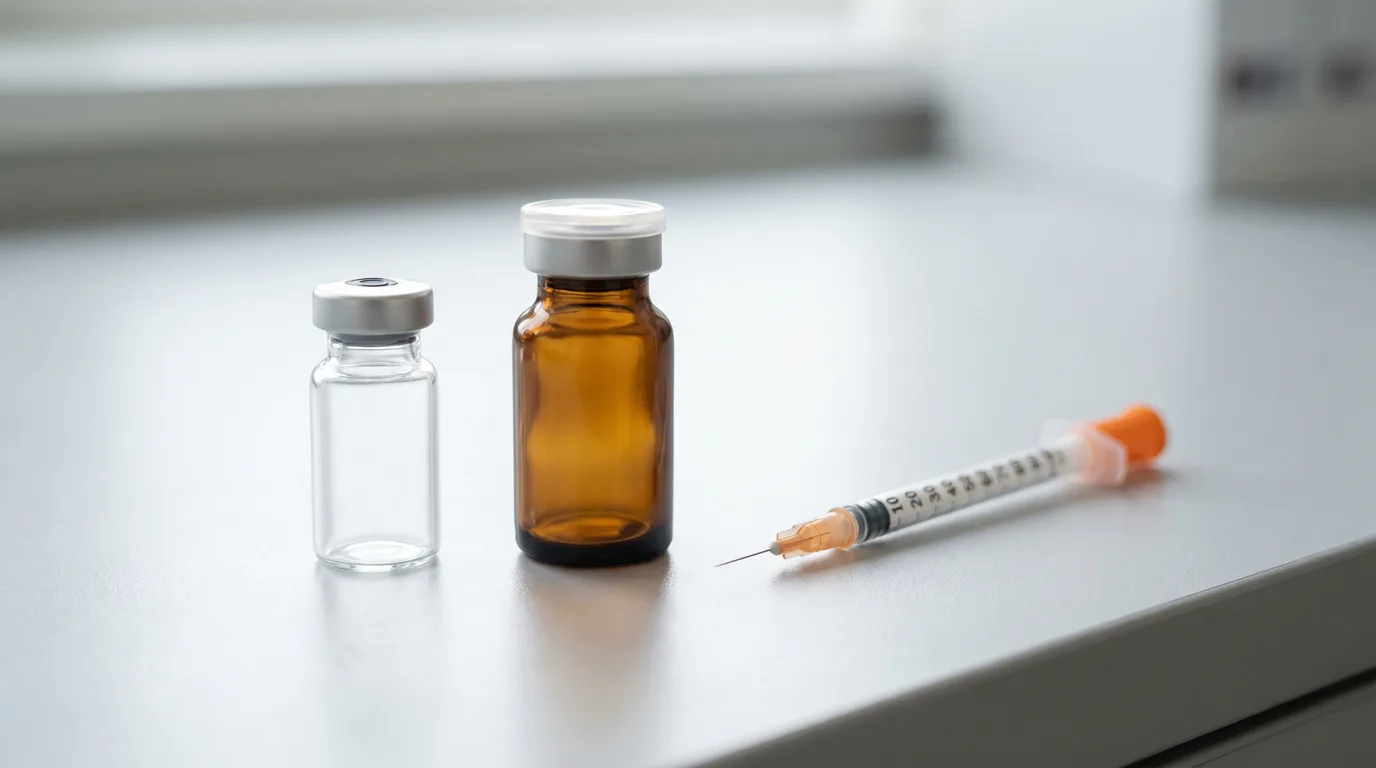
Kisspeptin: The Complete Guide to the HPG-Axis Master Switch (2026)
Kisspeptin is the body's own upstream "master switch" for the reproductive system: a natural signaling peptide that sits above the better-known hormone GnRH and effectively tells the brain to start the whole hormonal cascade behind puberty, fertility, and sexual desire. That high-level position is what makes it interesting, and unusual. Unlike its sibling PT-141, which acts further downstream and is FDA-approved for one use, kisspeptin has real, encouraging human research but zero FDA approval. Every vial sold today is research-use-only.
If you have seen kisspeptin marketed as a libido or fertility peptide, or read headlines about an Imperial College "sex-drive injection," this guide is the high-level map of the whole compound. For where it sits among the best peptides for libido, it ranks as an early-stage experimental option rather than a proven one. We cover what it actually is, how its upstream HPG-axis mechanism works, the difference between kisspeptin-10 and kisspeptin-54, what the human trials genuinely showed, its investigational uses, reported dosing, side effects, the honest safety picture (including the tachyphylaxis problem), its legal status, and how people obtain it. Each section is a clear overview; the deep-dive topics (a full dosing protocol, the kisspeptin-for-IVF story, the kp-10 vs kp-54 breakdown, the comparison with PT-141) point to dedicated guides so this page stays a clean hub.
Key Takeaways
- Kisspeptin is the upstream master regulator of the reproductive hormone axis. Encoded by the KISS1 gene, it acts on the brain above GnRH to start the cascade that drives puberty, fertility, and libido; loss-of-function mutations in its receptor cause failure to enter puberty (Wikipedia, "Kisspeptin", retrieved 2026-06-20).
- There is no FDA-approved kisspeptin therapy. All forms, including kisspeptin-10 and kisspeptin-54, are investigational and sold research-use-only; this is the opposite of its approved sibling PT-141 (Wikipedia, "Kisspeptin", retrieved 2026-06-20).
- The strongest human evidence is academic and early-phase. Imperial College London ran randomized, double-blind, placebo-controlled crossover trials of kisspeptin in 32 men and 32 women with low sexual desire, showing it boosted brain activity in sexual-processing regions (Imperial College London, 2021, retrieved 2026-06-20; PMC, 2022).
- Its most clinically mature use is as an IVF trigger. Kisspeptin-54 can trigger egg maturation with a much lower risk of ovarian hyperstimulation syndrome (OHSS) than the standard hCG trigger (PMC, 2025, retrieved 2026-06-20).
- Safety so far looks good, but with a key caveat. Across 150+ research subjects no serious adverse events were reported; side effects were mild (headache, nausea, injection-site). Chronic daily dosing causes tachyphylaxis (the response fades), so trials use bi-weekly or pulsed schedules (JCEM, 2014, retrieved 2026-06-20).
- Reported research doses vary widely by form and goal and are studied figures, not validated protocols; the full ladder is a future dosing spoke.
What is kisspeptin?
Kisspeptin is a natural signaling peptide, made in the brain and encoded by the KISS1 gene, that acts as the upstream "master switch" of the reproductive hormone system; it has real human research but no FDA-approved therapy, and is sold only as a research peptide. It is a short chain of amino acids, given in studies as a subcutaneous injection or infusion. Most attention it gets comes from investigational use for libido and fertility.
Biochemically, kisspeptin is not a single molecule but a family of fragments. The KISS1 gene produces a 145-amino-acid precursor protein that is cleaved into several active peptides that all share the same C-terminal region and all act on the same receptor (KISS1R, also called GPR54): kisspeptin-54, kisspeptin-14, kisspeptin-13, and kisspeptin-10 (Wikipedia, "Kisspeptin", retrieved 2026-06-20). The number after the name is simply how many amino acids long that fragment is. This is the single most important thing to understand before reading any product page, because "kisspeptin" can mean very different molecules with different half-lives and uses. We break the two main forms down in the next section.
The defining fact about kisspeptin's status is how early it is. It is a genuinely exciting target with strong academic backing, but it has not crossed into an approved medicine for any use. The lyophilized vials sold "for research use only" online are unapproved, and the human data, while encouraging, come mostly from brain-imaging and early-phase trials rather than large outcome studies. If injectable peptides are new to you, start with our what are peptides and how peptides work guides.
Citation capsule. Kisspeptin is a neuropeptide encoded by the KISS1 gene that signals through the receptor KISS1R (GPR54) to stimulate GnRH release, placing it upstream of the entire hypothalamic-pituitary-gonadal (HPG) axis. The 145-amino-acid precursor is cleaved into fragments kisspeptin-54, -14, -13, and -10, all sharing the active C-terminal decapeptide. Loss-of-function mutations in KISS1R cause hypogonadotropic hypogonadism and failure to enter puberty. No kisspeptin product is FDA-approved; all use is investigational. Source: Wikipedia, "Kisspeptin," 2026; PMC, 2022.
How does kisspeptin work?
Kisspeptin works at the very top of the reproductive hormone system: it acts on neurons in the hypothalamus to trigger the release of GnRH, which then drives the pituitary to release LH and FSH, which in turn signal the testes or ovaries. That upstream position is the whole reason it is different from peptides and drugs that act lower down the chain. It is, in effect, the switch that turns the cascade on.
In plain terms, the reproductive system runs as a chain of command called the HPG axis: hypothalamus to pituitary to gonads. For decades GnRH was treated as the top of that chain. Kisspeptin sits one level above it. When kisspeptin binds its receptor (KISS1R) on GnRH neurons, it tells them to fire, releasing GnRH in the pulses that the pituitary needs to release luteinizing hormone (LH) and follicle-stimulating hormone (FSH), which then drive testosterone, estrogen, egg maturation, and sperm production (American Journal of Obstetrics & Gynecology / PMC, 2022, retrieved 2026-06-20). Because it acts so far upstream, kisspeptin can in principle restart or amplify the whole natural cascade rather than replacing a single hormone, which is the conceptual appeal behind its investigational use.
Here is what each part of the pathway contributes, in simple terms:
- Kisspeptin / KISS1R (hypothalamus): the master switch. Binding tells GnRH neurons to fire. This is the level kisspeptin therapy targets.
- GnRH (hypothalamus): the next link. Pulsed GnRH release is what kisspeptin stimulates.
- LH and FSH (pituitary): the downstream hormones. Driven by GnRH pulses; they carry the signal to the gonads.
- Testes / ovaries: the endpoint. LH and FSH drive testosterone, estrogen, egg maturation, and sperm production.
One detail that explains much of kisspeptin's behavior: because it sits at the top of a pulse-driven system, how you give it matters enormously. The natural system works in pulses, and a single acute dose of kisspeptin reliably produces a clean LH surge. But give it continuously, day after day, and the GnRH neurons stop responding, a phenomenon called tachyphylaxis or desensitization. This is not a flaw in a particular product; it is built into the biology, and it is exactly why research protocols favor acute, intermittent, or bi-weekly dosing rather than daily use. It is also why kisspeptin behaves differently depending on the goal: a one-time trigger (as in IVF) plays to its strength, while a chronic libido protocol runs straight into the desensitization problem.
The receptor-pharmacology deep dive (KISS1R signaling, KNDy neurons, the GnRH pulse generator) is its own topic. We keep it at overview level here and link out to how peptides work for the foundations.
What is the difference between kisspeptin-10 and kisspeptin-54?
Kisspeptin-10 and kisspeptin-54 are two fragments of the same parent protein that act on the same receptor, but differ in length, half-life, and how they are used: kisspeptin-54 (KP-54) is the larger, longer-acting form used in most Imperial clinical work (IVF and amenorrhea), while kisspeptin-10 is the shorter fragment dominant in the research-peptide market and acute LH-stimulation studies. Both are real, but they are not interchangeable.
Both fragments come from the same KISS1 precursor and share the active C-terminal region, so both switch on KISS1R. The practical difference is size and longevity. Kisspeptin-54, the 54-amino-acid form, tends to act for longer and is the version used in much of the landmark clinical research from the Imperial College London group, including the IVF trigger and hypothalamic amenorrhea studies (JCEM, 2014, retrieved 2026-06-20). Kisspeptin-10, the 10-amino-acid form (the minimal active sequence), is shorter-acting and is the form most commonly sold in the research-peptide market and used in acute LH-stimulation testing. Neither has an approved therapeutic product; both are investigational.
A hub-level comparison of the two main forms:
| Feature | Kisspeptin-10 | Kisspeptin-54 (KP-54) |
|---|---|---|
| Length | 10 amino acids (minimal active fragment) | 54 amino acids (larger isoform) |
| Receptor | KISS1R (GPR54) | KISS1R (GPR54) |
| Relative duration | Shorter-acting | Longer-acting |
| Most studied use | Acute LH-stimulation / mechanism studies | IVF egg-maturation trigger; hypothalamic amenorrhea |
| Where you see it | Common in the research-peptide market | Common in academic clinical trials (Imperial) |
| Status | Investigational, research-use-only | Investigational, research-use-only |
The full molecular breakdown, the other fragments (kisspeptin-14 and -13), and how the choice of form changes a protocol build on the same picture. The table above captures the practical difference most readers need: kisspeptin-54 is the larger, longer-acting clinical form, and kisspeptin-10 is the shorter fragment that dominates the research-peptide market.
What did the clinical trials show?
The most rigorous human evidence comes from academic trials at Imperial College London, which used a randomized, double-blind, placebo-controlled crossover design to show that kisspeptin increased brain activity in sexual-processing regions and improved aspects of mood and arousal; separately, kisspeptin-54 has shown real promise as a safer IVF trigger. These are mechanism and early-phase studies, not large definitive outcome trials, which is why no therapy is approved.
The Imperial College London group (the Dhillo and Abbara teams) ran the headline libido studies: a randomized, double-blind, placebo-controlled crossover trial in 32 women with hypoactive sexual desire disorder (2020-21) and a parallel trial in 32 men with HSDD (2021), pairing kisspeptin infusions with functional MRI and behavioral measures (Imperial College London, 2021, retrieved 2026-06-20; American Journal of Obstetrics & Gynecology / PMC, 2022, retrieved 2026-06-20). Kisspeptin enhanced activity in brain regions linked to sexual and emotional processing and improved some behavioral measures versus placebo. These were elegant mechanism studies, but they were small and short, and they measured brain and behavioral signals rather than long-term real-world outcomes.
The libido studies (Imperial, men and women)
The libido trials are best read as proof-of-mechanism, not proof-of-cure. Each enrolled 32 volunteers with low sexual desire and used a crossover design, so each person received both kisspeptin and placebo, which is a strong way to control for individual variation. The results showed kisspeptin boosted activity in sexual-processing brain regions and improved certain mood and arousal measures over placebo (PMC, 2022, retrieved 2026-06-20). What they did not do is follow people over months of real-world use, test a marketable dosing schedule, or establish a clinical benefit large enough for regulators. So the honest read is that kisspeptin has a credible, brain-imaging-backed mechanism for desire, with no approved therapy and no long-term efficacy data yet. One widely repeated figure, a roughly 56% increase in penile rigidity, traces to Imperial press coverage rather than a clean published endpoint, so we treat it cautiously and do not lead with it.
The fertility and IVF studies (kisspeptin-54)
The most clinically mature use of kisspeptin is as an IVF trigger, and here the evidence is stronger. In IVF, a "trigger" injection is given to mature the eggs before retrieval; the standard trigger, hCG, carries a risk of ovarian hyperstimulation syndrome (OHSS), a potentially serious complication. Because kisspeptin-54 triggers the body's own LH surge rather than mimicking it with a long-acting hormone, it matures eggs effectively with a substantially lower OHSS risk, which is a genuine clinical advantage in high-risk patients (PMC, 2025, retrieved 2026-06-20). Imperial's group also showed that kisspeptin-54 can restore LH pulses in women with hypothalamic amenorrhea (absent periods from a shut-down axis), though chronic daily dosing ran into desensitization (JCEM, 2014, retrieved 2026-06-20).
Why no therapy is approved yet
The pattern across all of this is consistent: real, well-designed, often academic studies, but small, early-phase, and mechanism-focused rather than the large multi-site outcome trials regulators need. The libido work shows a brain mechanism; the IVF work shows a safety advantage in a controlled setting; the amenorrhea work shows the axis can be restarted. None of these has yet been carried through a full approval pathway into a marketed kisspeptin product. That gap, strong science but no finished regulatory file, is exactly why kisspeptin remains investigational and research-use-only, and why every claim about it should be read as promising rather than proven.
Our take: The honest way to read this is that kisspeptin has unusually good early science for a research peptide, an upstream mechanism, brain-imaging data, and a real IVF safety advantage, but none of it has crossed into an approved therapy. The IVF-trigger evidence is the most solid; the libido evidence is a credible mechanism, not a finished treatment.
What is kisspeptin used for?
Kisspeptin has no FDA-approved use; its investigational uses cluster into four areas: as an IVF egg-maturation trigger (the most developed), for hypothalamic amenorrhea, for low sexual desire in men and women, and for some forms of infertility such as hypogonadotropic hypogonadism. All of these are research or off-label contexts, supported by early-phase rather than definitive evidence.
The most clinically advanced use is the IVF trigger with kisspeptin-54, where its lower OHSS risk is a real advantage over hCG in high-risk patients (PMC, 2025, retrieved 2026-06-20). Beyond that, because kisspeptin restarts the whole HPG axis, it is studied in hypothalamic amenorrhea (absent periods from a suppressed axis) and in hypogonadotropic hypogonadism, where the signal to the gonads is missing. The libido use, in both men and women with low desire, draws on the Imperial brain-imaging trials. In the research-peptide community it is most often discussed for libido and as a possible upstream alternative or complement to testosterone-axis approaches.
A quick overview of where kisspeptin is studied and how solid the evidence is:
| Use | Population | Status / evidence |
|---|---|---|
| IVF egg-maturation trigger | Women in IVF (esp. high OHSS risk) | Investigational; most mature evidence; lower OHSS vs hCG |
| Hypothalamic amenorrhea | Women with a suppressed axis | Investigational; acute dosing restores LH; chronic dosing desensitizes |
| Low sexual desire (HSDD) | Men and women | Investigational; early Imperial fMRI / behavioral trials |
| Hypogonadotropic hypogonadism / infertility | Men and women | Investigational; mechanistic rationale, limited trials |
| Delayed puberty | Adolescents | Research only; not established or recommended |
Because each use is really its own future spoke, we keep them brief here. The honest headline: kisspeptin is a promising upstream tool across reproductive medicine, with its strongest case in IVF and its most-hyped case (libido) still at the mechanism stage. For how the broader hormone-axis picture fits fertility, see TRT and fertility.
What doses of kisspeptin do people use?
There is no validated or approved kisspeptin dose; trials have used a wide range of doses and routes depending on the form (kisspeptin-10 vs kisspeptin-54) and the goal (an acute trigger versus a libido protocol), and community research doses are conventions, not evidence. The single most important dosing fact is not a number but a pattern: acute or intermittent dosing works, while chronic daily dosing causes the response to fade.
Because kisspeptin is investigational, every figure should be read as "studied in trials" or "reported in community use," never as a recommendation. Trial designs differ sharply by purpose. The IVF trigger uses a single kisspeptin-54 injection to set off one LH surge; the amenorrhea work used intermittent kisspeptin-54; the libido studies used short kisspeptin infusions in a controlled setting; and the research-peptide market mostly handles shorter-acting kisspeptin-10. We do not publish a milligram protocol here because the doses are not standardized, are form-specific, and are easy to misapply. What is well established is the schedule principle: a single acute dose reliably stimulates LH, but continuous daily dosing produces tachyphylaxis (desensitization), so trials that need repeat dosing space it out, for example bi-weekly, to avoid the response fading (JCEM, 2014, retrieved 2026-06-20).
For orientation only, here is how the routes and figures are commonly described in research (not a recommendation):
| Context | Form | Schedule principle |
|---|---|---|
| IVF egg-maturation trigger | Kisspeptin-54 | Single injection to set off one LH surge |
| Hypothalamic amenorrhea (research) | Kisspeptin-54 | Intermittent / spaced dosing; daily dosing desensitizes |
| Acute LH-stimulation testing | Kisspeptin-10 | Single short dose / infusion |
| Community research use | Mostly kisspeptin-10 | Reported acute or intermittent; conventions, not validated |
Our take: With kisspeptin, the schedule matters more than the milligrams. The biology rewards acute, intermittent dosing and punishes daily dosing with desensitization. Anyone treating it like a daily peptide is fighting its own pharmacology. The detailed, form-specific protocol is a dedicated spoke.
The detailed dosing ladder, the kisspeptin-10 versus kisspeptin-54 dose differences, reconstitution, and timing strategy are a dedicated spoke. We cover only the high-level framing here and link out to our peptide dosing calculator and the general peptide injections guide.
What are the side effects of kisspeptin?
Across more than 150 research subjects, kisspeptin has shown a reassuring safety profile with no serious adverse events reported; the side effects that did occur were mild, mainly headache, nausea, and injection-site reactions, and the main open question is the lack of long-term and repeat-dose data. Because the human data come from controlled trials rather than mass use, this picture is genuinely encouraging but not complete.
In the published human studies, including the Imperial libido and IVF work, kisspeptin was generally well tolerated, with mild adverse effects such as headache, nausea, and reactions at the injection site, and no serious adverse events reported across the research population of 150-plus subjects (American Journal of Obstetrics & Gynecology / PMC, 2022, retrieved 2026-06-20). The notable mechanistic effect, the one that is built into how the peptide works, is tachyphylaxis: with continuous daily administration the response fades as GnRH neurons desensitize, which is why repeat-dose research spaces doses out (JCEM, 2014, retrieved 2026-06-20).
A hub-level overview of what is reported:
- Mild and common: headache, nausea, and injection-site reactions in the trial setting.
- Mechanistic (dosing-related): tachyphylaxis / desensitization with chronic daily dosing, the response weakens over time. A safety-and-efficacy fact, not a classic side effect.
- Theoretical hormonal effects: because it acts on the whole reproductive axis, overstimulation of the axis is a conceptual concern, which is one reason dosing is controlled in trials.
- Long-term data gap: there is limited long-term and repeat-dose safety data, so the favorable short-term picture should not be read as a clean bill of health for extended use.
- Quality-related (research vials): because grey-market "research" vials are not an approved product, contamination, wrong potency, and non-sterile product are real, separate risks.
This is the hub-level summary, and the bullets above cover the core picture: mild trial-setting effects, the tachyphylaxis mechanism, the theoretical risk of axis overstimulation, and the long-term data gap that keeps the favorable short-term record from being a clean bill of health.
How does kisspeptin compare to PT-141 and TRT?
Kisspeptin differs from PT-141 because it acts further upstream, on the whole reproductive hormone axis rather than on a single brain desire receptor, and it differs from TRT because it works to stimulate the body's own hormone production rather than replacing testosterone from outside. Understanding these two comparisons clears up most of the confusion around where kisspeptin fits.
Versus PT-141 (its sibling libido peptide): PT-141 acts on melanocortin (MC4R) receptors in the brain to raise sexual desire directly, and it is FDA-approved for one use. Kisspeptin acts higher up, on the hormone cascade itself, and is not approved for anything; the two are not the same tool, even though both get discussed for libido (Wikipedia, "Kisspeptin", retrieved 2026-06-20). Versus TRT (testosterone replacement): TRT supplies testosterone from outside, which can suppress the body's own production and fertility, whereas kisspeptin acts upstream to stimulate the natural axis, which is the conceptual reason it is studied as a fertility-sparing or axis-restarting approach. That said, kisspeptin is investigational and TRT is an established therapy, so this is a comparison of mechanisms, not of equivalent options.
The full side-by-side, including dosing differences, evidence grade, and when each is chosen, builds on the mechanism contrast above. For the sibling compound in depth, see our PT-141 complete guide, and for the hormone-axis angle, TRT and fertility.
Is kisspeptin safe and legal?
Kisspeptin is investigational and research-use-only: it has no FDA approval for any indication, so there is no approved product, and the lyophilized vials sold online are unapproved; its short-term safety in trials looks good, but long-term and repeat-dose data are limited. "Promising research" and "not an approved medicine" are both true at once, and reading kisspeptin honestly means holding them together.
On safety, the trial record is genuinely reassuring for short-term, controlled use: no serious adverse events across 150-plus research subjects, with only mild effects (American Journal of Obstetrics & Gynecology / PMC, 2022, retrieved 2026-06-20). The honest caveat is that this is short-term, supervised data, and the long-term and repeat-dose picture is not established. On legality, kisspeptin is not a controlled substance, but because no kisspeptin therapy is approved, it cannot be legally sold as a medicine or marketed for treating any condition; what is sold are research-use-only chemicals, which are unapproved and outside the medical framework. For the full legal picture and how to evaluate a vendor, see are peptides legal and how to vet peptide quality.
Our take: Kisspeptin's status is the mirror image of PT-141's. PT-141 has one real approval that people over-stretch; kisspeptin has strong science and no approval at all. Treat "research-use-only" as the precise statement it is: encouraging human data, but not a finished, regulated medicine you can rely on like an approved drug.
How do people obtain kisspeptin?
People access kisspeptin in two main ways: as participants in a clinical trial or research setting, where it is given under supervision, or by buying unapproved "research chemical" vials online, which is the riskier and far more common route outside research. Because no kisspeptin product is approved, there is no legitimate prescription pathway for a finished medicine the way there is for an approved drug.
The cleanest exposure to kisspeptin is inside a registered clinical study, where the form, dose, and monitoring are controlled. Outside research, the reality is that most people who seek kisspeptin end up buying lyophilized "for research use only" vials online, which is where most off-label searches land. That market carries real risks of mislabeled potency, impurities, and non-sterile product, with no regulatory oversight, and these quality risks are separate from, and add to, the unknowns about kisspeptin itself.
If you are considering kisspeptin, the responsible groundwork is:
- Talk to a qualified clinician first, ideally one familiar with the HPG axis and reproductive hormones, and be clear that no kisspeptin therapy is FDA-approved.
- Look for a legitimate research or trial route where the compound, dose, and monitoring are controlled, rather than self-experimenting with grey-market product.
- Confirm the legal status for your country and situation. See are peptides legal.
- If using any research vial, demand a certificate of analysis (COA) from independent third-party testing, and learn to read it for identity and purity. See how to vet peptide quality.
- Understand handling and the schedule. Reconstitution and cold storage matter, and the biology rewards intermittent rather than daily dosing. See getting started with peptides and the peptide injections guide.
We are describing what people do, not endorsing any particular route. Because no approved kisspeptin product exists, stepping outside a research setting means accepting both the unknowns of the compound and the unknowns of an unregulated supply.
What results can you realistically expect?
For the uses with the most evidence, the realistic expectation is specific and modest: kisspeptin-54 can serve as an effective IVF trigger with lower OHSS risk, and kisspeptin can produce measurable changes in sexual-processing brain activity, but it is not a proven, marketable libido or fertility cure. Calibrated expectations matter even more here than with an approved drug, because the long-term, real-world data simply do not exist yet.
In the IVF setting, the realistic expectation is grounded: kisspeptin-54 maturing eggs with a lower OHSS risk than hCG is a real, demonstrated advantage in a controlled clinical context (PMC, 2025, retrieved 2026-06-20). For libido, the honest frame is narrower: the Imperial trials showed kisspeptin boosts activity in brain regions tied to sexual processing and improved some behavioral measures over placebo, which is a credible mechanism, but they did not establish a durable, real-world treatment effect over months of use (PMC, 2022, retrieved 2026-06-20).
Three honest caveats shape what to expect. First, the strongest results come from controlled clinical settings, not from at-home use of research vials, so individual outcomes outside research are far less predictable. Second, the dosing schedule is decisive: because chronic daily dosing desensitizes the system, anyone expecting a "take it every day and watch it build" pattern is working against the biology. Third, for the most-hyped use, libido, the data are a mechanism, not a finished treatment, so the right expectation is cautious interest rather than confidence. A useful way to set expectations is to think of kisspeptin as an upstream signal that the science is still learning to use well, not as a reliable product with a known result. For grounded before-and-after context and how to read transformation claims, see peptides before and after.
Frequently Asked Questions
The bottom line
Kisspeptin is the upstream master switch of the body's reproductive system, and that high position is exactly what makes it interesting. Acting one level above GnRH, it can in principle switch on the whole natural hormone cascade behind puberty, fertility, and sexual desire, rather than replacing a single hormone the way most reproductive drugs do. The human research behind it is unusually strong for a research peptide: randomized, double-blind, placebo-controlled trials from Imperial College London on libido, a real OHSS-lowering advantage as an IVF trigger, and a reassuring short-term safety record across 150-plus subjects.
The other half of the story is discipline about what that evidence actually supports. There is no FDA-approved kisspeptin therapy for anything, the libido data are a brain-imaging mechanism rather than a finished treatment, the long-term and repeat-dose safety data are limited, and the biology punishes daily dosing with desensitization. If you take one thing from this hub, let it be the precise status: strong early science, a real IVF-trigger case, and no approved medicine, which is the mirror image of its approved sibling PT-141. From here, the natural next reads are our PT-141 complete guide, are peptides legal, and how to vet peptide quality.
Sources
- Wikipedia. "Kisspeptin." Retrieved 2026-06-20. https://en.wikipedia.org/wiki/Kisspeptin
- Imperial College London. "Kisspeptin hormone injection could treat low sex drive in women and men." 2021. Retrieved 2026-06-20. https://www.imperial.ac.uk/news/242901/kisspeptin-hormone-injection-could-treat-drive/
- "Kisspeptin and the role of kisspeptin in reproductive physiology and sexual behaviour." American Journal of Obstetrics & Gynecology / PMC, 2022. Retrieved 2026-06-20. https://www.ncbi.nlm.nih.gov/pmc/articles/PMC9273750/
- Jayasena, C.N., Abbara, A., Dhillo, W.S., et al. "Kisspeptin-54 triggers egg maturation in women undergoing in vitro fertilisation / restores LH pulsatility in hypothalamic amenorrhea." Journal of Clinical Endocrinology & Metabolism, 2014. Retrieved 2026-06-20. https://academic.oup.com/jcem/article-abstract/99/6/E953/2538162
- "Kisspeptin in reproductive medicine and fertility." PMC, 2025. Retrieved 2026-06-20. https://www.ncbi.nlm.nih.gov/pmc/articles/PMC12112093/