Orforglipron: The Complete Guide to the Oral GLP-1 Pill (Foundayo, 2026)
Orforglipron is the first once-daily GLP-1 weight-loss medicine you can take as a simple pill instead of an injection, and as of April 2026 it is FDA-approved under the brand name Foundayo. What makes it a genuine breakthrough is not just convenience: it is a non-peptide small molecule, chemically different from injectable drugs like semaglutide and tirzepatide, which is exactly why it survives stomach acid and works as a tablet with no food, water, or timing restrictions.
If you have been waiting for an "Ozempic in a pill" that does not need refrigeration or needles, orforglipron is the closest thing yet. This guide is the high-level map of the whole compound: what it actually is, how its small-molecule mechanism works, what it is approved and studied for, where it sits among the top peptides and drugs for weight loss, the weight-loss results from the ATTAIN and ACHIEVE trials, the dosing schedule, side effects, the honest safety picture, and its regulatory status. Each section is a clear overview; the deep-dive topics (a full dosing chart, the head-to-head vs semaglutide and tirzepatide, cost and availability) point to dedicated guides so this page stays a clean hub.
Key Takeaways
- Orforglipron (brand name Foundayo, code LY3502970) is the first oral small-molecule GLP-1 receptor agonist — a once-daily pill, not an injection, and not a peptide (Pharmacy Times, 2026; Int. J. Molecular Sciences, 2026).
- It is now FDA-approved. On April 1, 2026 the FDA approved Foundayo (Eli Lilly) for adults with obesity, or overweight with weight-related conditions, for long-term weight management; the type 2 diabetes indication is still under review (Pharmacy Times, 2026; PR Newswire / Eli Lilly, 2026).
- Weight loss in the pivotal trial was real but smaller than top injectables. In ATTAIN-1, the highest dose produced an average 12.4% (about 27.3 lb) weight loss at 72 weeks vs 0.9% on placebo (Eli Lilly / PR Newswire, 2026). For comparison, injectable tirzepatide reached about 22.5% in its trial.
- It works by activating the GLP-1 receptor as a partial, biased agonist. As a small molecule (~under 600 daltons) with a 24-68 hour half-life, it survives digestion and is absorbed orally, with no food or water restrictions (Int. J. Molecular Sciences, 2026; News-Medical, 2026).
- The dose is titrated slowly. The FDA label starts at 0.8 mg once daily and steps up about every 30 days through 2.5, 5.5, 9, 14.5, and up to 17.2 mg, to limit nausea (RxList / FDA label, 2026). The full ladder is a future dosing chart spoke.
- Side effects are mostly gastrointestinal (nausea, constipation, diarrhea, vomiting), usually mild-to-moderate and worst during dose increases; it carries a class-wide boxed warning for thyroid C-cell tumors (RxList / FDA label, 2026).
What is orforglipron?
Orforglipron is the first once-daily oral GLP-1 receptor agonist — a small-molecule pill, not a peptide injection — approved for weight management under the brand name Foundayo. It mimics the gut hormone GLP-1 to reduce appetite and improve blood-sugar control, but unlike older GLP-1 drugs it is taken by mouth.
Chemically, orforglipron (developmental code LY3502970, brand name Foundayo, made by Eli Lilly) is a "synthetic, orally bioavailable, nonpeptide agonist" of the GLP-1 receptor with a rigid polycyclic scaffold (International Journal of Molecular Sciences, "Orforglipron: A Comprehensive Review of an Oral Small-Molecule GLP-1 Receptor Agonist", 2026, retrieved 2026-06-15). This is the single most important fact about it: every other widely used GLP-1 medicine (semaglutide, tirzepatide, liraglutide) is a peptide, a small protein that stomach acid and digestive enzymes destroy, which is why those drugs are injected or, in oral semaglutide's case, need a special absorption enhancer and a strict empty-stomach routine. Orforglipron is a true small molecule (molecular weight under about 600 daltons), so it survives digestion and is absorbed like an ordinary pill, with no food or water restrictions. If GLP-1 medicines are new to you, start with our semaglutide guide and what are peptides for the foundations.
The defining feature, then, is the delivery: orforglipron brings GLP-1-class metabolic effects to a daily tablet. That convenience is also why it is expected to be far cheaper and easier to scale than injectable peptides, which require cold-chain handling and manufacturing of complex proteins.
Citation capsule. Orforglipron (brand name Foundayo; developmental code LY3502970; made by Eli Lilly) is the first non-peptide, small-molecule, orally bioavailable GLP-1 receptor agonist (molecular weight under ~600 Da). It was FDA-approved on April 1, 2026 for long-term weight management in adults with obesity or overweight with weight-related conditions. Source: Pharmacy Times, 2026; International Journal of Molecular Sciences, 2026; FDA label (RxList), 2026.
How does orforglipron work?
Orforglipron works by activating the GLP-1 receptor, the same target as Ozempic, which curbs appetite, slows stomach emptying, and helps the body release insulin when blood sugar is high. The twist is that it is a small molecule that acts as a partial, "biased" agonist, fitting into the receptor differently than the natural hormone or injectable peptides.
In plain terms, GLP-1 is a hormone your gut releases after eating that tells your brain you are full and tells your pancreas to manage blood sugar. Orforglipron imitates that signal. Because it is small and chemically stable, it can be swallowed: it binds "within the upper helical bundle of the GLP-1 receptor and acts as a highly potent partial agonist that favors cyclic adenosine monophosphate (cAMP) signaling" (News-Medical, "Oral GLP-1 Pills for Weight Loss: How Orforglipron Works", 2026, retrieved 2026-06-15). This "biased agonism" preferentially turns on the cAMP pathway, which is the route most linked to the metabolic benefits.
Here is what each property contributes, in simple terms:
- Small-molecule, non-peptide structure: survives stomach acid and digestive enzymes, so it can be a pill instead of an injection.
- Partial / biased GLP-1 agonism: activates the receptor enough for appetite and glucose benefits while shaping the signaling in a way researchers hope improves tolerability.
- Long half-life (24-68 hours): supports steady once-daily dosing; the drug stays in the system around the clock (Int. J. Molecular Sciences, 2026; News-Medical, 2026).
- GLP-1-only target: unlike tirzepatide (which also hits the GIP receptor), orforglipron acts on the single GLP-1 receptor, which partly explains its more modest weight loss.

The receptor-level pharmacology deep dive (biased signaling, why a small molecule can hit a receptor built for a peptide) is its own topic. We keep it at overview level here and link out to how peptides work for the foundations.
What is orforglipron used for?
Orforglipron is FDA-approved for long-term weight management in adults with obesity, or overweight plus a weight-related health problem, and is also being studied (and reviewed) for type 2 diabetes. It is meant to be used alongside a reduced-calorie diet and more physical activity, not on its own.
The approved use is weight management. The FDA cleared Foundayo for "adults with obesity, or some adults with overweight who also have weight-related medical problems to reduce excess body weight and maintain weight reduction long term, alongside a reduced-calorie diet and increased physical activity" (Eli Lilly / PR Newswire, 2026, retrieved 2026-06-15). Separately, Lilly studied orforglipron in people with type 2 diabetes (the ACHIEVE trial program) and has submitted it for the diabetes indication in many countries; that use is still under regulatory review rather than approved.
A quick overview of where orforglipron is used and where the evidence stands:
| Use | Status | What the trials showed |
|---|---|---|
| Obesity / overweight (weight management) | FDA-approved (Apr 2026) | Up to ~12.4% mean weight loss at 72 weeks (ATTAIN-1) |
| Type 2 diabetes (blood-sugar control) | Submitted; under review | HbA1c reduced ~1.3-1.6% in the ACHIEVE program |
| Weight maintenance after injectables | Studied (ATTAIN-MAINTAIN) | Maintained prior weight loss after switching from Wegovy/Zepbound |
Each of these is a distinct future spoke, so we keep them brief here. The honest headline: orforglipron is a real, approved weight-management option whose appeal is oral convenience, with diabetes use likely to follow.
How much weight do people lose on orforglipron?
In its pivotal weight-loss trial, the highest dose of orforglipron produced an average of about 12.4% body-weight reduction (roughly 27.3 pounds) over 72 weeks, compared with under 1% on placebo. That is meaningful weight loss for a pill, though less than the top injectable drugs deliver.
In ATTAIN-1 (adults with obesity but not diabetes, n=3,127), participants on the 36 mg dose lost an average of 27.3 pounds (12.4%) at 72 weeks, versus 2.2 pounds (0.9%) on placebo (Eli Lilly / PR Newswire, 2026, retrieved 2026-06-15). Lower doses produced proportionally less weight loss, and a substantial share of participants crossed clinically important thresholds: across orforglipron doses, 49.8% to 72.8% achieved at least 5% weight loss, versus 24.4% on placebo (Medscape, 2025, retrieved 2026-06-15). In the type 2 diabetes population (ATTAIN-2 / ACHIEVE), weight loss was somewhat lower (around 6-10%), which is typical, because people with diabetes tend to lose less weight on GLP-1 drugs, while blood sugar (HbA1c) fell by roughly 1.3-1.6% (Int. J. Molecular Sciences, 2026, retrieved 2026-06-15).
Our take: The number people fixate on is "12% vs 22% for tirzepatide," and that gap is real. But the honest framing is that orforglipron is competing on access, not on maximum weight loss: a daily pill with no needles, no fridge, and likely a lower price point can help far more people than a more powerful drug they never start. The right comparison is often "orforglipron vs nothing," not "orforglipron vs the strongest injectable."
The detailed dose-by-dose response curves and the full vs-injectable comparison are dedicated spokes. We keep it high-level here and link out to the orforglipron vs tirzepatide comparison and orforglipron vs semaglutide comparison.
What doses of orforglipron are used?
Orforglipron is taken once daily as a tablet, started low and increased slowly: the FDA label begins at 0.8 mg and steps up about every 30 days through 2.5, 5.5, 9, 14.5, and up to a maximum of 17.2 mg. The gradual titration exists to reduce nausea while the body adjusts.
The approved schedule starts at 0.8 mg once daily, increases to 2.5 mg after at least 30 days, then to 5.5 mg after another 30 days, with further optional increases to 9 mg, 14.5 mg, or 17.2 mg after at least 30 days at each level, based on response and tolerability (RxList / FDA label, "Foundayo", 2026, retrieved 2026-06-15). A practical advantage over many GLP-1 medicines: orforglipron can be taken any time of day, with or without food or water (Eli Lilly / PR Newswire, 2026, retrieved 2026-06-15). Note that the clinical trials reported their results using simplified dose tiers (6, 12, and 36 mg), so trial doses and the final label numbers are described differently.
For orientation only, here is the general titration shape (always follow your prescriber and the label, not a web table):
| Step | Dose (once daily) | Typical timing |
|---|---|---|
| Start | 0.8 mg | First ~4 weeks |
| Step 2 | 2.5 mg | After ≥30 days |
| Step 3 | 5.5 mg | After ≥30 days |
| Optional steps | 9, 14.5, up to 17.2 mg | ≥30 days between increases |
The full titration math, what to do about a missed dose, and how to manage nausea during step-ups are a dedicated spoke. We cover only the high-level framing here and link out to our peptide dosing calculator to work the numbers.
What are the side effects of orforglipron?
The most common side effects of orforglipron are gastrointestinal — nausea, constipation, diarrhea, and vomiting — usually mild-to-moderate and worst during dose increases; it also carries a class-wide boxed warning for a risk of thyroid C-cell tumors. This is the same general profile as other GLP-1 medicines.
In the trials, the most frequent adverse reactions (each occurring in roughly 5% or more of people) were nausea (about 26-35%), constipation (about 20-27%), diarrhea (about 21-25%), and vomiting (about 13-24%), along with indigestion, abdominal pain, headache, fatigue, belching, heartburn, gas, and hair loss (RxList / FDA label, 2026, retrieved 2026-06-15). These gastrointestinal effects "predominantly occurred during dose escalation" and were generally mild and transient, which is exactly why the dose is raised so slowly (Int. J. Molecular Sciences, 2026, retrieved 2026-06-15). Discontinuation due to side effects was low across the trials.
A hub-level overview of the safety signals:
- Common, mostly mild-to-moderate: nausea, constipation, diarrhea, vomiting, indigestion, abdominal pain; usually peaks during dose step-ups and eases over time.
- Boxed warning: like other GLP-1 receptor agonists, Foundayo carries a warning about a risk of thyroid C-cell tumors based on rodent data; it is contraindicated in people with a personal or family history of medullary thyroid carcinoma (MTC) or the genetic syndrome MEN 2 (RxList / FDA label, 2026, retrieved 2026-06-15).
- Hypoglycemia: uncommon on its own, but the risk rises when combined with insulin or sulfonylureas, so those may need adjusting.
- Other class cautions: as with other GLP-1 drugs, prescribers watch for pancreatitis, gallbladder problems, and dehydration from vomiting or diarrhea.
This is the hub-level summary, covering how to manage nausea and the thyroid-warning context that matter most.
How does orforglipron compare to semaglutide and tirzepatide?
Orforglipron's headline difference is that it is an oral pill, while semaglutide (Ozempic, Wegovy) and tirzepatide (Mounjaro, Zepbound) are mainly injectables; the trade-off is that orforglipron tends to produce less weight loss than the strongest injectable. It competes on convenience, cost, and access rather than peak efficacy.
In rough terms: tirzepatide hits two receptors (GLP-1 and GIP) and produced about 22.5% weight loss in its trial, semaglutide hits one receptor and lands around 15%, and orforglipron, also GLP-1-only, reached about 12.4% in ATTAIN-1 (PeptidesExplorer, "Orforglipron vs Tirzepatide", 2026, retrieved 2026-06-15). But orforglipron is a true small-molecule pill with no needles, no refrigeration, and no food or water timing rules, advantages even oral semaglutide cannot fully match because oral semaglutide is a peptide that needs an absorption enhancer and an empty stomach. Interestingly, in the ATTAIN-MAINTAIN trial, people who had already lost weight on injectable Wegovy or Zepbound largely held onto that loss after switching to oral orforglipron, pointing to a possible "lose weight on an injectable, then maintain on a pill" strategy (Eli Lilly / PR Newswire, 2026, retrieved 2026-06-15).
The full head-to-head comparisons, including dosing, cost, and who each suits, are their own spokes. We keep it short here to avoid overlapping those future articles: see orforglipron vs semaglutide and orforglipron vs tirzepatide and the sequential strategy.
Is orforglipron safe and legal?
Orforglipron is now an FDA-approved prescription medicine, so it is legal to prescribe and dispense in the U.S. for weight management, and it passed the safety bar required for approval — but "approved" is not "risk-free," and it still carries a boxed warning and contraindications. Buying it outside a licensed pharmacy is a different, riskier story.
On safety, orforglipron cleared full Phase 3 trials and FDA review, with a side-effect profile dominated by manageable gastrointestinal effects and low discontinuation rates (Int. J. Molecular Sciences, 2026, retrieved 2026-06-15). That is a much stronger safety footing than the unapproved research peptides in this space. Still, it carries the class-wide boxed warning for thyroid C-cell tumors and is contraindicated in people with a personal or family history of medullary thyroid carcinoma or MEN 2, which is why it requires a prescription and clinician oversight (RxList / FDA label, 2026, retrieved 2026-06-15). On legality, the approval itself is notable: the FDA cleared Foundayo on April 1, 2026 as the fifth agent under the Commissioner's National Priority Voucher pilot program, an accelerated-review pathway (Pharmacy Times, 2026, retrieved 2026-06-15).
The important caveat for this community: because orforglipron generated huge hype well before approval, "research" versions appeared on the gray market. Anything sold as orforglipron outside the licensed pharmacy supply chain is not quality-verified, may be mislabeled or impure, and is not for human use. For the broader legal picture and how to evaluate a source, see are peptides legal and how to vet peptide quality.
Our take: The most common confusion right now is treating leftover "research orforglipron" listings as if they were the approved drug. They are not the same thing. The FDA-approved product is a pharmacy-dispensed prescription tablet (Foundayo); gray-market powder of unknown identity and purity is exactly the risk this approval was supposed to retire.
How do people get orforglipron?
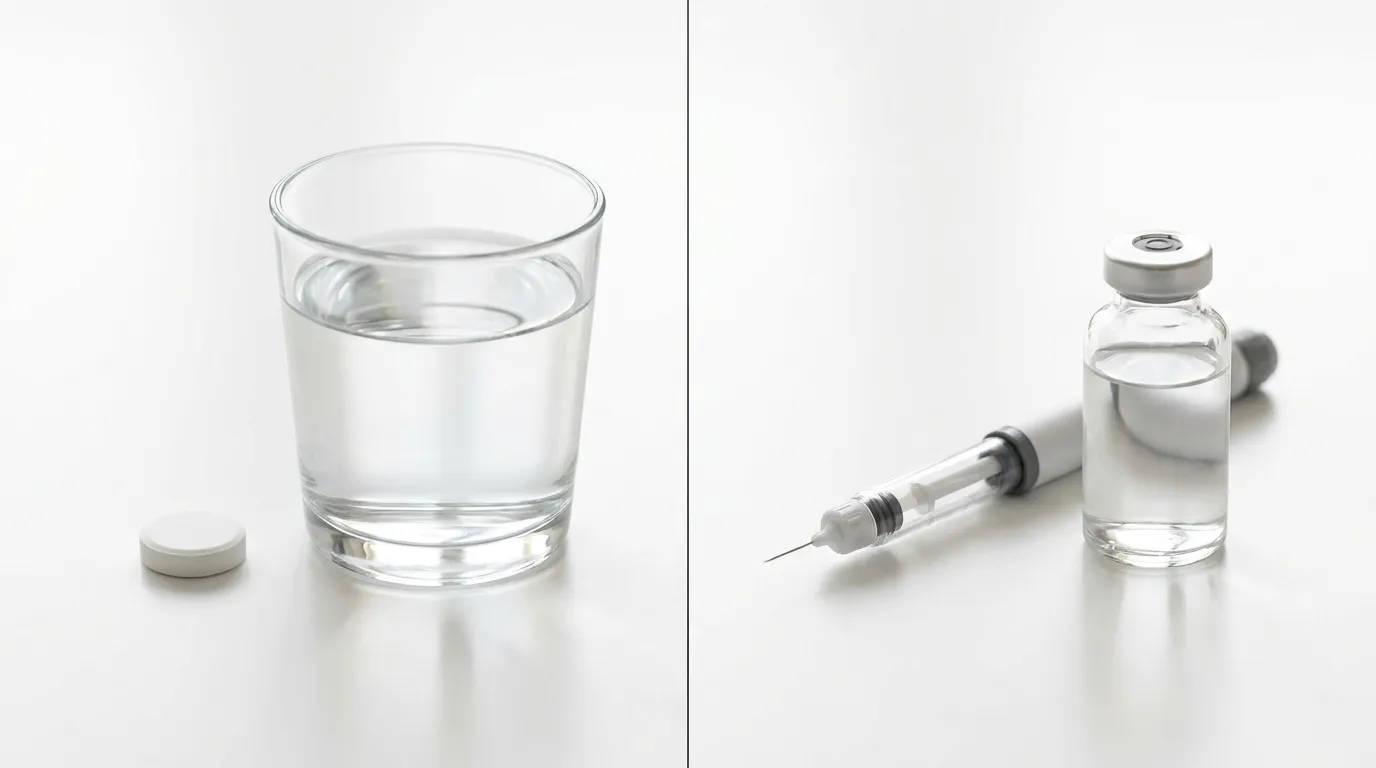
Now that it is FDA-approved, the legitimate way to get orforglipron is a prescription from a licensed clinician, filled at a pharmacy as the brand Foundayo, used for weight management alongside diet and activity. There is no need, and no safe reason, to source it from the unregulated research market.
The standard route is a clinical visit: a prescriber assesses whether you meet the criteria (obesity, or overweight with a weight-related condition), reviews contraindications like a thyroid-cancer history, and writes a prescription that is titrated up slowly. Because it is an oral tablet with no cold-chain needs, it is far simpler to dispense and store than injectable peptides. Coverage, copays, and real-world availability are evolving quickly after a brand-new launch and are their own topic.
If you are evaluating whether orforglipron is right for you, the responsible groundwork is straightforward:
- Talk to a qualified clinician who can confirm you are a candidate, screen for contraindications, and rule out interactions (especially insulin or sulfonylureas).
- Use the licensed pharmacy supply chain only. Avoid "research" orforglipron of unknown identity and purity. See how to vet peptide quality.
- Plan for slow titration. Expect to start at the lowest dose and step up monthly to limit nausea.
- Pair it with lifestyle changes. It is approved for use alongside a reduced-calorie diet and more physical activity, not instead of them.
The detailed cost, insurance, and availability picture sits alongside the other options in our guide to the best peptides for weight loss.
A realistic look at expectations
Realistic expectations for orforglipron are "meaningful weight loss from a convenient daily pill," not "the most weight loss possible." Going in calibrated, and understanding it works best with lifestyle change, is the difference between satisfaction and disappointment.
Two honest caveats sit on top of the excitement. First, trial averages hide a wide range: some people lose well over the 12% average, others much less, and weight loss on any GLP-1 drug tends to plateau. Second, like the rest of the class, orforglipron is studied as a long-term treatment; across GLP-1 medicines, stopping is generally associated with regaining weight, so it is not a short-term fix. For grounded before-and-after context and how to read transformation claims, see peptides before and after.

Frequently Asked Questions
The bottom line
Orforglipron is a genuine milestone: the first time the appetite- and glucose-controlling power of the GLP-1 class has been packaged into a true once-daily pill, made possible because it is a small molecule rather than a peptide. As of April 2026 it is FDA-approved as Foundayo for weight management, with diabetes use likely to follow. For the many people who never start, or never stay on, an injectable, an effective tablet with no needles and no fridge is a meaningful new option.
The discipline is in the expectations. Orforglipron's roughly 12% average trial weight loss is real and useful, but lower than the strongest injectables, and like the whole class it works best alongside diet and activity and is built for long-term use. It is a prescription medicine with a boxed warning and contraindications, so it belongs in a conversation with a qualified clinician, not in a gray-market vial. From here, the natural next reads are semaglutide, tirzepatide, and are peptides legal.
Sources
- Pharmacy Times. "FDA Approves Orforglipron, First GLP-1 Pill Without Time, Food, or Water Restrictions." 2026. Retrieved 2026-06-15. https://www.pharmacytimes.com/view/fda-approves-orforglipron-first-glp-1-pill-without-time-food-or-water-restrictions
- Eli Lilly / PR Newswire. "FDA approves Lilly's Foundayo (orforglipron), the only GLP-1 pill for weight loss that can be taken any time of day without food or water restrictions." 2026. Retrieved 2026-06-15. https://www.prnewswire.com/news-releases/fda-approves-lillys-foundayo-orforglipron-the-only-glp-1-pill-for-weight-loss-that-can-be-taken-any-time-of-day-without-food-or-water-restrictions-302731485.html
- Eli Lilly / PR Newswire. "Lilly's orforglipron helped people maintain weight loss after switching from injectable incretins to oral GLP-1 therapy in first-of-its-kind Phase 3 trial (ATTAIN-MAINTAIN)." 2026. Retrieved 2026-06-15. https://www.prnewswire.com/news-releases/lillys-orforglipron-helped-people-maintain-weight-loss-after-switching-from-injectable-incretins-to-oral-glp-1-therapy-in-first-of-its-kind-phase-3-trial-302645471.html
- "Orforglipron: A Comprehensive Review of an Oral Small-Molecule GLP-1 Receptor Agonist for Obesity and Type 2 Diabetes." International Journal of Molecular Sciences / PMC, 2026. Retrieved 2026-06-15. https://pmc.ncbi.nlm.nih.gov/articles/PMC12898445/
- News-Medical. "Oral GLP-1 Pills for Weight Loss: How Orforglipron Works." 2026. Retrieved 2026-06-15. https://www.news-medical.net/health/Oral-GLP-1-Pills-for-Weight-Loss-How-Orforglipron-Works.aspx
- RxList (FDA prescribing information). "Foundayo (orforglipron): Side Effects, Uses, Dosage, Interactions, Warnings." 2026. Retrieved 2026-06-15. https://www.rxlist.com/foundayo-drug.htm
- Medscape. "With Phase 3 Completed, Obesity Pill Orforglipron Advances." 2025. Retrieved 2026-06-15. https://www.medscape.com/viewarticle/phase-3-completed-obesity-pill-orforglipron-advances-2025a1000und
- PeptidesExplorer. "Orforglipron vs Tirzepatide: Pill vs Injection." 2026. Retrieved 2026-06-15. https://peptidesexplorer.com/blog/orforglipron-vs-tirzepatide
- U.S. Food and Drug Administration. "FDA Approves First New Molecular Entity Under National Priority Voucher Program." 2026. Retrieved 2026-06-15. https://www.fda.gov/news-events/press-announcements/fda-approves-first-new-molecular-entity-under-national-priority-voucher-program