Tirzepatide: The Complete Guide (Mounjaro & Zepbound)
Tirzepatide is a once-weekly injectable medicine that helps people lower blood sugar and lose a significant amount of weight by activating two of the body's own appetite-and-metabolism hormones at the same time. You have probably heard it by its brand names: Mounjaro for type 2 diabetes and Zepbound for weight management and sleep apnea. It is the same active drug in both, just approved and marketed for different conditions.
What makes tirzepatide notable is that it is a "dual agonist." Older drugs in this family, like semaglutide (Ozempic and Wegovy), act on a single hormone receptor. Tirzepatide acts on two, which is one reason its weight-loss results in trials have been the largest of any approved injectable to date. This guide is the high-level map of the whole topic: what tirzepatide is, how it works, what it treats, the dosing picture, side effects, realistic results, safety, legal status, and how people actually obtain it. Where a subject deserves its own deep dive, we keep it short here and point you to a dedicated guide. If you're still comparing your options, our roundup of the best peptides for weight loss sets tirzepatide alongside the alternatives.
Key Takeaways
- Tirzepatide is a dual GIP and GLP-1 receptor agonist, the active ingredient in both Mounjaro (type 2 diabetes) and Zepbound (obesity and obstructive sleep apnea). It is FDA-approved and prescription-only.
- It is taken as a once-weekly injection under the skin. Its long half-life of about 5 days is what allows weekly dosing.
- Dosing studied in trials runs from a 2.5 mg starting dose up to 15 mg weekly, titrated up slowly to limit nausea. The 2.5 mg dose is a starter, not a treatment dose.
- Results are large. In the SURMOUNT-1 trial (NEJM 2022), people on the 15 mg dose lost about 20.9% of body weight over 72 weeks; head-to-head, tirzepatide beat semaglutide (about 20.2% vs 13.7%) in SURMOUNT-5.
- The most common side effects are gastrointestinal (nausea, diarrhea, constipation) and tend to peak right after each dose increase. It carries a boxed warning for thyroid C-cell tumors.
- It is a real, approved drug, not a research chemical — but a large gray market of "compounded" and research-labeled tirzepatide also exists, with different and uncertain quality and legal status.
What is tirzepatide?
Tirzepatide is a once-weekly injectable peptide medicine that activates two gut-hormone receptors at once to lower blood sugar and reduce appetite. It is the active ingredient in two FDA-approved brands: Mounjaro, approved for type 2 diabetes, and Zepbound, approved for chronic weight management and obstructive sleep apnea.
Tirzepatide is a synthetic peptide of 39 amino acids, engineered from the human GIP hormone and modified so it can bind both the GIP and the GLP-1 receptor (NCBI StatPearls, "Tirzepatide," 2024, retrieved 2026-06-15). Eli Lilly developed it, and the FDA first approved it as Mounjaro for type 2 diabetes in May 2022 (NCI / NCBI StatPearls, 2024, retrieved 2026-06-15). It belongs to the broader family of incretin-based therapies and is, chemically, a peptide drug; if the term is new to you, start with our guide to what peptides are.
The single most important thing to understand up front is that "tirzepatide," "Mounjaro," and "Zepbound" all refer to the same molecule. The brand name tells you which condition it was approved and packaged to treat, not which drug is inside.
Citation capsule. Tirzepatide is a 39-amino-acid synthetic peptide that acts as a dual agonist of the GIP and GLP-1 receptors. It is FDA-approved as Mounjaro (type 2 diabetes, May 2022) and Zepbound (chronic weight management, November 2023; obstructive sleep apnea, December 2024). It is given as a once-weekly subcutaneous injection. Source: NCBI StatPearls, "Tirzepatide," 2024.
How does tirzepatide work?
Tirzepatide works by switching on two of your body's own appetite-and-blood-sugar hormones at the same time, which makes you feel full sooner, eat less, and manage glucose better. Most older drugs in this class flip only one of those switches; tirzepatide flips two, which is the headline difference.
In plain terms, this means your stomach empties more slowly, your brain registers fullness earlier, your body releases more insulin when blood sugar is high, and it releases less of the hormone that raises blood sugar. You end up eating less without the constant willpower battle, and your blood sugar stays steadier. None of this requires a special diet to start working, though eating well and moving amplify the results.
The mechanistic detail: tirzepatide is a dual agonist of the glucose-dependent insulinotropic polypeptide (GIP) receptor and the glucagon-like peptide-1 (GLP-1) receptor (National Cancer Institute / NCBI, "Tirzepatide," 2024, retrieved 2026-06-15). It was engineered from the GIP molecule and binds the GIP receptor with affinity comparable to native GIP, while its affinity for the GLP-1 receptor is roughly 18- to 20-fold weaker than native GLP-1, an "imbalanced" profile that researchers think contributes to its effects (PMC, "Tirzepatide is an imbalanced and biased dual GIP and GLP-1 receptor agonist," 2020, retrieved 2026-06-15). Together these actions enhance insulin secretion, suppress glucagon, slow gastric emptying, and reduce appetite. For the receptor-and-signaling fundamentals behind this whole drug class, see how peptides work.

Why "dual agonist" matters
Adding GIP activity on top of GLP-1 activity appears to produce more weight loss and better blood-sugar control than GLP-1 alone. That is the practical reason tirzepatide has outperformed single-receptor drugs in head-to-head trials. The exact contribution of GIP is still an active research question, and newer triple agonists (like investigational retatrutide) add a third receptor, glucagon, to push the idea further.
What is tirzepatide used for?
Tirzepatide is FDA-approved for three things: type 2 diabetes, chronic weight management, and obstructive sleep apnea in adults with obesity. Which approval applies depends on the brand name.
Here is the clean breakdown, because the brand-and-indication overlap is the single most confusing part of this topic:
| Brand | Approved use | First FDA approval |
|---|---|---|
| Mounjaro | Type 2 diabetes (with diet and exercise) | May 2022 |
| Zepbound | Chronic weight management (obesity, or overweight with a weight-related condition) | November 2023 |
| Zepbound | Moderate-to-severe obstructive sleep apnea in adults with obesity | December 2024 |
The diabetes approval came first, based on the SURPASS trial program; the weight-management approval followed from the SURMOUNT trials; and the obstructive sleep apnea approval, the first drug ever approved for that condition, came in December 2024 (AJMC, "FDA Approves Diabetes Drug Tirzepatide for Chronic Weight Management," 2023, retrieved 2026-06-15). Doctors also prescribe it "off-label" at their discretion, but the three indications above are the approved ones.
A detailed brand-by-brand comparison (packaging, insurance, pen vs vial) lives in the the Mounjaro brand guide and the the Zepbound brand guide.
How is tirzepatide dosed? (overview)
Tirzepatide is injected under the skin once a week, starting at a low 2.5 mg dose and increasing slowly, in 2.5 mg steps no sooner than every four weeks, up to a maximum of 15 mg. The slow ramp-up is deliberate: it gives your gut time to adjust and keeps nausea manageable.
A few practical facts most people want answered right away. The 2.5 mg starting dose is a "starter" meant only to build tolerance, not a treatment dose. Maintenance doses for most people fall somewhere between 5 mg and 15 mg, chosen based on response and tolerability (Cleveland Clinic, "Tirzepatide Injection," 2024, retrieved 2026-06-15). Steady-state drug levels take about four weeks of weekly dosing to build up, which is part of why each step lasts at least four weeks. You can inject into the abdomen, thigh, or upper arm, rotating sites.
The figures below are the titration schedule studied in trials and reflected on the FDA label, shown for understanding, not as a personal prescription:
| Step | Weekly dose | Minimum time before next step |
|---|---|---|
| Starter | 2.5 mg | 4 weeks |
| Step 1 | 5 mg | 4 weeks |
| Step 2 | 7.5 mg | 4 weeks |
| Step 3 | 10 mg | 4 weeks |
| Step 4 | 12.5 mg | 4 weeks |
| Maximum | 15 mg | — |
The full dose-by-dose protocol, dose-holding strategy, what to do above 15 mg, and missed-dose rules are a deep topic of their own. Tirzepatide dosage chart and titration deep-dive.
What results can you expect from tirzepatide?
In clinical trials, tirzepatide produced the largest weight loss of any approved injectable medicine, with people on the top dose losing around a fifth of their body weight. Results build gradually over many months, not days, and they depend on the dose reached and on diet and activity.
In the SURMOUNT-1 weight-loss trial (published in The New England Journal of Medicine in June 2022), adults without diabetes who took the 15 mg dose lost an average of 20.9% of body weight over 72 weeks, and about 39.7% of them lost at least 25% of body weight, versus 0.3% on placebo (Eli Lilly / NEJM, "Lilly's SURMOUNT-1 results published in NEJM," 2022, retrieved 2026-06-15). In the head-to-head SURMOUNT-5 trial against semaglutide (Wegovy), tirzepatide produced about 20.2% weight loss versus 13.7% for semaglutide (Eli Lilly investor release, "Zepbound showed superior weight loss over Wegovy in SURMOUNT-5," 2025, retrieved 2026-06-15). On the diabetes side, tirzepatide drives large HbA1c reductions across the SURPASS program, the basis of its Mounjaro approval (NCBI StatPearls, "Tirzepatide," 2024, retrieved 2026-06-15).
A realistic timeline matters as much as the headline number. Appetite suppression often shows up within the first few weeks, but meaningful weight change accrues over months as the dose climbs. The trial averages above reflect people who reached high maintenance doses and stayed on them for more than a year.
A full before-and-after expectations guide, including how fast results come and what happens if you stop, lives separately. What real results look like, and the regain question.
What are the side effects of tirzepatide?
The most common side effects are gastrointestinal: nausea, diarrhea, vomiting, constipation, and reduced appetite, and they tend to spike right after each dose increase, then settle. Most are mild to moderate, but tirzepatide also carries a boxed warning and some rare serious risks.
For the typical person, the early weeks are the hardest. Nausea is the classic complaint, and it is dose-dependent, which is exactly why the dose is raised slowly. These effects usually ease as your body adjusts to each step (Cleveland Clinic, "Tirzepatide Injection," 2024, retrieved 2026-06-15). Eating smaller, blander meals and stopping when full are common coping strategies.
The serious-but-rarer risks deserve naming clearly:
- Boxed warning, thyroid C-cell tumors. Animal studies showed a risk of medullary thyroid carcinoma (MTC). Tirzepatide is contraindicated for anyone with a personal or family history of MTC or with Multiple Endocrine Neoplasia type 2 (MEN 2) (NCBI StatPearls, "Tirzepatide," 2024, retrieved 2026-06-15).
- Pancreatitis, gallbladder problems, and kidney injury (often from dehydration due to vomiting or diarrhea) are recognized, less common risks (Cleveland Clinic, 2024, retrieved 2026-06-15).
- Low blood sugar (hypoglycemia), especially when combined with insulin or sulfonylureas.
A full symptom-by-symptom management guide and the long-tail side effects are a dedicated topic. Tirzepatide side effects: full list and how people manage them.
Is tirzepatide safe?
Tirzepatide has extensive safety data from large clinical trials and FDA review, which puts it in a completely different category from unapproved research compounds, but "approved" does not mean "risk-free." Its safety profile is well-characterized, which is precisely why it is prescription-only and carries a boxed warning.
The honest framing: approved peptide medicines like tirzepatide have years of trial data behind them, unlike many wellness peptides that have little human evidence. At the same time, tirzepatide is not for everyone. It should be avoided by people with a history of medullary thyroid cancer or MEN 2, used cautiously with other glucose-lowering drugs, and is not recommended in pregnancy (NCBI StatPearls, "Tirzepatide," 2024, retrieved 2026-06-15). The drug-interaction and contraindication checklist is exactly the conversation to have with a prescriber, not the internet.
Our take: "FDA-approved" and "safe for me" are different questions. Tirzepatide's evidence base is strong, but it is a potent metabolic drug with a boxed warning and real contraindications. The risk picture is individual, which is why a clinician, not a vendor, decides if it fits you.
How long does tirzepatide stay in your system?
Tirzepatide has a long half-life of about five days, so it stays active in your body for weeks and clears slowly after the last dose. That long half-life is the entire reason it works as a once-weekly shot.
A half-life of roughly 5 days (about 120 hours) means each dose is still meaningfully present a week later, which lets levels stay steady with weekly injections; it also takes about four weeks of dosing to reach steady state (Eli Lilly Zepbound Prescribing Information, 2024, retrieved 2026-06-15; NCBI StatPearls, 2024, retrieved 2026-06-15). The flip side: after you stop, it takes several weeks to fully wash out, and appetite often returns as levels fall. A long half-life is common across this drug class, which is why most of these medicines are weekly rather than daily.
How do people store and handle tirzepatide?
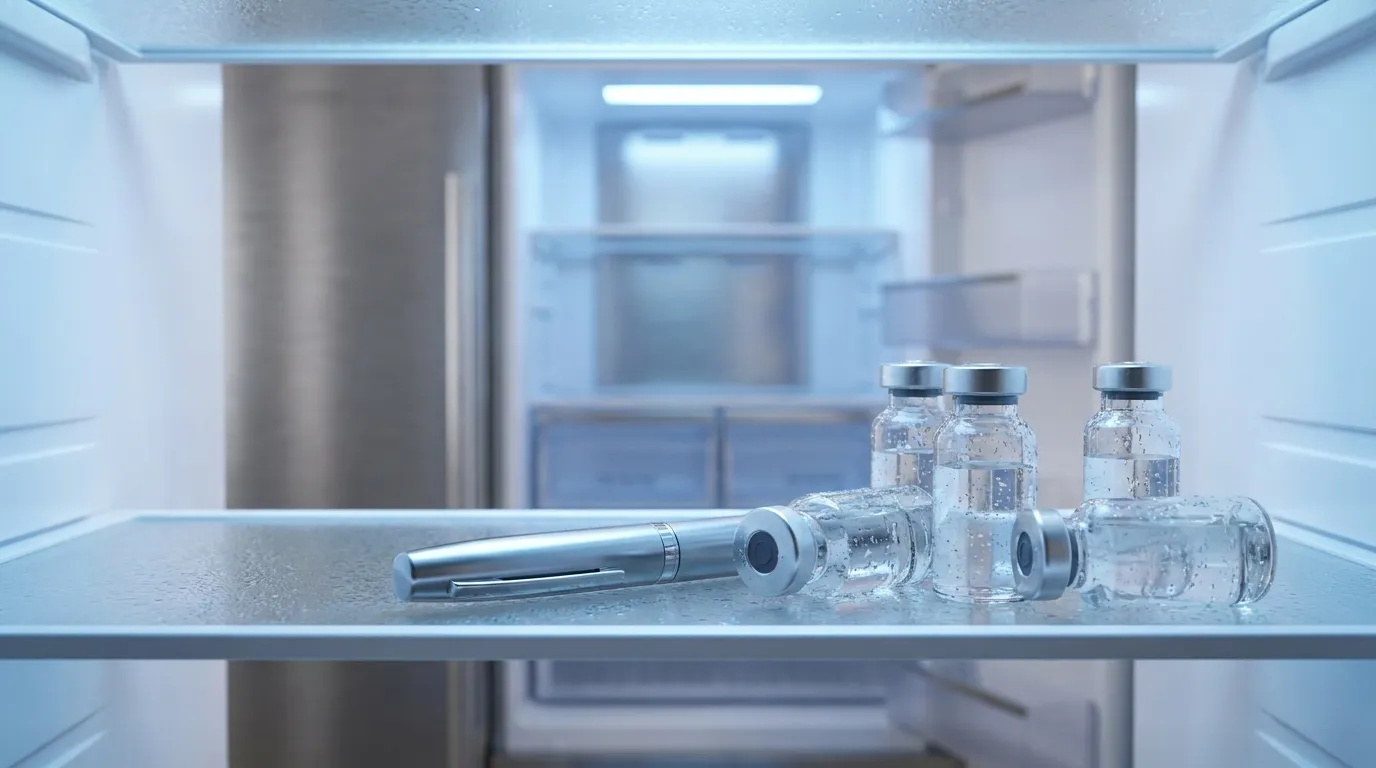
Tirzepatide is kept refrigerated, and depending on the product can be left at room temperature for a limited window, but it should never be frozen or used past its limits. Proper cold storage protects the peptide from degrading.
Manufactured pens and vials are generally stored in the refrigerator and, per the label, can tolerate room temperature for a defined period (commonly cited as up to 21 days for the branded product) before use; freezing ruins it (Cleveland Clinic, "Tirzepatide Injection," 2024, retrieved 2026-06-15). Always follow the specific product's instructions, since limits differ between pens, vials, and compounded preparations. The deeper science of peptide temperature stability and degradation is covered in our retatrutide storage and stability guide, and the general injection workflow (reconstituting vials, drawing a dose) is in our peptide injections guide.
How to handle a weekly injection (high-level)
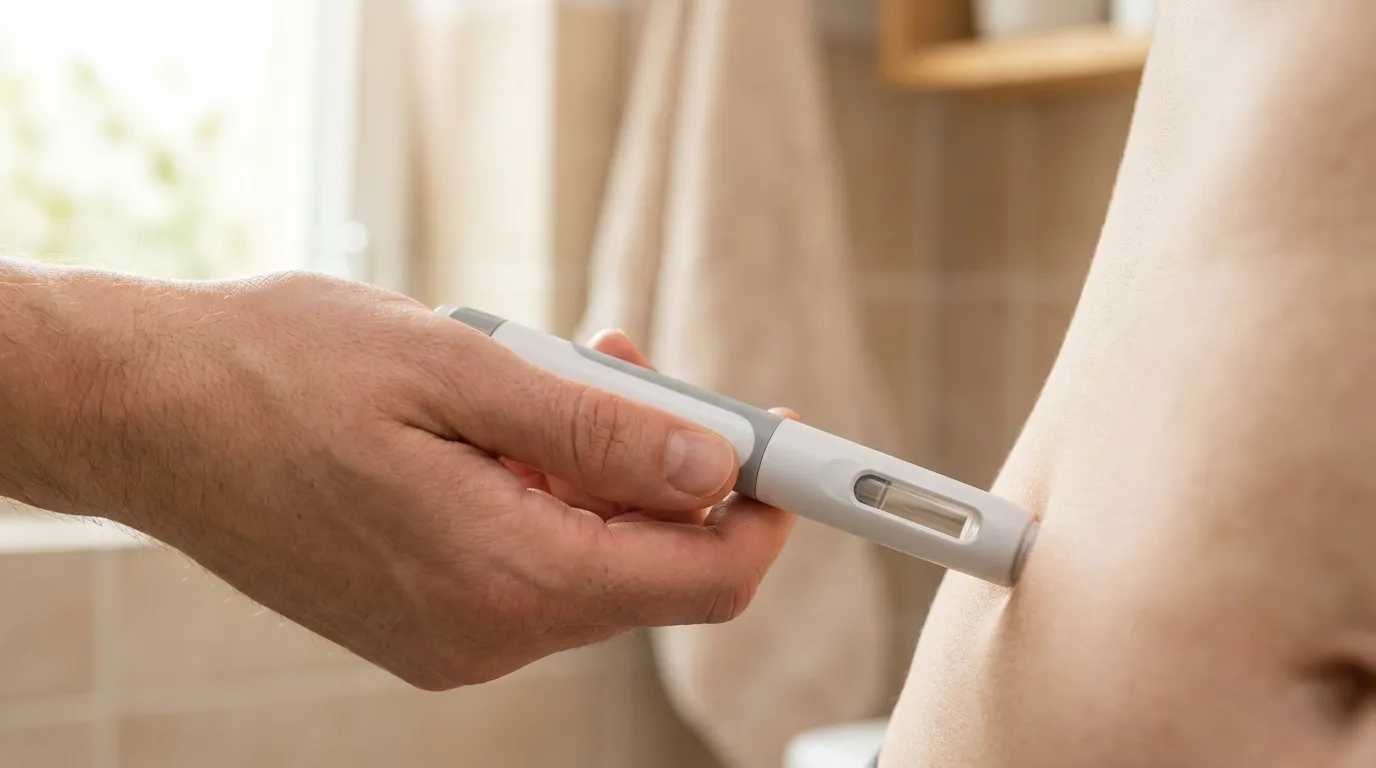
The basic weekly routine is simple, but technique matters; this is an orientation, not a substitute for your clinician's instructions or the product leaflet. For pens it is largely automatic; for vials there are a few more steps.
- Take it out and check it. Confirm the medicine is clear and unexpired; let a refrigerated pen sit briefly if your product instructs.
- Pick and clean a site. Abdomen, thigh, or upper arm, rotating each week; wipe with alcohol.
- Give the injection. With a pen, place and press as directed; with a vial and syringe, draw the prescribed amount and inject subcutaneously.
- Dispose safely. Used needles and pens go in a sharps container, never household trash.
- Log it. Note the date, dose, and any side effects so you and your clinician can track the response.
What does the ProtocolPlus community track for tirzepatide?
Tirzepatide is the single most-tracked compound in the ProtocolPlus community, and our anonymized data shows most logged vials run out right around the one-month mark. These are figures from in-app tracking, not clinical measurements, but they show real-world usage rhythm.
Across the community, tirzepatide leads the roster with the most tracking users and logged doses of any compound, and the typical tracked vial reaches "empty" near a median of about 22 days from first use (ProtocolPlus app data, data window 2024-09 to 2026-06, retrieved 2026-06-15). That clustering around three-to-four weeks lines up with how weekly dosing draws down a multi-dose vial.
How does tirzepatide compare to semaglutide and others?
Tirzepatide and semaglutide are the two leading injectable options, and in a head-to-head trial tirzepatide produced more weight loss, but "better on average" is not "better for everyone." The right choice depends on the condition, tolerability, cost, and access, not just the trial averages.
At a high level: semaglutide (Ozempic, Wegovy) is a single GLP-1 agonist; tirzepatide adds GIP activity. In SURMOUNT-5, the head-to-head trial, tirzepatide led on average weight loss (about 20.2% vs 13.7%) (Eli Lilly, 2025, retrieved 2026-06-15). Newer investigational drugs like the triple agonist retatrutide aim higher still. But tolerability, insurance coverage, dosing convenience, and individual response all factor in, and many people do very well on semaglutide.
A full, fair side-by-side comparison is its own article. Tirzepatide vs semaglutide: a detailed head-to-head. For the broader category, see our complete guide to semaglutide. And to weigh it against the investigational triple agonist, see tirzepatide vs retatrutide.
Is tirzepatide legal, and how do people get it?
Tirzepatide is a fully legal, FDA-approved prescription medicine, so the legitimate way to get it is a prescription from a licensed clinician filled at a pharmacy, as Mounjaro or Zepbound. It is not a controlled substance, but it is prescription-only, and a large gray market exists alongside the brand-name supply.
The straightforward path is a clinical evaluation, a prescription, and a pharmacy. Separately, during periods of high demand and shortage, "compounded" tirzepatide (made by compounding pharmacies) and research-labeled tirzepatide sold "for research use only" have become widely available online. These are legally and qualitatively different from the FDA-approved branded product: compounded versions are not FDA-approved, and research-grade material is not intended or tested for human use, with quality that can vary enormously. Because tirzepatide is a peptide bought in an unregulated channel by some, the same buyer-beware quality concerns apply as with any peptide; see how to vet peptide quality and our overview of peptide legality. The honest bottom line: the approved, prescribed route is the only one with guaranteed identity, dose accuracy, and oversight.
Cost, insurance, savings cards, and the compounding landscape sit alongside the other options in our guide to the best peptides for weight loss.
Where does tirzepatide fit in the bigger picture?
Tirzepatide is the current front-runner of the incretin drug class, a category that started with single GLP-1 drugs and is now moving toward multi-receptor agonists. Understanding that arc helps place it.
The progression is roughly: single GLP-1 agonists (semaglutide), then dual GIP/GLP-1 (tirzepatide), then investigational triple agonists that add glucagon (retatrutide). Each step has aimed for more metabolic effect. Tirzepatide's success has also driven enormous demand, shortages, and a sprawling secondary market. If you are new to this whole area, the foundational context lives in what are peptides and getting started with peptides; for a vocabulary refresher, see the peptide glossary.
Frequently Asked Questions
The bottom line
Tirzepatide is the active drug behind Mounjaro and Zepbound: an FDA-approved, once-weekly injectable that activates both the GIP and GLP-1 receptors to lower blood sugar and drive substantial weight loss. Its dual mechanism has translated into the largest weight-loss results of any approved injectable in trials, and it now carries approvals for type 2 diabetes, obesity, and obstructive sleep apnea. It is a real, well-studied medicine, which is exactly why it is prescription-only and carries a boxed warning.
The most useful frame to carry away is that the brand name tells you the approved use, not a different drug, and that "approved and effective" still means "potent and individual." The dosing, side-effect management, brand and cost comparisons, and the semaglutide question each have their own dedicated guides. And for anything you might consider, the right next step is a conversation with a qualified clinician, not a vendor.
Sources
- NCBI Bookshelf / StatPearls. "Tirzepatide." 2024. Retrieved 2026-06-15. https://www.ncbi.nlm.nih.gov/books/NBK585056/
- Willard FS, et al. "Tirzepatide is an imbalanced and biased dual GIP and GLP-1 receptor agonist." JCI Insight / PMC, 2020. Retrieved 2026-06-15. https://www.ncbi.nlm.nih.gov/pmc/articles/PMC7526454/
- Cleveland Clinic. "Tirzepatide Injection." 2024. Retrieved 2026-06-15. https://my.clevelandclinic.org/health/drugs/23789-tirzepatide-injection
- Eli Lilly and Company / Jastreboff AM, et al. "Lilly's SURMOUNT-1 results published in The New England Journal of Medicine show tirzepatide achieved between 16.0% and 22.5% weight loss." NEJM, 2022. Retrieved 2026-06-15. https://investor.lilly.com/news-releases/news-release-details/lillys-surmount-1-results-published-new-england-journal-medicine
- Eli Lilly and Company. "Zepbound (tirzepatide) showed superior weight loss over Wegovy (semaglutide) in complete SURMOUNT-5 results published in The New England Journal of Medicine." 2025. Retrieved 2026-06-15. https://investor.lilly.com/news-releases/news-release-details/zepbound-tirzepatide-showed-superior-weight-loss-over-wegovy
- AJMC. "FDA Approves Diabetes Drug Tirzepatide for Chronic Weight Management." 2023. Retrieved 2026-06-15. https://www.ajmc.com/view/fda-approves-diabetes-drug-tirzepatide-for-chronic-weight-management
- Eli Lilly and Company. "Zepbound (tirzepatide) Highlights of Prescribing Information." 2024. Retrieved 2026-06-15. https://pi.lilly.com/us/zepbound-uspi.pdf
- Drugs.com. "Tirzepatide (Zepbound, Mounjaro): Weight Loss, Diabetes, Dosage & Side Effects." 2024. Retrieved 2026-06-15. https://www.drugs.com/tirzepatide.html
- Springer Nature, Diabetes Therapy. "Insights into the Mechanism of Action of Tirzepatide: A Narrative Review." 2025. Retrieved 2026-06-15. https://link.springer.com/article/10.1007/s13300-025-01804-w
- ProtocolPlus. Anonymized app tracking data, data window 2024-09-01 to 2026-06-15. Retrieved 2026-06-15. /data/peptide-stats/userbase.json