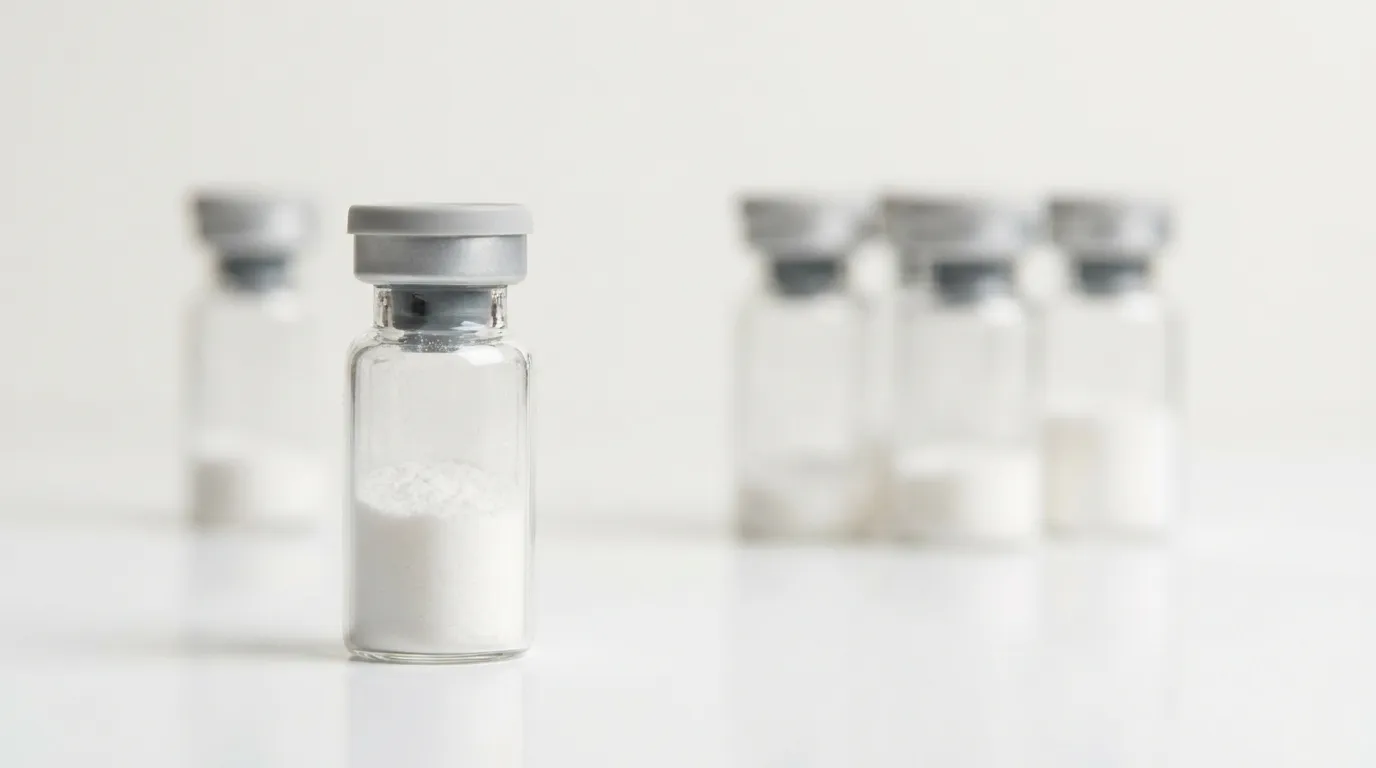
Custom GH & Healing Peptide Blends: What's Really in a Stack Vial
Peptide blends are single vials that contain two or more peptides pre-mixed together, sold for the convenience of one reconstitution and one injection instead of several. You have probably seen them under nicknames like the "Wolverine" healing stack (BPC-157 + TB-500), a GH-secretagogue blend (CJC-1295 + ipamorelin), or the cosmetic "GLOW" and "KLOW" blends. They are marketed on the promise that the peptides work better together, but here is the catch: no specific blend combination has ever been tested in a human clinical trial, and the convenience comes at the cost of dose control.
This is the concept hub for the whole category. If you are new to the topic, the beginner's guide to what peptides are sets the foundation. Instead of re-explaining each peptide, we cover what a blend actually is, what is really in the common vials, why people reach for them, how they get dosed and reconstituted at a high level, and the honest risks of buying your peptides pre-combined. For the deep science on any single component, we link out to its dedicated guide, so this page stays a clean map of the category rather than a wall of overlapping detail.
Key Takeaways
- A peptide "blend" or "stack" is one vial holding two or more peptides in a fixed ratio, sold so you reconstitute and inject once instead of juggling several vials. The combination itself is a vendor formulation convention, not a clinically validated product (Bio Longevity Labs, "GLOW Peptide Blend," 2026, retrieved 2026-06-16).
- The fixed ratio removes independent dose control. Once the peptides share a vial, choosing the dose of one fixes the dose of every other, so you cannot titrate them separately or stop just one if it causes a side effect (Hello Regimen, "Peptide Blend Dosing Guide," 2026, retrieved 2026-06-16).
- No blend has human-trial evidence for the combination. Even where individual components have research, the supporting studies examined each peptide separately; combination "synergy" is a theoretical claim, not a tested one (Innerbody Research, "CJC-1295 + Ipamorelin," 2026, retrieved 2026-06-16).
- The components are unapproved drugs. BPC-157, TB-500, GHK-Cu, CJC-1295, ipamorelin, and KPV are not approved by any regulator for human use, and several (BPC-157, TB-500) are banned in sport by WADA (Wikipedia, "BPC-157," 2026, retrieved 2026-06-16).
- A multi-peptide vial multiplies the quality risk. Independent testing has found a meaningful share of research peptides mislabeled, under- or over-dosed, or contaminated, and a blend stacks that uncertainty across every ingredient at once (STAT News, 2026, retrieved 2026-06-16).
- The honest framing: convenience is real, synergy is mostly anecdotal. Blends save steps and may simplify a routine, but the "1 + 1 = 3" healing claims rest on mechanism theory and user reports, not controlled human data.
What is a peptide blend?
A peptide blend is a single vial that holds two or more peptides mixed together in a fixed ratio, sold so you reconstitute and inject the whole combination at once instead of preparing each peptide separately. People also call them "stacks." The appeal is convenience: one vial, one mix, one shot. The trade-off is that the recipe is decided for you by whoever made the vial.
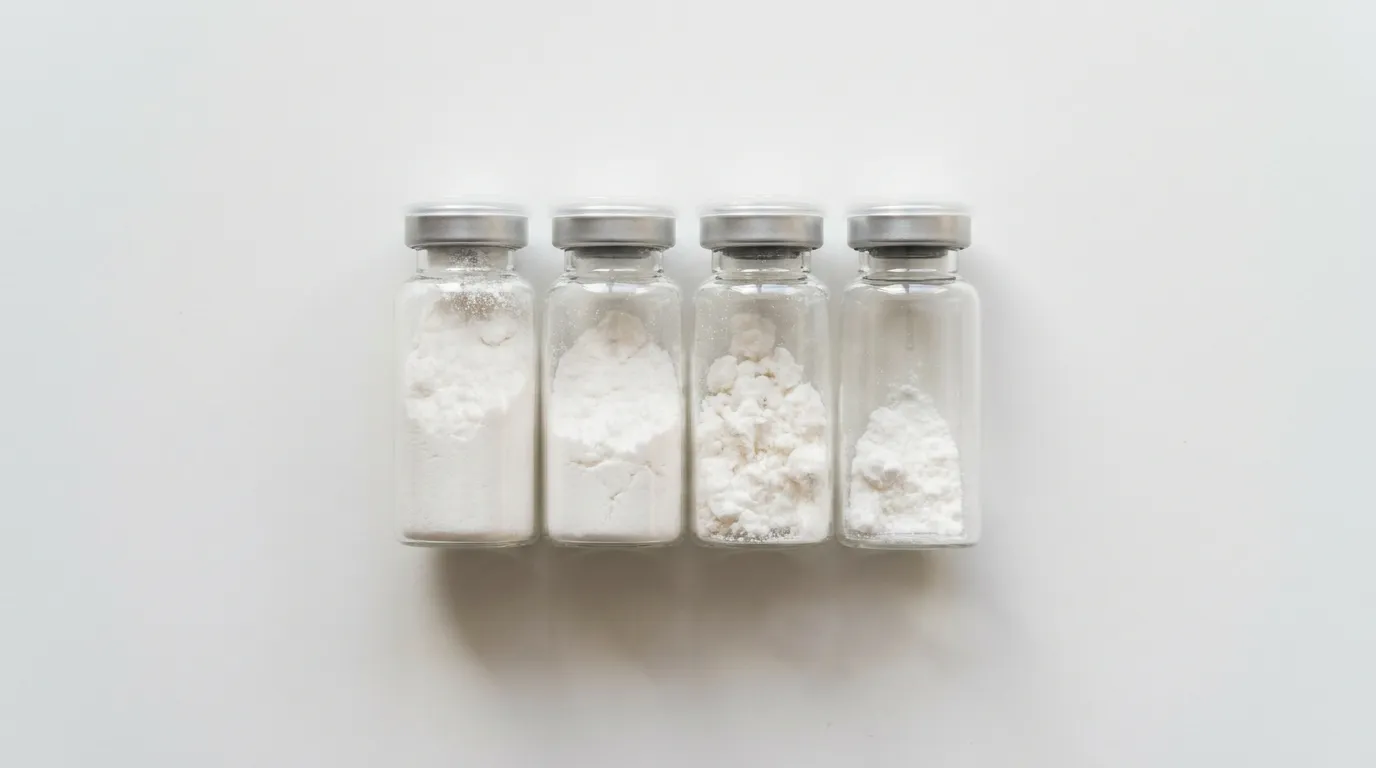
In practice a blend is just a marketing-and-manufacturing convenience, not a different class of compound. The peptides inside are the same research chemicals sold individually, the only difference being that a vendor has lyophilized them together in chosen amounts. A healing blend might pair BPC-157 with TB-500; a growth-hormone blend pairs a GHRH analog like CJC-1295 with a GH secretagogue like ipamorelin; a cosmetic blend stacks skin-and-repair peptides. Because the mix is pre-set, the ratio between the peptides is locked the moment you buy the vial.
That locked ratio is the single most important thing to understand about blends, and it is why the rest of this guide keeps returning to it. The whole category exists to save you steps, so the honest question is always whether the convenience is worth giving up the ability to tune each peptide on its own.
Citation capsule. A peptide blend (or "stack") is a single lyophilized vial containing two or more research peptides combined in a fixed, vendor-chosen ratio, marketed for the convenience of one reconstitution and one injection. The combination is a formulation convention, not a regulator-reviewed or clinically validated product; none of the common blends has been tested as a combination in a human trial. Source: Bio Longevity Labs product listings, 2026; Innerbody Research, 2026.
What are the common peptide blends, and what is in them?
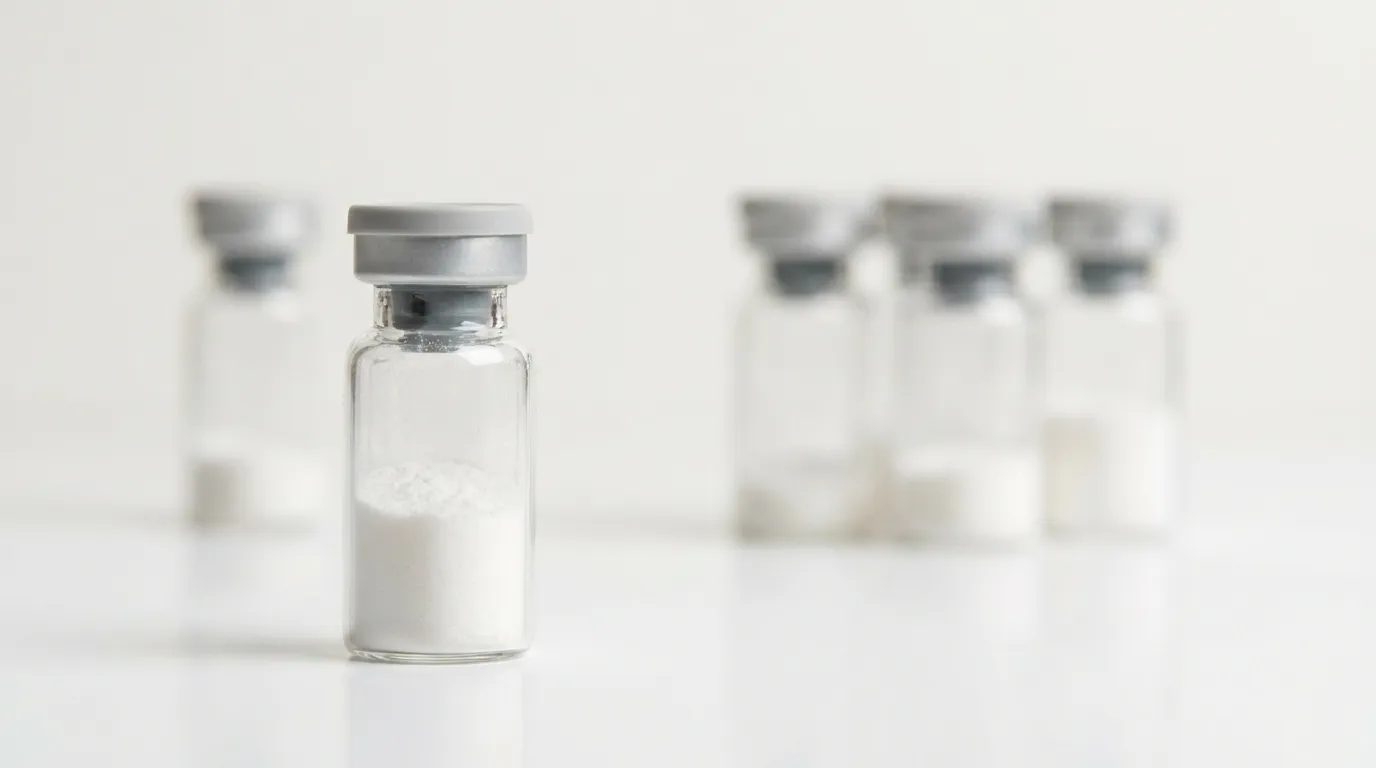
The common blends fall into three families: GH-secretagogue blends (CJC-1295 + ipamorelin), healing blends (BPC-157 + TB-500, the "Wolverine" stack), and cosmetic-healing blends (GLOW and KLOW), which layer skin and repair peptides like GHK-Cu and KPV on top. Each combines peptides whose individual mechanisms are at least plausible together, even though the combination itself is untested.
The GH-secretagogue blend pairs CJC-1295, a synthetic analog of growth-hormone-releasing hormone (GHRH), with ipamorelin, a selective agonist of the ghrelin/GH-secretagogue receptor; the logic is that one provides a steady GHRH signal while the other adds a clean pulse, both nudging the pituitary to release more of the body's own growth hormone (Wikipedia, "CJC-1295," 2026, retrieved 2026-06-16; Wikipedia, "Ipamorelin," 2026, retrieved 2026-06-16). The healing "Wolverine" blend pairs BPC-157, a 15-amino-acid peptide derived from a protein in gastric juice, with TB-500, a synthetic fragment of the actin-regulating protein thymosin beta-4; the idea is that BPC-157 acts more locally and TB-500 more systemically (Wikipedia, "Thymosin beta-4," 2026, retrieved 2026-06-16). The cosmetic blends build outward: GLOW typically combines GHK-Cu (a copper tripeptide studied for collagen and skin repair) with BPC-157 and TB-500, and KLOW adds KPV, an anti-inflammatory tripeptide fragment of alpha-MSH (Wikipedia, "GHK-Cu," 2026, retrieved 2026-06-16; Mandrika et al., PubMed PMID 11256945, 2001, retrieved 2026-06-16).
Here is a category-level cheat sheet of the common blends and what each one is reaching for. Component facts are deliberately brief, as each peptide has its own full guide:
| Blend (nickname) | Components | Claimed purpose | Honest status |
|---|---|---|---|
| GH-secretagogue blend | CJC-1295 + ipamorelin | Raise the body's own growth-hormone release (recovery, body composition, sleep) | Studied separately, never as a combo in humans |
| Wolverine (healing) blend | BPC-157 + TB-500 | Soft-tissue, tendon, and injury recovery | Combination is anecdotal; both unapproved, WADA-banned |
| GLOW blend | GHK-Cu + BPC-157 + TB-500 | Skin quality, collagen, "glow," plus healing | Cosmetic-healing marketing; no combo trial |
| KLOW blend | GHK-Cu + BPC-157 + TB-500 + KPV | GLOW goals plus added anti-inflammatory action | Same as GLOW, with one more untested ingredient |
For the science behind any single ingredient, see the component guides: BPC-157 complete guide, TB-500 complete guide, CJC-1295 guide, ipamorelin guide, GHK-Cu guide, and KPV peptide guide.
Why do people use peptide blends?
People use blends for two reasons: convenience (one vial, one mix, one injection instead of several) and the belief that the combined peptides work better together than each would alone. The convenience is genuine and easy to verify; the synergy is the part that rests on theory and anecdote rather than human trials.
The convenience case is straightforward. Running BPC-157 and TB-500 separately means two vials, two reconstitutions, two amounts to track, and often two injections. A blend collapses that into one of each, which is a real reduction in friction, cost of multiple shipments, and chances to make a mixing error. For a cosmetic stack with three or four ingredients, the time savings compound further. This is why most blend buyers describe the appeal as simplicity first.
The synergy case is where honesty matters. The mechanistic story is appealing: in a GH blend, a GHRH analog and a GH secretagogue act on different receptors, so combining them is thought to produce a larger growth-hormone release than either alone; in a healing blend, one peptide is described as more local and the other more systemic. These are reasonable hypotheses, but Innerbody's medically reviewed analysis of the CJC-1295 and ipamorelin pairing is explicit that the supporting studies "examined the two peptides separately," meaning the combination itself has not been tested in people (Innerbody Research, "CJC-1295 + Ipamorelin," 2026, retrieved 2026-06-16). The same is true of the healing blends: no peer-reviewed human trial of BPC-157 plus TB-500 exists.
It helps to separate what is known from what is hoped. What is known is that each peptide, on its own, has its own (mostly preclinical) research base, and that two compounds acting on different receptors or in different tissues can in principle add up. What is hoped is that putting them in one vial produces a result greater than the sum of the parts. Those are very different standards of proof. A great deal of the enthusiasm for blends comes from user reports and clinic anecdotes, which are useful for spotting patterns but cannot separate a true combination effect from the placebo of a new routine, the body's own healing over the same weeks, or the effect of the single peptides doing exactly what they would have done apart. Until a controlled trial compares a blend against its components head-to-head, the synergy stays a plausible story rather than a measured benefit.
Our take: The convenience of a blend is real and worth something. The synergy is the part to treat skeptically. "These peptides work better together" is a mechanistic guess that has never been put to a controlled human test, so treat it as a hypothesis, not a benefit you have been promised.
What is in a GLOW or KLOW blend?
A GLOW blend typically contains GHK-Cu, BPC-157, and TB-500; a KLOW blend is the same three plus KPV. They are marketed as cosmetic-and-healing stacks, aimed at skin quality and collagen on top of soft-tissue repair, and the names are vendor branding rather than any standardized formula.
GLOW leans on GHK-Cu, the copper complex of the tripeptide glycyl-L-histidyl-L-lysine, which is naturally present in plasma (around 200 ng/ml at age 20, declining to about 80 ng/ml by age 60) and has been studied for stimulating collagen synthesis and wound healing (Wikipedia, "GHK-Cu," 2026, retrieved 2026-06-16). It pairs that with the two healing peptides, BPC-157 and TB-500, for a combined "repair plus glow" pitch. KLOW adds KPV, the lysine-proline-valine fragment that forms the anti-inflammatory C-terminal message of alpha-MSH, studied in inflammation models (Mandrika et al., PubMed PMID 11256945, 2001, retrieved 2026-06-16).
The ratios are not standardized across vendors, which is worth stressing. One representative KLOW listing splits an 80 mg vial as GHK-Cu 50 mg, KPV 10 mg, BPC-157 10 mg, and TB-500 10 mg, but that is one vendor's recipe, not an industry standard (Bio Longevity Labs, "KLOW Blend," 2026, retrieved 2026-06-16). Two GLOW or KLOW vials from different sellers can contain very different amounts of each peptide, so the name alone tells you the ingredients but not the doses.
How are peptide blends dosed and reconstituted?
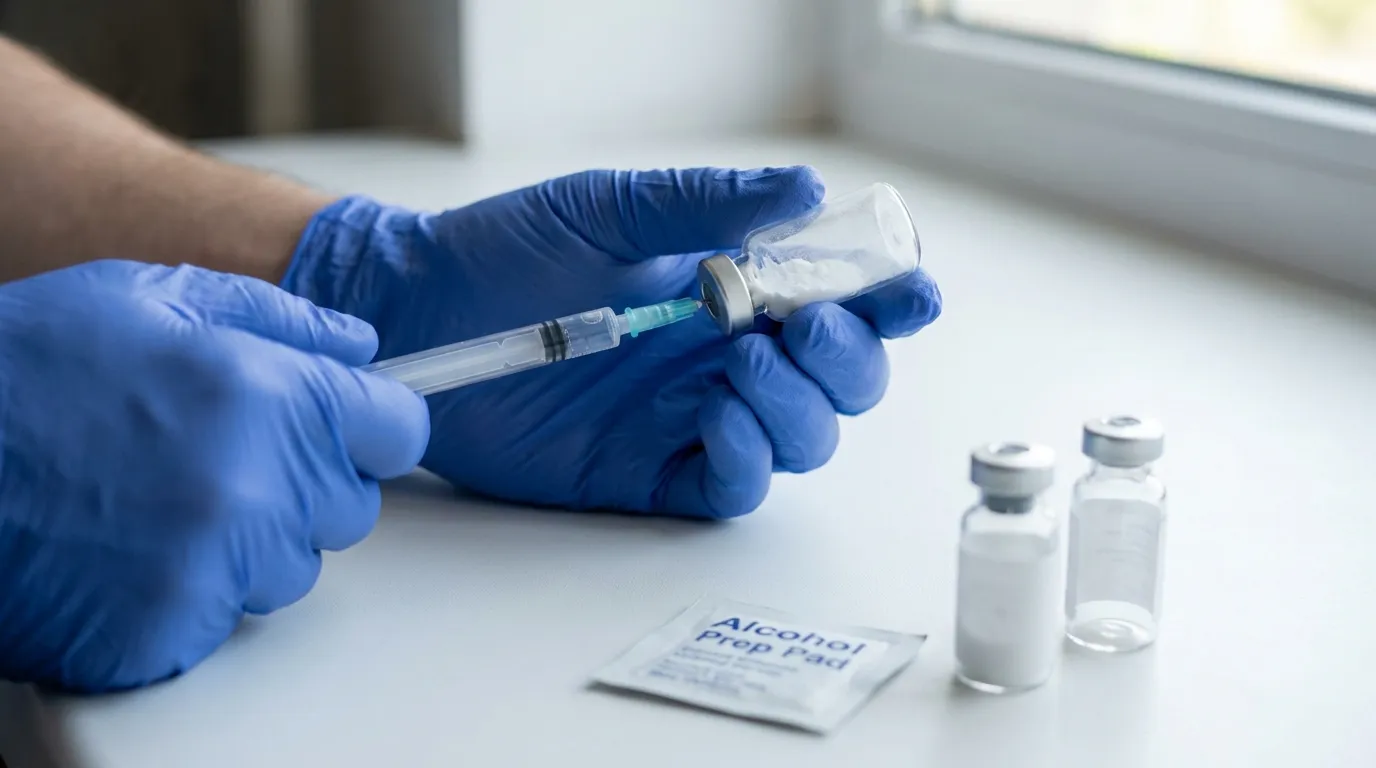
Blends are reconstituted and dosed like any lyophilized peptide vial (add bacteriostatic water, then draw a measured volume), but with one critical difference: because the peptides share the vial, the dose you choose applies to the whole mixture at the locked ratio. You are dosing the blend as a unit, not each peptide independently.
At a high level the mechanics are familiar to anyone who has used a single peptide. You add a chosen volume of bacteriostatic water to the powder, swirl gently until it dissolves, store it cold, and draw your dose in insulin-syringe units. The math is the same as for one peptide; what changes is the interpretation. If a GH blend holds CJC-1295 and ipamorelin at a set ratio, then drawing a dose that gives you the ipamorelin amount you want also delivers whatever CJC-1295 amount the ratio dictates. You cannot raise one and hold the other steady.
That is the practical heart of the fixed-ratio problem. With separate vials you can titrate each peptide, find your own balance, and stop just one if it disagrees with you. With a blend, every adjustment moves all the ingredients at once. The detailed reconstitution math and syringe-unit conversions are their own topic, and we keep them out of this hub deliberately to avoid overlap; see the reconstitution calculator for that protocol-level depth.
What are the real risks of peptide blends?
The real risks of blends are loss of dose control from the fixed ratio, the difficulty of attributing a side effect to a specific ingredient, the absence of any human trial of the combination, and a quality risk that multiplies across every peptide sharing the vial. These are on top of the baseline risk that the peptides are unapproved drugs to begin with.
The fixed ratio is the headline risk. Because the recipe is locked, you cannot adjust one peptide without moving the others, so finding a dose that works for one ingredient may force you above or below your target for another (Hello Regimen, "Peptide Blend Dosing Guide," 2026, retrieved 2026-06-16). The attribution problem follows directly: if you develop a side effect on a four-peptide KLOW vial, you have no clean way to tell which ingredient caused it, and no way to stop just that one. With separate vials you could isolate the culprit; with a blend you can only stop everything at once.
The evidence and quality risks compound the picture:
- No combination trial. Even the best-studied components were tested individually, so the specific mixture in any blend is genuinely untested in humans (Innerbody Research, 2026, retrieved 2026-06-16).
- Stacked quality risk. Independent testing has reported a meaningful share of research peptides mislabeled, under- or over-dosed, or contaminated; a multi-peptide vial puts every one of those risks into a single product, and a sterility or purity failure affects all the ingredients at once (STAT News, 2026, retrieved 2026-06-16).
- GH-specific caution. Researchers have flagged a theoretical cancer concern for growth-hormone-raising peptides, which applies to GH-secretagogue blends as much as to the single peptides (STAT News, 2026, retrieved 2026-06-16).
- Unapproved baseline. USADA has stated plainly that BPC-157 is "not approved for human clinical use by any global regulatory authority and it may lead to negative health effects," and that caution extends to the blends built around it (STAT News, 2026, retrieved 2026-06-16).
Our take: The biggest misconception is that a blend is simply "more healing per shot." A blend is more peptides per shot at a ratio you did not choose and cannot change, with the same or worse quality uncertainty and zero combination evidence. The convenience is real; the safety margin is not larger than for the single peptides, and in the attribution sense it is smaller.
Are peptide blends safe and legal?
Peptide blends are not approved by any regulator, so there is no official safety determination, and the components are unapproved drugs sold "for research use only," not lawful medicines or dietary ingredients. A blend inherits the legal status of its riskiest ingredient, and several common components are explicitly flagged.
On legality, the picture tracks the individual peptides. BPC-157, TB-500, GHK-Cu, CJC-1295, ipamorelin, and KPV are all unapproved drugs, and BPC-157 and TB-500 are banned in sport by the World Anti-Doping Agency (Wikipedia, "BPC-157," 2026, retrieved 2026-06-16). The U.S. compounding picture has been in flux: the FDA placed BPC-157 in the "significant safety risks" tier of its 503A bulk-substances review, citing possible immunogenicity, peptide-related impurities, and insufficient safety data, and a Pharmacy Compounding Advisory Committee review of BPC-157 bulk substances is scheduled for July 23 to 24, 2026 (FDA, "Certain Bulk Drug Substances," 2026, retrieved 2026-06-16; FDA, "July 23-24, 2026 PCAC Meeting," 2026, retrieved 2026-06-16). The regulatory status of these compounds is genuinely moving, so the legal section is one to re-check.
On safety, no one can responsibly call an untested combination of unapproved drugs "safe." The honest groundwork before considering any blend is the same as for any research peptide, only multiplied by the number of ingredients:
- Confirm the legal status for your country, sport, and workplace, for every component in the blend. See are peptides legal.
- Demand a certificate of analysis (COA) that covers each peptide in the vial, not just one, and learn to read it for identity and purity. See how to vet peptide quality.
- Understand the fixed-ratio trade-off before you buy, since you are giving up independent dosing and clean side-effect attribution.
- Talk to a qualified clinician who can weigh your specific situation, interactions, and contraindications.
We are describing what people do, not endorsing it. Using an untested blend of unapproved drugs means accepting stacked, unknown risks with no regulatory safety net.
Blend or separate vials: which makes sense?
As a rule of thumb, a blend makes the most sense when you have already used the individual peptides, know how each one affects you, and value the convenience; separate vials make more sense when you are new, sensitive to side effects, or want to titrate. The deciding factor is almost always whether you need independent dose control.
If you have run BPC-157 and TB-500 on their own and tolerated both, a fixed-ratio healing blend mostly costs you flexibility you may not need day to day, and the convenience is a fair trade. If you have never used a component, a blend is a poor place to start, because the first time you react badly you will not know which ingredient to blame or stop. Beginners, anyone prone to injection-site or systemic reactions, and anyone who wants to dial a peptide up or down over a cycle are better served by separate vials.
This hub stays at the "what and why" level on purpose. Full cycle design, how to sequence peptides over weeks, and protocol-level dosing are decisions to make with a qualified clinician against your own goals and labs, not something to copy from a fixed-ratio vial.
Frequently Asked Questions
The bottom line
Peptide blends are best understood as a convenience product, not a more powerful one. Putting two, three, or four peptides into a single vial saves real steps, which is why the GH-secretagogue, healing, and GLOW/KLOW stacks are popular. But the convenience is the whole of the proven benefit. The "synergy" that the marketing leans on is a mechanistic guess that no human trial has ever tested, and the moment the peptides share a vial you lose the ability to dose them independently or to tell which one caused a problem.
If you take one thing from this hub, let it be the fixed-ratio trade-off. A blend hands you a recipe you cannot change, built from unapproved research chemicals, with quality uncertainty multiplied across every ingredient. For some experienced users who already know how each component affects them, that trade is acceptable. For most people, especially beginners, separate vials and a qualified clinician are the more honest path. From here, the natural next reads are the component guides (BPC-157, TB-500, CJC-1295, ipamorelin, GHK-Cu, KPV), plus how to vet peptide quality and are peptides legal.
Sources
- Wikipedia. "BPC-157." Retrieved 2026-06-16. https://en.wikipedia.org/wiki/BPC-157
- Wikipedia. "Thymosin beta-4." Retrieved 2026-06-16. https://en.wikipedia.org/wiki/Thymosin_beta-4
- Wikipedia. "GHK-Cu." Retrieved 2026-06-16. https://en.wikipedia.org/wiki/GHK-Cu
- Wikipedia. "CJC-1295." Retrieved 2026-06-16. https://en.wikipedia.org/wiki/CJC-1295
- Wikipedia. "Ipamorelin." Retrieved 2026-06-16. https://en.wikipedia.org/wiki/Ipamorelin
- Mandrika, I., et al. "Effects of melanocortin peptides on lipopolysaccharide/interferon-gamma-induced NF-kappaB DNA binding and nitric oxide production (Lys-d-Pro-Val / KPV)." PubMed, 2001. PMID 11256945. Retrieved 2026-06-16. https://pubmed.ncbi.nlm.nih.gov/11256945/
- Innerbody Research. "CJC-1295 + Ipamorelin: Benefits, Safety & Buying Advice." 2026. Retrieved 2026-06-16. https://www.innerbody.com/cjc-1295-and-ipamorelin
- Hello Regimen. "Peptide Blend Dosing Guide: GLOW, KLOW, Wolverine." 2026. Retrieved 2026-06-16. https://helloregimen.com/blog/peptide-blend-dosing-guide
- STAT News. "What the peptide craze reveals about Americans' relationship with risk." 2026. Retrieved 2026-06-16. https://www.statnews.com/2026/04/06/rfk-jr-apparent-contradiction-peptides-vaccines-medical-libertarianism/
- U.S. Food and Drug Administration. "Certain Bulk Drug Substances for Use in Compounding That May Present Significant Safety Risks." 2026. Retrieved 2026-06-16. https://www.fda.gov/drugs/human-drug-compounding/certain-bulk-drug-substances-use-compounding-may-present-significant-safety-risks
- U.S. Food and Drug Administration. "July 23-24, 2026 Meeting of the Pharmacy Compounding Advisory Committee." 2026. Retrieved 2026-06-16. https://www.fda.gov/advisory-committees/advisory-committee-calendar/july-23-24-2026-meeting-pharmacy-compounding-advisory-committee-07232026
- Bio Longevity Labs. "GLOW Peptide Blend (GHK-Cu, BPC-157, TB-500)." 2026. Retrieved 2026-06-16. https://biolongevitylabs.com/product/glow-blend-ghk-cu-bpc-157-tb-500/
- Bio Longevity Labs. "KLOW Blend (GHK-Cu, BPC-157, TB-500, KPV)." 2026. Retrieved 2026-06-16. https://biolongevitylabs.com/product/klow-blend-ghk-cu-bpc-157-tb-500-kpv/