TB-500 (Thymosin Beta-4): The Complete Guide (2026)
TB-500 is a synthetic peptide marketed as a powerful, whole-body "healing" compound, sold as a research-market stand-in for thymosin beta-4 (Tβ4), a natural actin-regulating protein the body uses in tissue repair. It has a real scientific pedigree (its parent molecule, Tβ4, has reached Phase 3 human trials for eye conditions), but the muscle, tendon, and joint recovery uses that drive most searches rest almost entirely on animal data and anecdote, and TB-500 itself is not approved by any regulator.
If you have heard TB-500 called a "systemic" healing peptide, or seen it paired with BPC-157 as the "Wolverine stack," this guide is the high-level map of the whole compound, and it ranks among the options in our best peptides for recovery hub. We cover what it actually is (including an honest look at the fragment-versus-full-protein confusion that surrounds it), how its proposed mechanism works, what it is studied for, the doses people report, side effects, the real safety picture, the BPC-157 stack, and its research-only legal status. Each section is a clear overview; the deep-dive topics (a full dosing chart, side-effect management, the BPC-157 blend, injection technique) point to dedicated guides so this page stays a clean hub.
Key Takeaways
- TB-500 is a synthetic peptide sold as a research-market version of thymosin beta-4 (Tβ4), a naturally occurring 43-amino-acid actin-sequestering protein found in almost all human cells and body fluids (Wikipedia, "Thymosin beta-4", retrieved 2026-06-15).
- "TB-500" and "thymosin beta-4" are not cleanly interchangeable. The name TB-500 was coined for the synthetic active fragment Ac-LKKTETQ (residues 17-23 of Tβ4), but many vendors sell full-length Tβ4 under the same label, so what is in a given vial is genuinely uncertain (BSCG, 2025, retrieved 2026-06-15).
- It is not FDA-approved and is not a dietary ingredient. TB-500 is an unapproved drug sold "for research use only," and the FDA placed thymosin beta-4 / TB-500 in Category 2 ("significant safety risks") of its 503A compounding list (BSCG, 2025, retrieved 2026-06-15).
- The proposed mechanism is actin sequestration, in which Tβ4 binds G-actin monomers to regulate the cell's "skeleton," which supports cell migration, new blood-vessel growth (angiogenesis), and reduced inflammation at an injury site (Wikipedia, "Thymosin beta-4", retrieved 2026-06-15).
- The strongest human data is in ophthalmology, not sports injuries. RegeneRx's Tβ4 eye drop (RGN-259) advanced through Phase 3 trials for dry eye and corneal injury; there are no completed human trials for the muscle/tendon recovery uses TB-500 is marketed for.
- Reported doses cluster around a 4-6 mg/week loading phase (split into 2 weekly subcutaneous injections) for 4-6 weeks, then ~2 mg/week maintenance. These are community/research conventions, not validated dosing. The full ladder is a future dosing chart spoke.
- It is banned in sport. TB-500 is on the World Anti-Doping Agency Prohibited List (peptide hormones / growth factors) and is prohibited for U.S. military personnel (BSCG, 2025, retrieved 2026-06-15).
What is TB-500?
TB-500 is a synthetic peptide sold as a research-market version of thymosin beta-4 (Tβ4), a small natural protein the body uses to regulate cell structure and tissue repair. It is studied and used mainly for whole-body injury recovery, wound healing, and flexibility. Critically, "TB-500" is a market name, not a precisely standardized molecule.
Here is the part most articles gloss over. Thymosin beta-4 is a real, naturally occurring 43-amino-acid peptide (sequence beginning SDKPDMAEIIEKFDKSKLKKTETQ...) that is one of the body's main actin-sequestering molecules, present in nearly every cell type except red blood cells (Wikipedia, "Thymosin beta-4", retrieved 2026-06-15). The name "TB-500" was originally coined in the research-chemical and veterinary world for a synthetic, acetylated fragment, Ac-LKKTETQ, that corresponds to the actin-binding region (residues 17-23) of Tβ4 (BSCG, 2025, retrieved 2026-06-15). In practice, though, the label is used loosely: some vendors sell that short fragment, others sell full-length Tβ4 and call it "TB-500," and the buyer often cannot tell which. If injectable peptides are new to you, start with our what are peptides and how peptides work guides.
The single most important fact about TB-500 is its status: it is not approved by the FDA or any other drug regulator for any human use. It exists in a body of mostly preclinical research (with a notable ophthalmology trial program around its parent Tβ4) and, separately, in a large unapproved "research chemical" market. Everything else in this guide should be read through that lens.
Citation capsule. TB-500 is a synthetic peptide marketed as a version of thymosin beta-4 (Tβ4), a naturally occurring 43-amino-acid actin-sequestering protein (CAS 77591-33-4; sequence SDKPDMAEIIEKFDKSKLKKTETQEKNPLPSKETIEQEKQAGES). The name "TB-500" was coined for the synthetic fragment Ac-LKKTETQ (residues 17-23, the LKKTET actin-binding motif), but the term is used inconsistently across the research-peptide market. TB-500 is not approved by any regulator for human use. Source: Wikipedia, "Thymosin beta-4," 2026; BSCG, 2025.
TB-500 vs thymosin beta-4: the name confusion in one table
Because this distinction trips up almost everyone, here is the quick reference. Treat it as the hub-level summary; the deeper chemistry lives in how peptides work.
| Thymosin beta-4 (Tβ4) | "TB-500" (as originally defined) | |
|---|---|---|
| What it is | Full natural protein | Synthetic active fragment |
| Length | 43 amino acids | 7 amino acids (Ac-LKKTETQ) |
| Origin | Made naturally in the body | Lab-synthesized |
| Key region | Contains the LKKTET actin-binding motif | Is essentially that motif |
| Sold as "TB-500"? | Sometimes (mislabeled) | Yes, by definition |
The honest takeaway: when you read "TB-500," assume you may be getting either the short fragment or full-length Tβ4, and that the human research evidence is strongest for the full protein, not the fragment.
How does TB-500 work?
TB-500 is thought to work mainly through actin sequestration: it binds the building-block protein actin to help reorganize the cell's internal skeleton, which lets repair cells migrate to an injury, build new blood vessels, and calm inflammation. Unlike a peptide injected directly at one spot, TB-500's parent protein acts systemically, traveling through the body, which is why it is described as a "whole-body" healing peptide.
In plain terms, every cell has an internal scaffolding made of actin. To crawl toward a wound, lay down new tissue, or sprout a new blood vessel, a cell has to rapidly rebuild that scaffolding. Thymosin beta-4 is the body's main "buffer" of spare actin monomers: it binds free G-actin and keeps it ready, regulating how fast the scaffolding can assemble and disassemble (Wikipedia, "Thymosin beta-4", retrieved 2026-06-15). By tuning that process, Tβ4 is reported to promote three things that matter for healing: cell migration, angiogenesis (new blood-vessel growth), and reduced inflammation. This picture comes overwhelmingly from animal and cell studies, not human trials of the injury uses TB-500 is sold for.
Here is what each proposed mechanism contributes, in simple terms:
- Actin sequestration (the core mechanism): Tβ4 binds free actin via its LKKTET motif, regulating the cell skeleton so repair cells can reshape and move. This is the most established, biochemically grounded effect.
- Cell migration and stem-cell recruitment: by mobilizing the actin needed for movement, it is reported to help progenitor and repair cells travel to damaged tissue.
- Angiogenesis: like many repair peptides, Tβ4 is described as pro-angiogenic, helping grow new blood vessels so an injured area gets better circulation.
- Anti-inflammatory signaling: it is reported to dampen inflammatory signaling at injury sites, which may aid recovery.

The receptor-and-signaling deep dive (how actin dynamics are regulated, why "systemic" differs from "local" peptides) is its own topic. We keep it at overview level here and link out to how peptides work for the foundations.
What is TB-500 used for?
TB-500 is studied and used mainly for soft-tissue and tendon injury recovery, wound and skin healing, joint comfort, and, in early research, heart and eye repair. None of these are FDA-approved uses; they are the directions animal research, veterinary use, and community use have pointed.
The headline use is whole-body injury recovery. Because its parent protein circulates systemically, TB-500 is popular with people recovering from muscle strains, tendon and ligament injuries, and overuse problems, on the theory that it does not need to be injected at the exact injury site. It is also widely discussed for chronic wounds and skin healing, and there is genuine clinical interest in two areas its full-length parent has actually been trialed in: corneal/eye healing and cardiac repair after a heart attack. A historically important note: TB-500 first became well known through horse racing, where Tβ4 compounds were used to speed injury recovery, which is part of why WADA acted early.
A quick overview of the areas TB-500 / Tβ4 is studied for, and where the evidence stands:
| Studied area | What research suggests | Evidence level |
|---|---|---|
| Soft-tissue / tendon recovery | Faster healing, improved flexibility | Animal and veterinary studies; no human trials |
| Wound / skin healing | Accelerated closure, reduced scarring | Animal studies; some early human (Tβ4) work |
| Joint pain / overuse | Reduced discomfort, better recovery | Anecdotal / animal |
| Cardiac repair | Protects and helps repair heart tissue after injury | Animal studies; early human interest |
| Eye / corneal healing | Improved corneal repair, dry-eye relief | Human trials (Tβ4 drops, Phase 2-3) |
| Hair growth | Promotes follicle activity | Animal / early studies |
Because each of these is a distinct future spoke, we keep them brief here. The honest headline: TB-500's parent molecule has the most credible human data in eye care, while the muscle-and-tendon recovery that fuels its popularity is supported by animals and anecdotes, not human trials.
How strong is the evidence for TB-500?
The evidence for TB-500 is a tale of two molecules: its parent protein thymosin beta-4 has real human trial data (mostly for eye conditions), but TB-500 itself has no completed human trials for the muscle, tendon, and joint uses it is marketed for. That gap is the most important thing to understand before considering it.
On the encouraging side, thymosin beta-4 is one of the better-studied repair peptides at the basic-science level, with decades of actin-biology research and a clinical program: RegeneRx Biopharmaceuticals advanced a Tβ4 eye drop (RGN-259) through Phase 3 trials for dry eye and corneal injury, and Tβ4 has also been studied in early trials for pressure ulcers and cardiac repair. On the sobering side, that human work is in ophthalmology and wound care, not the injectable injury-recovery use people buy "TB-500" for, and human randomized trials for musculoskeletal TB-500 simply do not exist.
Our take: The most common mistake we see is borrowing the credibility of thymosin beta-4's eye-drop trials to vouch for an injected research-chemical fragment used for a torn hamstring. They are not the same evidence. The actin mechanism is real; the human injury-recovery data is not there yet, and "investigational" is the honest label for TB-500 in 2026.
What doses of TB-500 do people report using?
There is no validated dose for TB-500, but reported research and community protocols cluster around a loading phase of about 4-6 mg per week (split into two subcutaneous injections) for 4-6 weeks, followed by a maintenance dose near 2 mg per week. These are figures people report, not an established or recommended dose, and there is no approved label to anchor them.
The most commonly cited structure is biphasic. A loading phase of roughly 4-6 mg/week, usually split into two weekly subcutaneous shots, is run for about 4-6 weeks to "saturate" tissue, then dropped to a maintenance dose of about 2 mg/week (sometimes 2-2.5 mg) (Swolverine, "TB-500 Dosage Guide", 2025, retrieved 2026-06-15). Unlike BPC-157, TB-500 is generally dosed in milligrams, not micrograms, and because it is described as systemic it is typically not injected at the injury site. We label all of this as a community/research convention because no regulator has reviewed a dose, and human pharmacokinetics for the injectable injury use are essentially unstudied (BSCG, 2025, retrieved 2026-06-15).
The detailed titration ladder, dose-conversion math, reconstitution volumes, and SubQ-versus-IM choices are a dedicated spoke. We cover only the high-level framing here and link out to the full TB-500 dosing, loading, and maintenance chart, our peptide reconstitution calculator, and the general peptide injections guide.
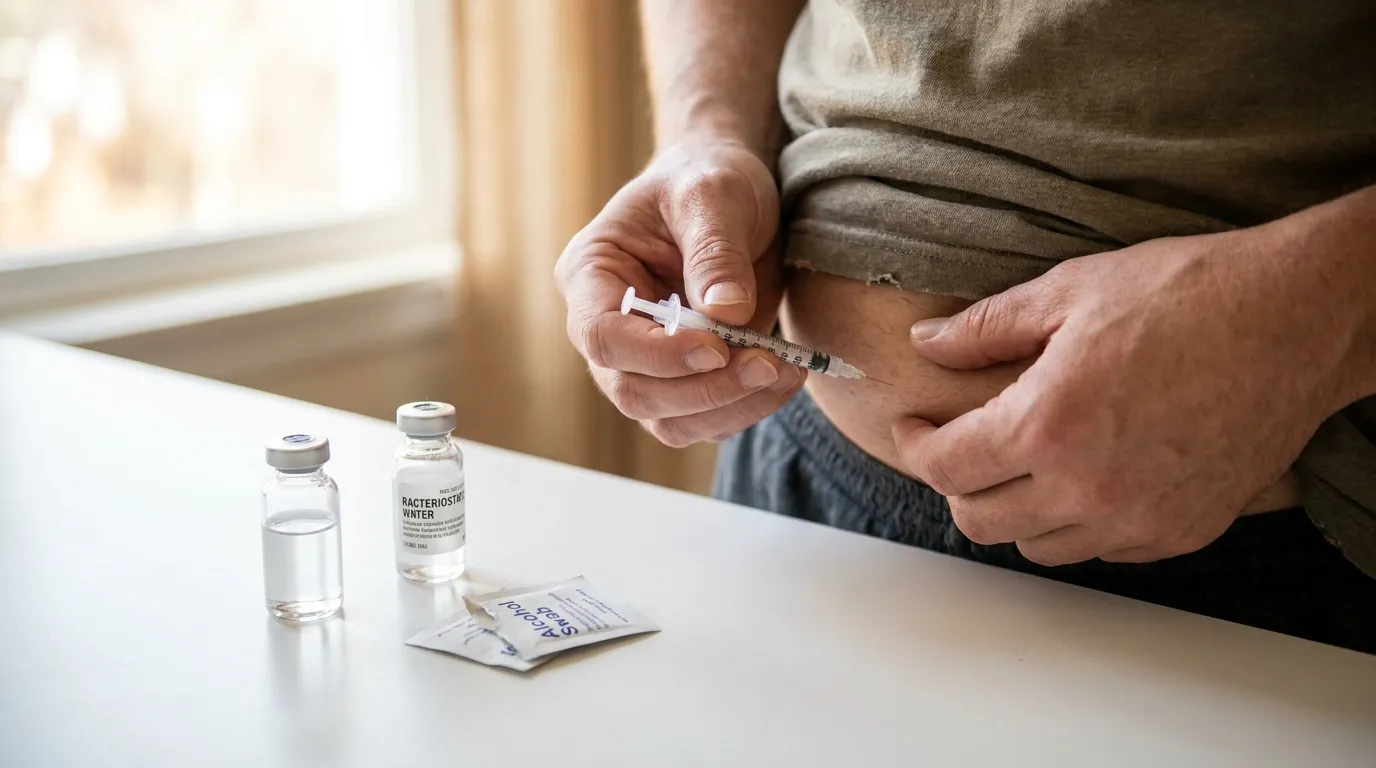
For orientation only, here is how people commonly describe the reported protocol (not a recommendation):
| Phase | Reported dose range | Notes |
|---|---|---|
| Loading | ~4-6 mg/week, split 2x/week | Subcutaneous; run for ~4-6 weeks |
| Maintenance | ~2-2.5 mg/week | Lower frequency, often once weekly |
| Acute-injury (reported) | ~2 mg every 3-4 days, ~3 weeks | A shorter, front-loaded pattern some report |
| Cycle structure | Loading then maintenance, or ~12-week fixed | Often cycled with breaks (e.g. time off between cycles) |
Our take: Numbers like "5 mg a week" get repeated so often they start to sound official. They are not. They are community conventions built largely on veterinary and animal-dose extrapolation, not human dose-finding trials, which is exactly why we never present them as a validated dose.
What are the side effects of TB-500?
Because TB-500 has not been tested in proper human injury trials, its true side-effect profile is unknown; reported issues are mostly mild and include injection-site reactions and fatigue, with a notable theoretical concern around angiogenesis and cancer. "Unknown" is the honest headline, not "safe."
In animal studies and the limited human work on its parent protein, the safety profile has generally been described as favorable, and community reports lean toward mild, transient effects. But major clinics and anti-doping bodies stress that human safety data for injectable TB-500 are lacking, so potential effects ranging from mild to serious cannot be ruled out (Innerbody, "TB4 and TB-500 Peptide Therapy", 2026, retrieved 2026-06-15).
A hub-level overview of what is reported and what is theorized:
- Commonly reported (mild): injection-site redness, swelling, or irritation; temporary fatigue or "head rush"; occasional headache or nausea (anecdotal).
- Quality-related risks: because the market is unregulated and the very identity of "TB-500" varies, contamination, mislabeled potency, and getting a different molecule than expected are real concerns independent of the peptide itself.
- Theoretical, researcher-raised: the same pro-angiogenic and cell-migration activity that aids healing is also implicated in tumor growth and spread, prompting caution about a theoretical cancer-promotion or progression risk, especially for anyone with a cancer history.
- Unknown: true long-term safety in humans, because the long-horizon injury-use data simply do not exist.
This is the hub-level summary. A full side-effect deep-dive, including the cancer-risk debate and how researchers frame it, is a dedicated spoke: TB-500 side effects and safety deep-dive.
How does TB-500 compare to BPC-157? (The Wolverine stack)
TB-500 and BPC-157 are the two most popular "healing" peptides, and they are often stacked because their proposed mechanisms differ: BPC-157 acts more locally through angiogenesis at an injury site, while TB-500 works more systemically to help cells migrate throughout the body. Both are unapproved research compounds with limited human data, and the combination is nicknamed the "Wolverine stack."
In rough terms, BPC-157 (a gastric-derived 15-amino-acid peptide) is reported to drive local blood-vessel growth and fibroblast activity and has the stronger gut-healing data, so it is often injected near a single-site injury. TB-500 is described as circulating systemically through actin-driven cell migration, so it does not need to be placed at the injury. The theory behind the stack is that they hit complementary parts of the repair process at once. That said, there are no human trials comparing the stack to either peptide alone, so its "synergy" is a reasonable hypothesis, not a proven result.
| TB-500 (Tβ4) | BPC-157 | |
|---|---|---|
| Origin | Thymosin beta-4 (actin protein) | Gastric protein fragment |
| Reported action | Systemic, whole-body | More local, injury-site |
| Typical dose unit | Milligrams (mg) | Micrograms (mcg) |
| Strongest data | Eye-drop human trials (parent) | Animal tissue/gut healing |
| Dosing frequency | Often 1-2x/week | Often daily |
The full comparison, the stack rationale, the combined dosing, and the BPC-157 deep-dive are their own articles. We keep it short here to avoid overlapping them: see TB-500 vs BPC-157 comparison and the Wolverine stack, our guide to the best peptides for recovery, and the bpc-157 complete guide.

Is TB-500 safe and legal?
TB-500 is not approved by any regulator, so there is no official safety determination, and it is not legal to sell or prescribe as an approved medicine or to include in dietary supplements; the products sold online are unapproved "research chemicals." That status matters more than any single study.
On safety, the animal data and the parent protein's eye trials look reassuring for an investigational compound, but "reassuring in rats and eye-drop studies" is not the same as "established safe" for an injected musculoskeletal protocol, and the theoretical cancer concern keeps caution warranted. On legality, the U.S. picture is clear: TB-500 is an unapproved drug, cannot be legally prescribed or sold over the counter for human use, and is not a lawful dietary ingredient. The FDA placed thymosin beta-4 / TB-500 in Category 2 of its 503A interim bulk-drug-substances list, the "significant safety risks" tier, which means compounding pharmacies cannot legally compound it for human use (BSCG, 2025, retrieved 2026-06-15).
TB-500 is also banned in sport. Thymosin beta-4 and its fragments appear on the World Anti-Doping Agency Prohibited List (prohibited at all times, peptide hormones / growth factors), and TB-500 is prohibited for U.S. military personnel under the Department of Defense's adoption of the WADA categories, so athletes and service members face additional rules beyond the FDA's (BSCG, 2025, retrieved 2026-06-15). For the full legal picture and how to evaluate a vendor, see are peptides legal and how to vet peptide quality.
Our take: The single most common misunderstanding is assuming that because TB-500 is sold openly online, it must be legal and vetted to use. It is sold "for research use only," it is an unapproved drug, it is banned in sport, and you may not even be getting the molecule on the label. Easy to buy is not the same as legal or safe.
How do people obtain TB-500?
Because TB-500 is unapproved, the main way people access it is by buying unapproved "research chemical" vials online, which is a legal and safety gray market; legitimate U.S. compounding pharmacies cannot make it after the FDA placed it in 503A Category 2. There is no legitimate "get a prescription" route for an unapproved drug, outside of a clinical trial.
The research-peptide market is where most online searches end up: vendors sell lyophilized "TB-500" for research use only, and buyers reconstitute and use it off-label. That market carries real risks of mislabeled potency, impurities, non-sterile product, and the specific TB-500 problem of identity uncertainty (fragment versus full Tβ4), all with no regulatory oversight. Some telehealth and "concierge" peptide clinics market TB-500, but that does not change its unapproved federal status.
If you are researching that path despite the risks, the responsible groundwork is the same as for any research peptide:
- Confirm the legal status for your country and situation, including sport and workplace rules. See are peptides legal.
- Demand a certificate of analysis (COA) from independent third-party testing, and learn to read it for identity (is it the fragment or full Tβ4?) and purity. See how to vet peptide quality.
- Understand handling before anything else. Reconstitution and cold storage are not optional. See getting started with peptides and the peptide injections guide.
- Talk to a qualified clinician who can weigh your specific health situation, cancer history, interactions, and contraindications.
We are describing what people do, not endorsing it. Using an unapproved drug means accepting unknown risks with no regulatory safety net.
A realistic look at expectations
The dramatic "fully healed in weeks" stories around TB-500 come mostly from animal studies, veterinary use, and anecdotes, not controlled human results, so realistic expectations should be modest and skeptical. Going in calibrated is part of using any of this information responsibly.
Two honest caveats sit on top of the hype. First, animal and veterinary healing at controlled doses does not reliably predict human outcomes, and the credible human trials are for eye drops, not injected injury recovery. Second, much of what people attribute to TB-500 (recovery from an injury over several weeks) overlaps with what the body would do on its own with rest and rehab, so it is hard to separate signal from natural healing without controlled trials. For grounded before-and-after context and how to read transformation claims, see peptides before and after.
Frequently Asked Questions
The bottom line
TB-500 is one of the most interesting and most misunderstood compounds in the peptide world. Its foundation is genuinely solid: thymosin beta-4 is a real, well-studied actin-regulating protein, and its eye-drop form has reached late-stage human trials. That pedigree is the honest reason TB-500 earned its "healing peptide" reputation, and the systemic, actin-driven mechanism is a real one.
The other half of the story is discipline. The injectable "TB-500" people buy for muscle and tendon recovery has no completed human trials, you may not even be getting the molecule on the label, it carries a real theoretical cancer concern, it is unapproved and flagged by the FDA, and it is banned in sport. The honest label is investigational. If you take one thing from this hub, let it be the gap between "thymosin beta-4 has real science" and "an injected research chemical will heal my injury," and the value of a qualified clinician in navigating it. From here, the natural next reads are the bpc-157 complete guide, how to vet peptide quality, and are peptides legal.
Sources
- Wikipedia. "Thymosin beta-4." Retrieved 2026-06-15. https://en.wikipedia.org/wiki/Thymosin_beta-4
- Banned Substances Control Group (BSCG). "TB-500: Status, Risks, and Bans in Sport and Military." 2025. Retrieved 2026-06-15. https://www.bscg.org/blogs/single/tb-500-status-risks-and-bans-in-sport-and-military
- Innerbody Research. "TB4 and TB-500 Peptide Therapy: What to Know in 2026." 2026. Retrieved 2026-06-15. https://www.innerbody.com/thymosin-beta-4-and-tb-500
- Swolverine. "TB-500 Dosage Guide: How Much Should You Take for Recovery and Injury Repair?" 2025. Retrieved 2026-06-15. https://swolverine.com/blogs/blog/tb-500-dosage-guide-how-much-should-you-take-for-recovery-and-injury-repair
- PeptideDeck. "TB-500 Dosage Guide: Thymosin Beta-4 Protocol, Frequency & Cycle (2026)." Retrieved 2026-06-15. https://www.peptidedeck.com/blog/tb-500-dosage-guide
- Medsbase. "TB-500 Peptide: Thymosin Beta-4 Healing Guide (2026)." Retrieved 2026-06-15. https://medsbase.com/tb-500-thymosin-beta-4-peptide-guide/
- ChemicalBook. "Thymosin beta 4 (CAS 77591-33-4)." Retrieved 2026-06-15. https://www.chemicalbook.com/ChemicalProductProperty_EN_CB4409683.htm
- U.S. Food and Drug Administration. "Bulk Drug Substances Used in Compounding Under Section 503A of the FD&C Act." Retrieved 2026-06-15. https://www.fda.gov/drugs/human-drug-compounding/bulk-drug-substances-used-compounding-under-section-503a-fdc-act