Melanotan 2: The Complete Guide to the Tanning Peptide (2026)
Melanotan 2 is a synthetic peptide that mimics a natural hormone in your body to trigger a tan without much sun, which is why it picked up the nickname "the Barbie drug" or "tan jab." The catch is that it was never finished as a medicine: it is not approved by any regulator, it is sold as an unlicensed research chemical, and dermatologists have flagged it for serious concerns, from nausea and blood-pressure changes to darkening moles and case reports of melanoma.
If you have seen Melanotan 2 (often written "Melanotan II" or "MT-2") sold as a tanning injection or nasal spray, this guide is the high-level map of the whole compound, and it anchors our broader roundup of the best peptides for skin and anti-aging. We cover what it actually is, how its melanocortin mechanism works, what people use it for, the dosing ranges that get reported, side effects, the mole-and-melanoma question, realistic results, the honest safety picture, its legal status, and how people obtain it. Each section is a clear overview; the deep-dive topics (a full dosing chart, the side-effect deep-dive, the Melanotan 1 comparison, injection technique) point to dedicated guides so this page stays a clean hub.
Key Takeaways
- Melanotan 2 is a synthetic analog of alpha-melanocyte-stimulating hormone (alpha-MSH) that darkens skin by activating melanocortin receptors; it is described by dermatology authorities as "an unlicensed and largely untested form of alpha-melanocyte-stimulating hormone" (DermNet, "Melanotan II", retrieved 2026-06-15).
- It is not approved anywhere and is not a legal cosmetic. Health regulators in the US, UK, Australia, Denmark, Ireland, and Norway have warned against it since 2007 (Wikipedia, "Melanotan II", 2026; TGA, "Don't risk using tanning products containing melanotan").
- The mechanism is well understood. Melanotan 2 is a non-selective agonist of the MC1, MC3, MC4, and MC5 melanocortin receptors; tanning comes from MC1 activation, and the sexual-arousal side effect comes from MC4 (Wikipedia, "Melanotan II", 2026).
- Side effects are common, not rare. Nausea and appetite loss, facial flushing, and spontaneous erections in men are frequently reported within hours of a dose; community write-ups put nausea/appetite effects near 70-80% and flushing near 60% (community-reported figures, not validated trial rates) (Immortal Medicals, 2026).
- The big concern is your skin. Melanotan 2 can darken and multiply moles and has been tied in case reports to eruptive dysplastic (atypical) nevi and melanoma in situ, which is why dermatologists recommend skin monitoring (Westlake Dermatology, 2026; J Am Acad Dermatol / Actas Dermo-Sifiliográficas case report).
- Reported doses cluster around a 0.25-0.5 mg starting dose, a daily "loading" phase, then 0.25-1 mg one to three times weekly to maintain color, by subcutaneous injection. These are community conventions, not validated dosing; the full ladder is a future dosing chart spoke.
What is Melanotan 2?
Melanotan 2 is a lab-made peptide that copies a natural hormone (alpha-MSH) to make your skin produce more pigment, so you tan with far less sun exposure. It is a cyclic peptide, usually sold as a white powder you mix with bacteriostatic water and inject under the skin. It was created as a tanning agent but was never approved, and today it exists almost entirely as an unregulated research chemical.
Chemically, Melanotan 2 is a cyclic seven-amino-acid analog of alpha-melanocyte-stimulating hormone, with the formula C50H69N15O9 and CAS number 121062-08-6 (Wikipedia, "Melanotan II", 2026, retrieved 2026-06-15). It was developed by scientists at the University of Arizona in the 1980s, who reasoned that if you could stimulate the body's own tanning system directly, you could induce a protective tan without as much ultraviolet damage. DermNet, a dermatology reference, describes it plainly as "an unlicensed and largely untested form of alpha-melanocyte-stimulating hormone, which causes pigmentation (tanning) of human skin" (DermNet, "Melanotan II", retrieved 2026-06-15). If injectable peptides are new to you, start with our what are peptides and how peptides work guides.
It is worth untangling three similar names, because the confusion is constant. Melanotan 1 (afamelanotide) is a different, more selective peptide that is actually an approved drug for a rare light-sensitivity disorder. Melanotan 2 is the broader, non-selective tanning peptide this guide covers. And bremelanotide (PT-141) is a related melanocortin drug that grew out of the Melanotan 2 program and is now approved for sexual dysfunction. We keep the comparison brief here and link out below.
The single most important fact about Melanotan 2 is its status: it is not approved by the FDA or any other drug regulator, anywhere, for any use. It exists in a small body of older research and, separately, in a large unapproved "research chemical" and grey-market tanning trade. Everything else in this guide should be read through that lens.
Citation capsule. Melanotan 2 (also Melanotan II, MT-2) is a synthetic cyclic analog of alpha-melanocyte-stimulating hormone (alpha-MSH), formula C50H69N15O9, CAS 121062-08-6, PubChem CID 92432, developed at the University of Arizona in the 1980s as a sunless-tanning agent. It is a non-selective agonist of the MC1/MC3/MC4/MC5 melanocortin receptors and is not approved by any regulator for human use. Source: Wikipedia, "Melanotan II," 2026; DermNet, "Melanotan II," 2026.
How does Melanotan 2 work?
Melanotan 2 works by switching on the same receptors your body uses to tan, telling pigment cells in your skin to make more of the dark pigment melanin, so you go brown with much less sun. It is a non-selective agonist of the melanocortin receptors, which is also why it causes side effects far beyond the skin. The picture below is well established mechanistically, but the long-term human effects of using it this way are not.
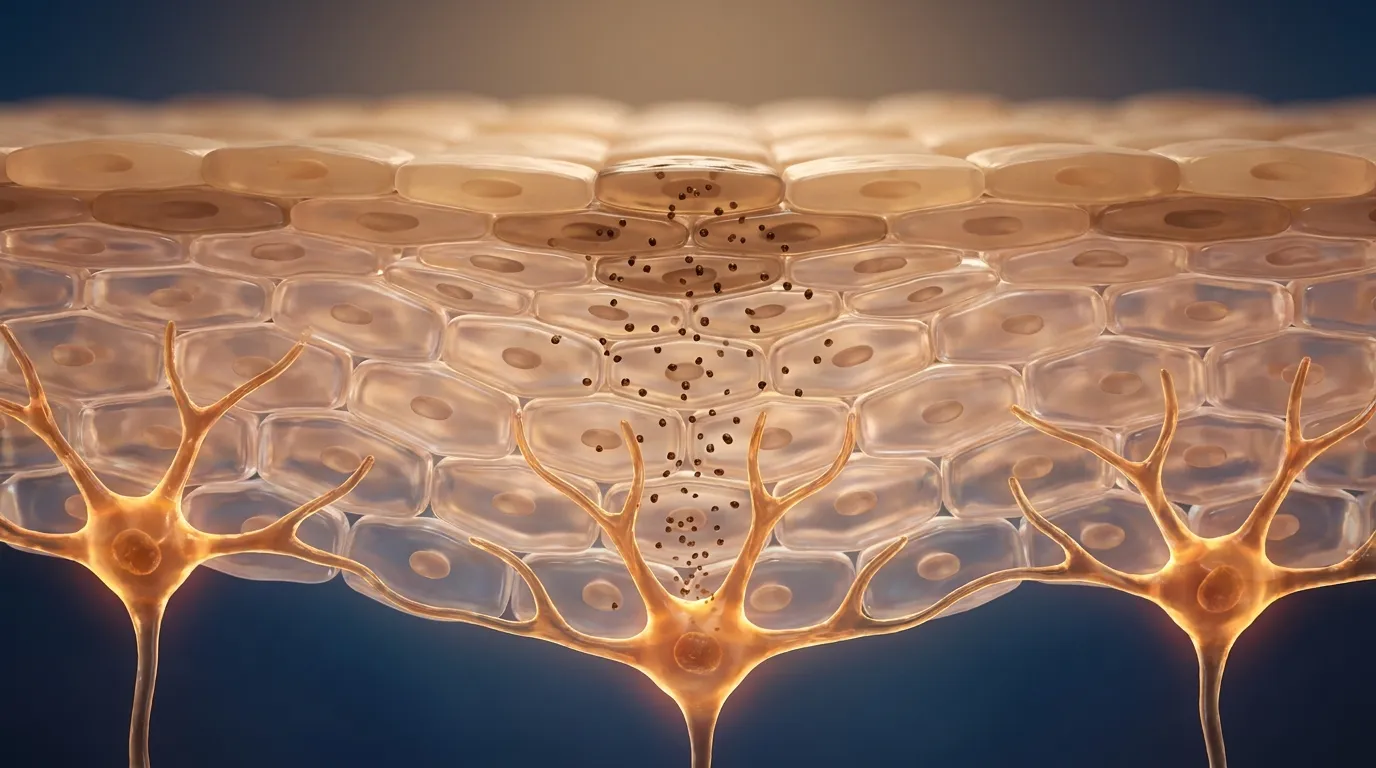
In plain terms, your skin already has a tanning switch. Sunlight (UV) normally triggers your body to release alpha-MSH, which binds a receptor called MC1R on pigment cells (melanocytes) and tells them to make eumelanin, the brown-black pigment that darkens skin. Melanotan 2 is a synthetic, longer-lasting copy of that hormone, so it pushes the same button directly, without waiting for sun damage to start the process. A 2026 dosing review summarizes the chain as MC1R activation driving downstream cyclic-AMP signaling and increased eumelanin production (Immortal Medicals, "Melanotan 2: How It Works, Dosing and Side Effects", 2026, retrieved 2026-06-15).
The reason Melanotan 2 has so many effects is that it is non-selective: it activates several melanocortin receptors, not just the tanning one. Here is what each contributes, in simple terms:
- MC1R (skin): the tanning receptor. Activation tells melanocytes to make more eumelanin, darkening skin and existing moles. This is the intended effect.
- MC4R (brain/nervous system): linked to sexual arousal and appetite. This is why Melanotan 2 famously causes spontaneous erections in men and suppresses appetite, and why its sister molecule bremelanotide (PT-141) became a sexual-dysfunction drug (Wikipedia, "Melanotan II", 2026, retrieved 2026-06-15).
- MC3R and MC5R: involved in energy balance, inflammation, and exocrine gland function; their broad activation is part of why side effects like flushing and nausea occur.
The receptor-pharmacology deep dive (selectivity, alpha-MSH biology, why non-selectivity drives the side-effect profile) is its own topic. We keep it at overview level here and link out to how peptides work for the foundations.
What is Melanotan 2 used for?
Melanotan 2 is used almost entirely off-label for one thing, getting a tan with little or no sun, with secondary, often unintended, effects on libido and appetite. None of these are approved uses; they are the directions the original research and grey-market use have taken.
The headline use is cosmetic tanning. People use it to develop and hold a deep tan year-round, to "prep" for a holiday, or to tan more easily despite fair, burn-prone skin. The original research rationale was also protective: a tan induced before sun exposure might reduce sunburn. A secondary use grew out of its MC4R activity, two effects that show up reliably enough that some people seek them out: increased libido and reduced appetite. That sexual effect is the reason a sister compound, bremelanotide, was developed and eventually approved as a sexual-dysfunction medicine (Wikipedia, "Melanotan II", 2026, retrieved 2026-06-15).
A quick overview of why people use Melanotan 2, and where it stands:
| Reported use | What people are after | Status / honest note |
|---|---|---|
| Cosmetic tanning | Deep, fast tan with minimal sun | The main use; not an approved cosmetic or drug |
| Tanning for fair / burn-prone skin | Color without burning | Unapproved; does not make UV exposure safe |
| Libido / sexual arousal | Increased desire, erections (men) | Off-target MC4R effect; the approved drug for this is bremelanotide, not MT-2 |
| Appetite suppression | Eating less / weight angle | Off-target effect, not a weight-loss treatment |
Because Melanotan 2 does not selectively tan, "what it's used for" and "its side effects" are really the same list seen from two directions. The libido and appetite changes some people want are exactly the systemic effects others experience as unwanted. We keep these brief here; the honest headline is that it has one cosmetic purpose and a lot of biological collateral.
What doses of Melanotan 2 do people report using?
There is no validated or approved dose for Melanotan 2, but reported community protocols typically start around 0.25-0.5 mg, run a daily "loading" phase to build color, then drop to 0.25-1 mg one to three times weekly to maintain it, all by subcutaneous injection. These are figures people report, not an established or safe dose, and there is no label to anchor them.
The most commonly described approach is a tolerance-and-loading pattern: begin with a small 0.25-0.5 mg dose to gauge how strongly you react, increase gradually, and keep individual injections at or below about 1 mg, which most users treat as a practical ceiling (The Peptide Catalog, "Melanotan-2 Dosing Guide", 2026, retrieved 2026-06-15). The underlying research dose most often cited is 0.025 mg/kg, the level studied in early human work on tanning and erectile function (RxList, "Melanotan-II", retrieved 2026-06-15). After the desired color is reached, people shift to a maintenance phase of roughly one to three doses per week. We label all of this as a community convention because no regulator has reviewed a dose, and the human pharmacokinetics behind these numbers are thin.
The detailed titration ladder, the skin-type-by-skin-type loading schedule, dose-conversion math (mcg to syringe units), reconstitution volumes, and injection-site choices are a dedicated spoke. We cover only the high-level framing here and link out to the full Melanotan 2 dosing and titration chart, our peptide reconstitution calculator, and the general peptide injections guide.
For orientation only, here is how people commonly describe the reported phases (not a recommendation):
| Phase | Reported dose pattern | Notes |
|---|---|---|
| Tolerance / start | 0.25-0.5 mg, once daily | Small first dose to gauge reaction; nausea is common early |
| Loading | ~0.5-1 mg daily | Run for ~1-2 weeks to build pigment; stop sooner if side effects are strong |
| Maintenance | 0.25-1 mg, 1-3x per week | Holds color once the target tan is reached |
Our take: Numbers like "1 mg daily until you're tan" get repeated so often they start to sound official. They are not. They are community conventions built on a single old research dose (0.025 mg/kg) and trial-and-error, not human dose-finding studies, which is exactly why we never present them as a validated or safe dose, and why the side-effect and skin-cancer concerns matter so much.
What are the side effects of Melanotan 2?
Melanotan 2's common side effects, nausea, facial flushing, and spontaneous erections in men, are frequent rather than rare, and they show up within hours of a dose; the more serious concern is what it can do to your skin over time. Because it activates receptors all over the body, the side effects are systemic, not just cosmetic.
In the short term, the most consistently reported effects are nausea and appetite loss, facial flushing (a warm red flush across the face and chest), and, in men, spontaneous erections, which can be unwanted and, rarely, prolonged and painful (priapism, a medical emergency). Community write-ups put nausea and appetite suppression at roughly 70-80% of users and flushing near 60%, usually in the first hour after injecting; these are community-reported figures, not validated trial rates, but they match what regulators and clinics describe (Immortal Medicals, 2026, retrieved 2026-06-15; DermNet, "Melanotan II", retrieved 2026-06-15). Other commonly listed effects include flushing-related dizziness, headache, fatigue, yawning, and darkened skin.
The longer list, including the rarer but more serious entries, comes from dermatology references:
- Common, short-term (mostly within hours): nausea, reduced appetite, facial flushing, spontaneous erections in men, dizziness, headache, fatigue, yawning.
- Cosmetic / pigment: general skin darkening, new freckles, and darkening or new moles (covered in its own section below).
- Rare but serious (case reports): melanonychia (brown-black nail discoloration), rhabdomyolysis (muscle breakdown), and posterior reversible encephalopathy syndrome (a brain condition), all listed among reported long-term risks (DermNet, "Melanotan II", retrieved 2026-06-15).
- Quality-related: because the market is unregulated, contamination, wrong potency, and non-sterile product are real, separate risks (Westlake Dermatology, 2026, retrieved 2026-06-15).
This is the hub-level summary. A full side-effect deep-dive, including priapism management, blood-pressure effects, and the rarer neurological reports, is a dedicated spoke: Melanotan 2 side effects and safety deep-dive.
Does Melanotan 2 cause melanoma or change your moles?
Melanotan 2 reliably darkens existing moles and can trigger new ones, and there are published case reports of atypical (dysplastic) moles and even melanoma in users, which is why dermatologists treat skin monitoring as essential. The honest scientific position is that a definitive cause-and-effect link to melanoma is not proven, but the warning signs are real enough that the safe assumption is caution.
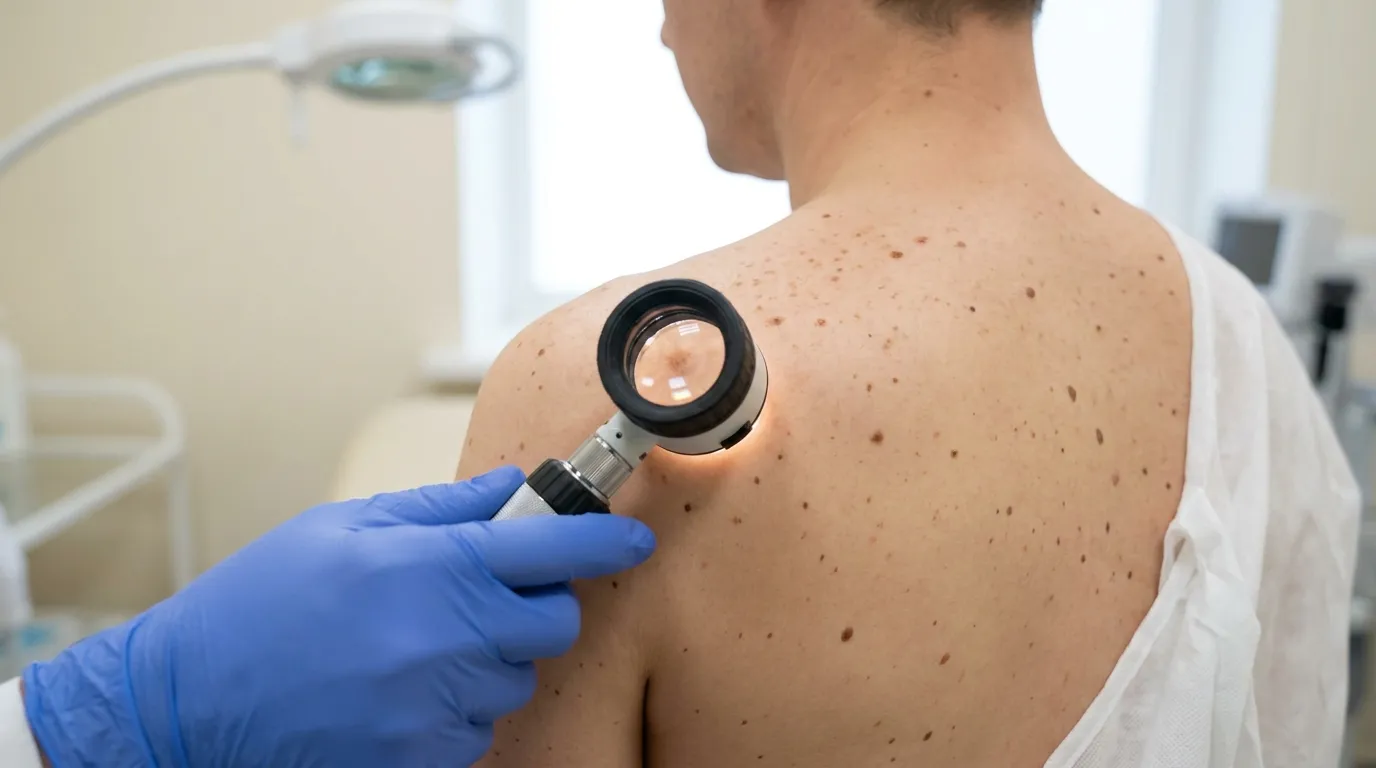
What is clearly established is the mole effect. Dermatology clinics report that Melanotan 2 is associated with "darkening of existing moles, development of new pigmented lesions, and rapid and irregular changes in mole appearance," changes that also make early skin-cancer detection harder (Westlake Dermatology, "Melanotan II", 2026, retrieved 2026-06-15). A striking case report described a 25-year-old man who developed more than 100 melanocytic nevi, many atypical, within weeks of a four-week course, with biopsies confirming dysplastic nevi and severe dysplasia in three lesions (Actas Dermo-Sifiliográficas / J Am Acad Dermatol, "Eruptive Dysplastic Nevi Following Melanotan Use", retrieved 2026-06-15). Separately, a 2012 case report documented melanotan-associated melanoma in situ (PubMed, "Melanotan-associated melanoma in situ", 2012, retrieved 2026-06-15).
The more nuanced question is whether Melanotan 2 causes melanoma. Here the evidence is genuinely unsettled: a 2013 review found no conclusive evidence that it causes melanoma, and a 2021 review suggested the increased melanoma risk seen among users could probably be explained by those users also getting more UV exposure (Wikipedia, "Melanotan II", 2026, retrieved 2026-06-15). So the picture is two-sided: clear evidence that it changes moles, plus alarming individual case reports, but no proof of direct causation.
Our take: This is the section that should drive the decision. Even if Melanotan 2 does not directly cause melanoma, it darkens and multiplies moles and can make atypical lesions erupt, which masks the exact early-warning signs dermatologists rely on to catch skin cancer. Practically, that means anyone using it should have a baseline skin check and ongoing dermatology monitoring, and people with many moles, fair skin, or a family history of melanoma have the most to lose.
The full melanoma-risk debate, the ABCDE mole-monitoring framework, and how dermatologists assess users is a dedicated spoke: Melanotan 2, moles and melanoma risk deep-dive.
How does Melanotan 2 compare to Melanotan 1?
Melanotan 1 and Melanotan 2 are different peptides that are constantly confused: Melanotan 1 (afamelanotide) is a more selective, approved prescription drug for a rare light-sensitivity disorder, while Melanotan 2 is the broader, non-selective, unapproved tanning peptide. They are not interchangeable, and only one of them is a legitimate medicine.
In rough terms, Melanotan 1 (afamelanotide, brand name Scenesse) is a longer, more selective alpha-MSH analog that is approved in the US and EU to reduce phototoxicity in erythropoietic protoporphyria, a rare condition where sunlight causes severe pain. Because it is more selective for the tanning receptor, it tends to cause fewer of the off-target effects (less of the libido and nausea profile). Melanotan 2 is shorter, non-selective, and unapproved, which is exactly why it produces both stronger tanning convenience and the broader side-effect set. The practical headline: "Melanotan 1" is sometimes a real drug used under medical supervision, while "Melanotan 2" is the grey-market tanning peptide.
The full side-by-side, including afamelanotide's approval history, the selectivity difference, and bremelanotide (PT-141), is its own spoke. We keep it short here to avoid overlapping that future article: see Melanotan 1 vs Melanotan 2 comparison.
What results can you realistically expect from Melanotan 2?
People using Melanotan 2 typically report a visible tan building over one to three weeks of daily dosing, with color deepening for a few weeks and then needing weekly maintenance to hold, but results vary a lot by skin type and come bundled with side effects and skin risks. "Tan in a few weeks" is the realistic claim; "safe, sun-free tan" is not.
The commonly described timeline is no visible change in the first few days, noticeable color around days 8-14, and peak color in the third to fourth week of loading, after which a maintenance dose holds it (Immortal Medicals, 2026, retrieved 2026-06-15). DermNet notes the tanning effect can begin within about five doses on an every-other-day schedule (DermNet, "Melanotan II", retrieved 2026-06-15). Two honest caveats sit on top of this. First, results are uneven: very fair skin may tan less and burn anyway, and the tan is not evenly distributed. Second, and most important, a Melanotan tan does not make UV exposure safe; many users still tan in the sun or beds to "activate" color, which compounds the very UV risk the peptide was once pitched to reduce. For grounded before-and-after context and how to read transformation claims, see peptides before and after.
Is Melanotan 2 safe and legal?
Melanotan 2 is not approved by any regulator, so there is no official safety determination, and it is not legal to sell as a medicine, cosmetic, or supplement; the products sold online and in gyms are unapproved research chemicals that multiple governments have publicly warned against. That status matters more than any single study.
On safety, the honest answer is that "safe" is not a word that applies, because no regulator has reviewed it, the side effects are common, and case reports tie it to serious skin changes. On legality, the picture is consistent worldwide. Australia's Therapeutic Goods Administration warns directly against tanning products containing melanotan, and health agencies in the US, UK, Denmark, Ireland, and Norway have issued warnings since 2007 against the unlicensed products sold online and in gyms (TGA, "Don't risk using tanning products containing melanotan", retrieved 2026-06-15; Wikipedia, "Melanotan II", 2026, retrieved 2026-06-15). It has never been approved for tanning in any country. For the full legal picture and how to evaluate a vendor, see are peptides legal and how to vet peptide quality.
Our take: The single most common misunderstanding is assuming that because Melanotan 2 is sold openly, in gyms, online, even in nasal-spray form, it must be legal and vetted. It is sold "for research use only," it is unapproved everywhere, and regulators have specifically warned the public against it. Easy to buy is not the same as legal or safe.
How do people obtain Melanotan 2?
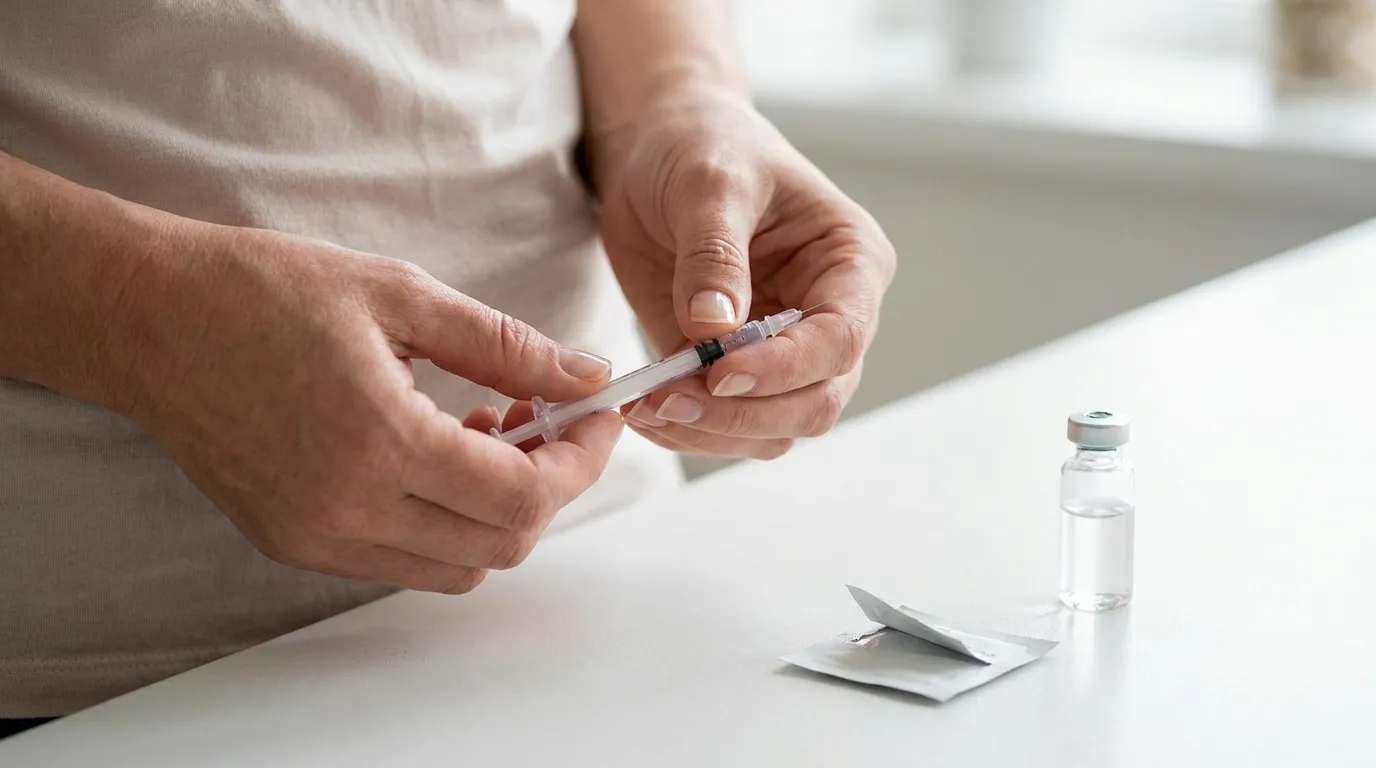
Because Melanotan 2 is unapproved, the main way people get it is by buying unregulated "research chemical" vials, or grey-market tanning injections and nasal sprays, online or through gyms and beauty channels, which is a legal and safety gray market. There is no legitimate prescription route for tanning, anywhere.
The research-peptide and grey tanning markets are where most searches end up: vendors sell lyophilized Melanotan 2 "for research use only," and buyers reconstitute and inject it off-label; some products are sold as nasal sprays or pre-mixed pens. That market carries real risks of mislabeled potency, impurities, and non-sterile product, with no regulatory oversight, on top of the peptide's own risks (Westlake Dermatology, 2026, retrieved 2026-06-15). Regulators specifically warn that you cannot know what is actually in these products.
If you are researching that path despite the risks, the responsible groundwork is the same as for any research peptide, plus one extra step that is non-negotiable here:
- See a dermatologist first. Get a baseline full-skin / mole check before anything, and plan ongoing monitoring, because Melanotan 2 changes the very signs used to catch skin cancer early.
- Confirm the legal status for your country and situation. See are peptides legal.
- Demand a certificate of analysis (COA) from independent third-party testing, and learn to read it for identity and purity. See how to vet peptide quality.
- Understand handling before anything else. Reconstitution and cold storage are not optional. See getting started with peptides and the peptide injections guide.
- Talk to a qualified clinician who can weigh your specific health situation, skin-cancer risk factors, and contraindications.
We are describing what people do, not endorsing it. Using an unapproved drug means accepting unknown risks with no regulatory safety net, and with Melanotan 2 those risks include your skin's cancer-warning system.
Frequently Asked Questions
The bottom line
Melanotan 2 is the clearest example in the peptide world of a compound that works as advertised and still should give you pause. The mechanism is real and well understood: it pushes the same tanning button UV does, so people do get darker with less sun. That convenience is exactly why it spread from research labs into gyms and online shops.
The other half of the story is the cost. Melanotan 2 is unapproved everywhere, sold as an unregulated research chemical with no guarantee of what is in the vial, and it comes with frequent side effects and, most seriously, the ability to darken and multiply moles and erupt atypical lesions, which is why dermatologists tie it to melanoma case reports and insist on skin monitoring. The honest label is unapproved and risky. If you take one thing from this hub, let it be that "a tan you can buy" and "a safe tan" are not the same thing, and that a dermatologist and a qualified clinician belong in this decision. From here, the natural next reads are how to vet peptide quality, are peptides legal, and getting started with peptides.
Sources
- DermNet. "Melanotan II." Retrieved 2026-06-15. https://dermnetnz.org/topics/melanotan-ii
- Wikipedia. "Melanotan II." 2026. Retrieved 2026-06-15. https://en.wikipedia.org/wiki/Melanotan_II
- Therapeutic Goods Administration (Australia). "Don't risk using tanning products containing melanotan." Retrieved 2026-06-15. https://www.tga.gov.au/news/blog/dont-risk-using-tanning-products-containing-melanotan
- Westlake Dermatology. "Melanotan II ('Tan Jabs'): Why They're Not Worth The Risk." 2026. Retrieved 2026-06-15. https://www.westlakedermatology.com/trends/melanotan-II/
- Immortal Medicals. "Melanotan 2: The Tanning Peptide, How It Works, Dosing and Side Effects." 2026. Retrieved 2026-06-15. https://immortalmedicals.com/blogs/news/melanotan-2-the-tanning-peptide-how-it-works-dosing-and-side-effects
- The Peptide Catalog. "Melanotan-2 Dosing Guide." 2026. Retrieved 2026-06-15. https://thepeptidecatalog.com/articles/melanotan-2-dosing-guide
- RxList. "Melanotan-II: Health Benefits, Side Effects, Uses, Dose & Precautions." Retrieved 2026-06-15. https://www.rxlist.com/supplements/melanotan-ii.htm
- "Eruptive Dysplastic Nevi Following Melanotan Use." Actas Dermo-Sifiliográficas / Journal of the American Academy of Dermatology. Retrieved 2026-06-15. https://www.actasdermo.org/en-eruptive-dysplastic-nevi-following-melanotan-articulo-S1578219012001357
- "Melanotan-associated melanoma in situ." PubMed, 2012. Retrieved 2026-06-15. https://pubmed.ncbi.nlm.nih.gov/22724573/
- PubChem. "Melanotan II (CID 92432)." Retrieved 2026-06-15. https://pubchem.ncbi.nlm.nih.gov/compound/92432